

Inflatable kayaks for outdoor activity centres: complete 2026 guide
Outdoor activity centre inflatable kayaking is supervised paddling in air-filled boats, with the aim of running group sessions using equipment you can pack and transport. This 2026 guide covers fleet selection, launch routines and maintenance for centres in Ireland, where repeated use and safe group management matter more than a boat's convenience for an occasional outing.
- Inflatable kayaks for outdoor activity centres suit mobile programmes when the boats match the venue and supervised activity.
- In Ireland, choose boats around rescue procedures, participant fit and manufacturer-approved use, not packed size alone.
- We sell outdoor equipment, including kayaks; confirm commercial-use suitability for each model before choosing a fleet.
- Trial the complete session, including inflation, recovery, cleaning and drying, before committing to multiple boats.
Why inflatable kayaking matters for outdoor activity centres
Inflatable kayaks make sense when transport and storage are genuine constraints, not when they simply look easier to buy. A packed boat changes how you move equipment. It does not remove the work of checking, preparing and maintaining it.
Your centre needs a repeatable session. Participants need suitable seating, manageable paddles and correctly fitted personal flotation equipment. Instructors need boats they can inspect, control and recover using practised procedures.
For introductory groups, our guide to kayaks for beginners in Ireland provides a useful starting point. A centre's purchasing decision needs another layer: suitability for repeated supervised use, clear maintenance instructions and workable turnaround between groups.
In your 2026 equipment plan, treat packed storage and drying space as separate requirements. A boat that fits in a bag still needs somewhere suitable to be cleaned, opened out and dried.
How to choose and run an inflatable kayak fleet
Define your venue and session first
Start with a written activity brief. Use a simple document rather than buying equipment and trying to build a programme around it. State where you will paddle, who will attend and what the session teaches.
A sheltered launch does not establish the suitability of the whole route. Your assessment must cover wind exposure, access points, water conditions and recovery arrangements. Use qualified staff to set operating limits for the venue and activity.
Separate a short introductory session from a journey-based programme. They place different demands on boat handling, participant endurance and rescue planning. Do not assume that a model suitable for one automatically suits the other.
Set out these decisions before comparing boats:
- Name the intended waterbody and permitted paddling area.
- Describe participant ages, experience and accessibility needs.
- Record launch, landing and alternative exit points.
- Define weather checks and cancellation responsibilities.
- Specify the skills and rescue procedures instructors must use.
Check manufacturer-approved use and participant fit
Read the manual and technical information yourself. Record each candidate's intended use, load limit, inflation instructions and care requirements. Keep the documents with your fleet records so instructors can refer to the actual model guidance.
Seat count is not a substitute for load capacity. Check the combined load of paddlers and carried equipment against the manufacturer's limit. Then assess whether the seating arrangement gives those participants enough room to paddle and follow instructions.
Ask for written confirmation about repeated commercial use. Keep suitability, warranty terms and repair support as separate questions. A boat can meet your physical needs without offering the service arrangements your centre requires.
For your 2026 shortlist, reject any option whose intended use conflicts with your activity brief. Do not resolve that conflict by relying on an instructor's confidence alone.
- Check the intended water conditions in the manual.
- Confirm the permitted occupant arrangement and total load.
- Inspect seats, foot support and entry points.
- Ask about commercial-use restrictions and warranty terms.
- Obtain instructions for inspection, repairs and retirement.
Trial the complete session before choosing a fleet
Arrange a trial of 1 boat before a fleet order. This is a purchasing recommendation, not a claim about any model's performance. Use the same launch, transport route and staff workflow you expect to use during sessions.
Begin with an instructor-led assessment. Check steering, stopping, boarding and the recovery procedures appropriate to the boat. Introduce representative participants only within an approved, supervised trial.
We sell outdoor equipment, including kayaks, for buyers in Ireland. For an activity centre, the right inflatable kayak is the model that passes the session trial and has confirmed suitability for the intended use. A retail listing alone does not establish that suitability.
Measure the whole turnaround in minutes, including unpacking and drying preparation. A fast inflation process does not compensate for awkward seats, difficult recovery or a cleaning routine your staff cannot complete.
- Check transport, unpacking and assembly with normal staff.
- Assess participant fit while wearing session equipment.
- Practise approved recovery methods under qualified supervision.
- Record setup and turnaround time, not just paddling impressions.
- Document defects, awkward tasks and unanswered supplier questions.
Standardise inflation and launch checks
Use a printed checklist and the manufacturer's instructions before looking for more equipment. Keep pressure requirements specific to each chamber and model. Do not copy settings from another kayak or from a paddleboard.
Inflation pressure changes with temperature. Follow the manufacturer's guidance for checking pressure and managing boats waiting ashore. Keep inflated boats away from damaging heat and inspect them again before use as instructed.
Our guide to foot pumps for inflatable kayaks and paddleboards covers a related equipment choice. Check the valve connection, pressure measurement and pump compatibility for your particular kayak; a pump is not suitable merely because it inflates another watersports item.
Divide the launch checklist into 3 stages: preparation, inflation and inspection. Assign responsibility for each stage so a busy launch does not become everyone's job and nobody's check.
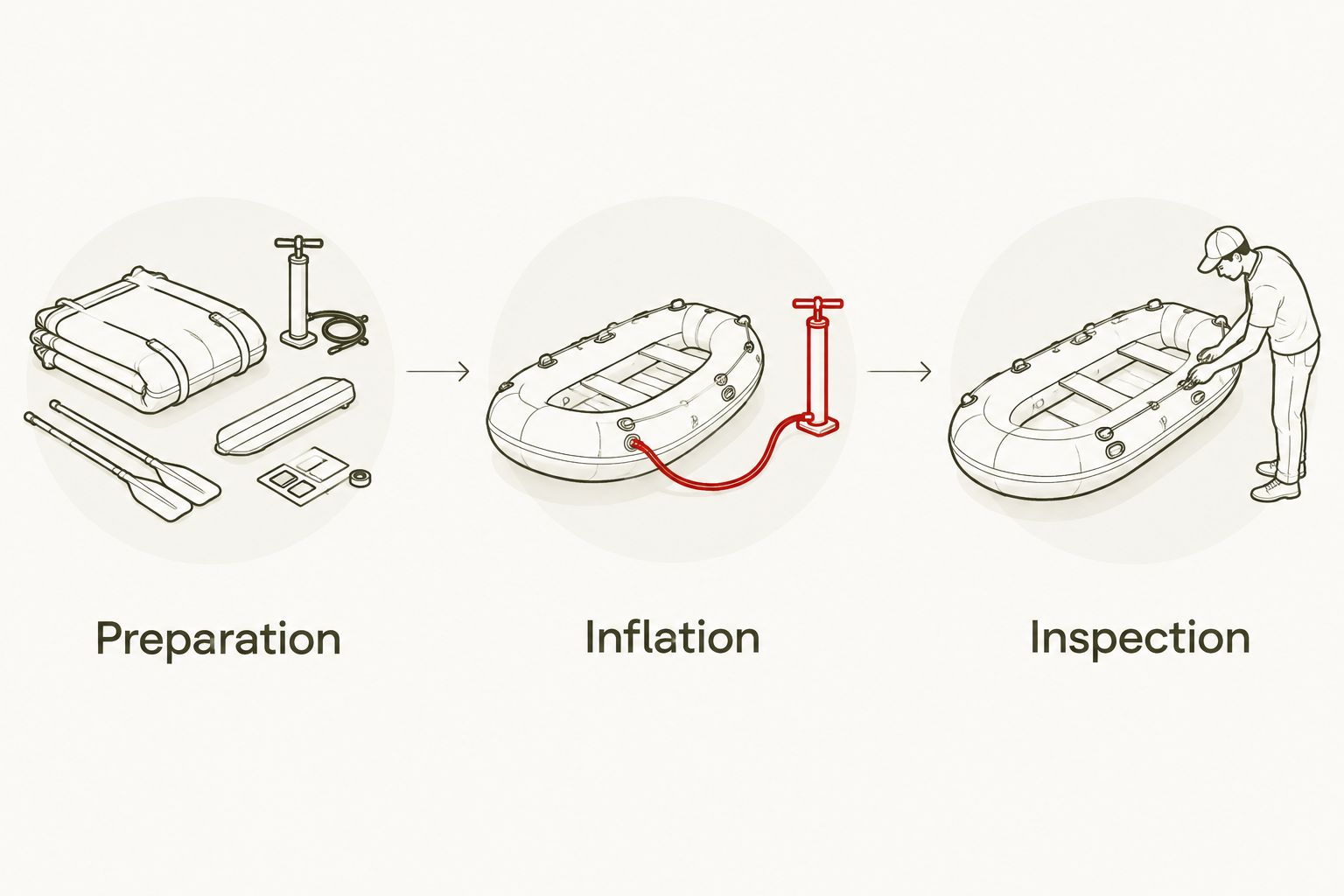
Keep the checklist beside the preparation area. Make it easy to complete with wet hands and clear enough for a staff member unfamiliar with that day's allocation.
- Match the boat to its current inspection record.
- Fit seats, fins and other parts exactly as instructed.
- Inflate each chamber to its specified pressure.
- Inspect valves, seams, attachment points and visible damage.
- Remove failed equipment from the launch queue immediately.
Build the safety plan around the actual boat
Start with your centre's risk assessment and qualified instruction. The boat purchase follows the safety plan, not the other way round. Equipment cannot replace suitable supervision, participant screening or clear operating limits.
Select personal flotation equipment for the activity and the individual. Check fit with the clothing participants will wear. Plan immersion clothing around the conditions and your procedures, rather than judging the water from a warm afternoon on shore.
Confirm how staff will manage a participant who cannot re-enter the kayak independently. Practise recovery using the actual boat and approved attachment points. Do not assume an inflatable kayak behaves like the hard-shell boat your team already knows.
For the 2026 operating plan, assign 2 staff roles: launch checks and session leadership. This separates responsibilities; it does not prescribe staffing numbers or replace the supervision required by your assessment.
- Check participant suitability and flotation equipment fit.
- Set clothing requirements for the expected conditions.
- Practise boat-specific recovery with qualified staff.
- Establish communications and emergency access arrangements.
- Brief participants on separation, capsize and stopping instructions.
Organise cleaning, drying and repair records
Begin with a boat log and clearly marked storage areas. You do not need specialist software to distinguish serviceable equipment from a boat awaiting inspection. You do need a system staff will use consistently.
Follow the manufacturer's cleaning and drying instructions. Where boats move between Irish waterbodies, include biosecurity measures that address equipment, footwear and other items entering the water. Follow current guidance from the relevant authorities and site managers.
Inspect vulnerable areas during cleaning rather than waiting for the next launch. Keep repair products matched to the boat's material and instructions. A general adhesive is not an acceptable substitute for an approved repair method.
Separate the drying area from packed storage. Make inspection points accessible, including areas beneath removable components where the design allows removal.
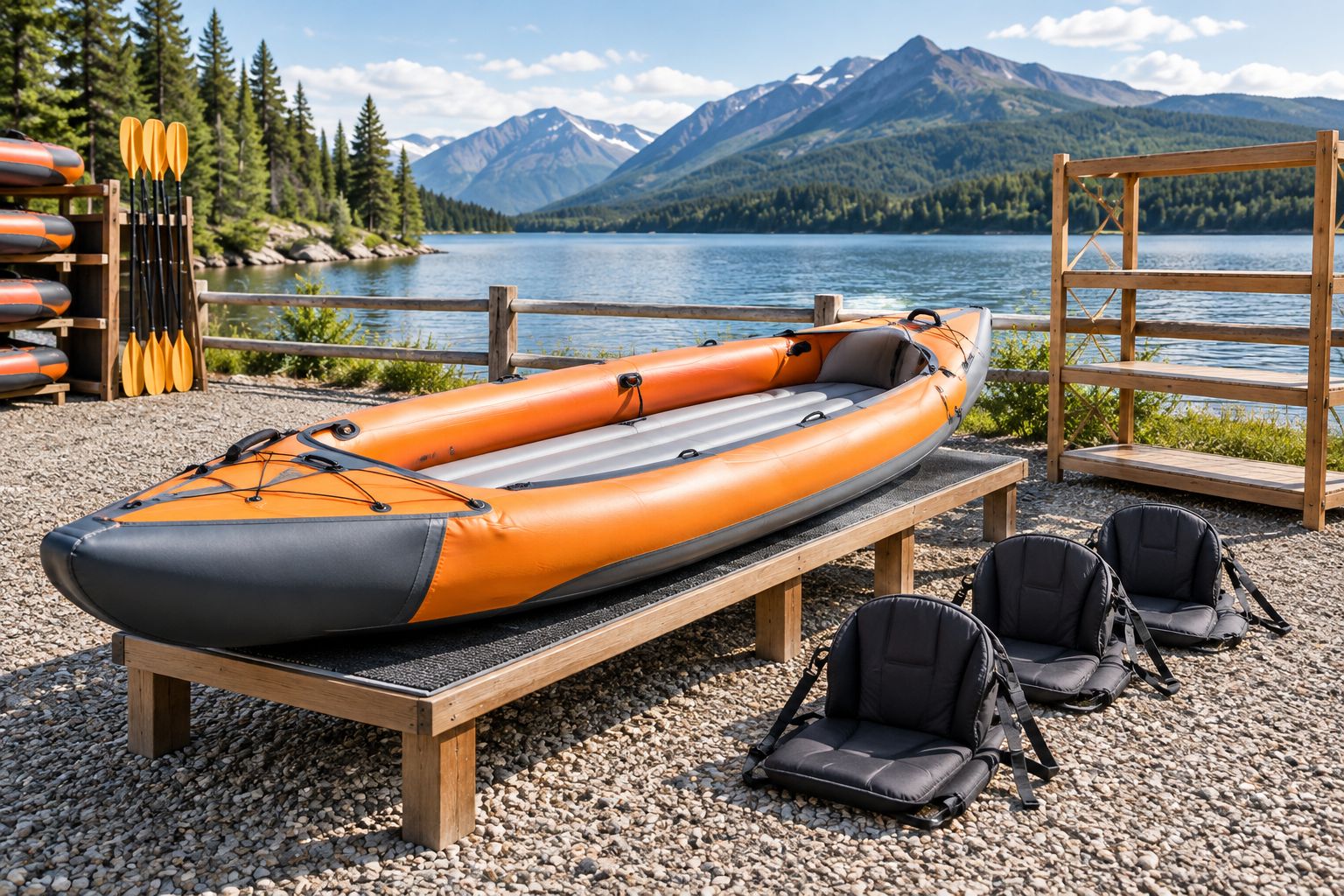
A repaired boat stays out of service until the repair is complete and the required checks are passed. Record the fault, work completed and decision to return it to use.
- Clean and dry boats according to their manuals.
- Follow site-specific biosecurity requirements between venues.
- Log damage against the individual boat's identifier.
- Store approved repair materials with their instructions.
- Keep quarantined boats separate from serviceable equipment.
Review the fleet using session records
Start with a spreadsheet or paper register. Record actual preparation time, faults, repairs and instructor feedback. Use those observations to decide whether the fleet fits your operation.
Do not judge success only by whether a session happened. Look at the effort required to deliver it safely and prepare for the next group. Recurring seat problems, valve issues or drying delays belong in the purchasing review.
Keep your 2026 review specific to each model. Mixing every inflatable boat into one category hides differences in construction, handling and maintenance. Retain the original activity brief so you can check whether the programme has changed since purchase.
- Record preparation and turnaround time in minutes.
- Track defects and periods out of service by boat.
- Gather instructor feedback on handling and recovery.
- Review participant fit across your actual groups.
- Reassess equipment whenever the venue or programme changes.
Compare fleet options for your centre
Choose the operating model before choosing the boat construction. These options serve different needs. None is a substitute for checking the individual manufacturer's intended use.
| Option | Best for | Practical benefit | Key limitation |
|---|---|---|---|
| Single-seat inflatable kayaks | Individual paddling skills sessions with limited transport space | Each participant controls a separate boat; boats pack down after use | Each boat needs its own preparation, inspection and drying routine |
| Tandem inflatable kayaks | Paired paddling within an approved supervised programme | Participants share a boat and practise coordinated paddling | Participant pairing, seating and combined load need careful assessment |
| Drop-stitch inflatable kayaks | Centres assessing a firmer inflated structure | Drop-stitch construction creates rigidity when inflated to the specified pressure | Construction alone does not establish stability, easy recovery or venue suitability |
| Hard-shell kayaks | Fixed venues with suitable transport and storage | No inflation step is required before launching | Boats retain their full hull size during storage and transport |
| Mixed fleets | Centres running distinct sessions at different venues | Boat selection can match the activity rather than force one model into every role | Different equipment adds training, storage and maintenance requirements |
For mobile programmes, assess inflatable options first. For a fixed waterfront operation, compare them directly with hard-shell boats. Packed size is a benefit only when it solves a real operational problem.
Common mistakes outdoor activity centres make
Buying for storage but ignoring drying
A fleet can fit neatly into a cupboard and still overwhelm your drying area. Map the return-from-session workflow before ordering. Include removable components, wet bags and inspection access.
Treating tandem boats as automatic capacity gains
A tandem arrangement changes participant pairing and recovery tasks. Check whether your groups can use it effectively. Do not turn the boat's seat count into a supervision decision.
Applying one pressure setting across the fleet
Different models and chambers have different instructions. Keep the correct settings with each boat's checklist. Remove ambiguity before staff start preparing multiple boats together.
Assuming recreational suitability means commercial suitability
A boat described for leisure paddling still needs confirmation against your centre's intended use. Obtain the documentation before purchase. Keep the commercial-use question separate from the boat's advertised features.
Adding accessories before testing recovery
Extra fittings can complicate boarding, paddling and recovery. Begin with the approved essential setup. Add equipment only after checking its purpose, attachment and effect on your procedures.
FAQ
Are inflatable kayaks suitable for outdoor activity centres?
Inflatable kayaks suit outdoor activity centres when the individual model matches the venue, participants and supervised programme. Confirm intended use and commercial-use terms, then trial preparation, handling and recovery before ordering a fleet.
What's the best inflatable kayak for a beginner group?
The best inflatable kayak for a beginner group is one that fits the participants and supports your approved instruction and recovery procedures. Seat count, construction type and packed size cannot establish suitability on their own.
Are tandem inflatable kayaks better than single-seat kayaks?
Tandem inflatable kayaks suit paired paddling, while single-seat kayaks suit individual boat-control practice. Choose around the session objective, participant pairing and the recovery methods your qualified staff can deliver.
Can an activity centre use inflatable kayaks on the sea?
Sea use requires a kayak intended for those conditions and a programme approved through the centre's risk assessment. Do not extend a sheltered-water activity to coastal water without reassessing exposure, supervision, communications and recovery.
What pressure should activity centre inflatable kayaks use?
Use the pressure specified by the manufacturer for each chamber of the exact kayak model. Check pressure as instructed and follow the guidance for temperature changes and boats waiting ashore.
How should we clean kayaks between Irish venues?
Clean and dry kayaks according to their manufacturer instructions and follow the relevant biosecurity guidance for each venue. Include paddles, footwear and other wet equipment when planning moves between waterbodies.
Should we buy inflatable or hard-shell kayaks for a fixed centre?
Compare both against your storage, launch and session workflow. Hard-shell kayaks avoid inflation, while inflatable kayaks pack down; neither advantage decides participant fit, handling or recovery suitability.
One last thing
Test the return to shore, not just the launch. Before placing a fleet order, walk through unloading, cleaning, inspection, drying and packing with the staff who will do the work. The best choice is the boat your centre can prepare, use and maintain consistently—not the one that looks simplest while still in its bag.