

Do children need a life jacket by law when kayaking in Ireland?
Yes. Children kayaking in the Republic of Ireland must wear a suitable personal flotation device (PFD), such as an appropriate lifejacket or buoyancy aid; in 2026, the key rules cover children under 16 years on open pleasure craft and everyone aboard pleasure craft less than 7 metres long while underway. Carrying the device in the kayak is not enough, and the legal requirement does not make every buoyancy aid suitable for a young child or non-swimmer.
- Children kayaking in the Republic of Ireland must wear a suitable personal flotation device, not simply carry one.
- Irish pleasure-craft rules require children under 16 years to wear a suitable PFD on open craft.
- Everyone paddling a pleasure craft less than 7 metres long must wear a suitable PFD, including accompanying adults.
- Water Safety Ireland distinguishes lifejackets from buoyancy aids: choose for the child's swimming ability, weight and activity.
Do children need a life jacket by law when kayaking in Ireland?
Yes: a child must wear a suitable PFD while kayaking. Irish law uses the broader term personal flotation device, rather than requiring every paddler to wear one particular style of lifejacket.
The Pleasure Craft (Personal Flotation Devices and Operation) (Safety) Regulations 2005, S.I. No. 921/2005, set out the relevant national requirements. Two provisions matter directly to a family kayaking trip:
- Age: children under 16 years must wear a suitable PFD on an open pleasure craft.
- Craft length: everyone aboard a pleasure craft less than 7 metres long must wear a suitable PFD while underway.
For an ordinary family kayak, those requirements overlap. Your child's swimming ability, the short distance to shore and an adult sharing the kayak do not remove the requirement.
Start with how to choose a life jacket size for kids, then check whether the device is suitable for the actual paddling session.
Legal reference for this 2026 guide: the Irish pleasure-craft regulations named above, covering the Republic of Ireland. Check the current legislation through the Irish Statute Book and follow current Water Safety Ireland and Department of Transport guidance. Northern Ireland has a separate legal framework.
Why this matters
The distinction between carrying and wearing is simple. A PFD stored behind a seat cannot provide flotation when a child unexpectedly enters the water.
There is another distinction: meeting a legal equipment requirement is not the same as making the whole outing safe. You still need suitable conditions, a correctly fitted device, close supervision and a way to recover a child from the water.
For family paddling in 2026, make wearing a PFD part of getting ready on land. Do not leave fastening and adjustment until the kayak is moving.
Does the rule change when a child turns 16?
Turning 16 years old does not remove the PFD requirement when paddling a pleasure craft less than 7 metres long. The craft-length rule applies to adults as well as children.
That means a teenager cannot stop wearing a PFD simply because the child-specific age rule no longer applies. An accompanying parent in the same small kayak must wear a suitable device too.
Avoid presenting this as a rule only for younger children. Everyone wearing suitable flotation is the practical starting point for a family kayak trip, not a special precaution for the least confident swimmer.
Does a child in a tandem kayak still need a PFD?
A child needs a suitable PFD in a tandem kayak, even when an adult occupies the other seat. Sharing a craft does not replace individual flotation.
Fit each person's device separately. An adult-sized buoyancy aid tightened around a small child is not automatically suitable, and a child sitting between adults still needs their own correctly sized device.
Before launching, check that the child can sit properly without the PFD pushing up around the face. Check the adult's fit too: a parent needs to remain secure in their own device while helping someone else.
Is a buoyancy aid the same as a lifejacket?
No. Both are types of PFD, but they have different purposes and limitations. A buoyancy aid must not be treated as an automatic substitute for a child's lifejacket.
Water Safety Ireland's guidance distinguishes buoyancy aids, intended to assist suitable swimmers, from lifejackets intended to provide greater support. The manufacturer's instructions determine the intended wearer and use of the individual device.
| Device | Best for | Useful feature | Main limitation |
|---|---|---|---|
| 50 N buoyancy aid | Competent swimmers in sheltered water with help close at hand, where appropriate for the activity | Supports flotation while allowing paddling movement | Not designed to turn an unconscious wearer face-up; unsuitable as a default choice for non-swimmers |
| 100 N lifejacket | Sheltered-water use where the manufacturer's child sizing and activity guidance match | Provides more flotation than a 50 N buoyancy aid and is designed to support a face-up position | Does not guarantee self-righting in every situation, particularly with unsuitable clothing or fit |
The figures describe performance categories in newtons, not a child's body weight. A 50 N label does not mean the device is suitable for a child weighing 50 kilograms.
For a young child or non-swimmer, seek a suitable child-specific lifejacket rather than choosing a buoyancy aid because it looks less bulky. For a competent junior paddler, ask a qualified paddlesports instructor which PFD suits the planned activity and conditions.
Choose flotation for the child and the activity, not simply for freedom of movement. Neither category removes the need for supervision or rescue planning.
Why the right PFD varies between children
The duty to wear suitable flotation stays the same, but the right device depends on the wearer. Check these factors before choosing:
- Swimming ability: a confident swimmer and a non-swimmer do not have the same support needs.
- Body weight: use the manufacturer's stated weight range, not an age estimate or a clothing size.
- Body shape: check whether the device stays secure around the torso without slipping upwards.
- Paddling activity: the device must suit the intended use and allow the child to sit and move properly.
- Water conditions: sheltered instruction and exposed coastal paddling present different demands; equipment alone cannot make unsuitable conditions acceptable.
- Clothing: fit the device over the layers the child will actually wear, then check the manufacturer's guidance about clothing and performance.
Do not buy a larger PFD for a child to grow into. If adjustment cannot produce a secure fit now, it is the wrong fit for the outing.
How do you check a child's lifejacket before kayaking?
Use this sequence before every launch. For your 2026 paddling kit, keep the manufacturer's instructions with the device so that another supervising adult can check it correctly.
- Read the label. Confirm the device's intended activity, weight range and fastening instructions. Do not rely on the colour or the word junior.
- Check condition. Look for damaged fabric, loose stitching, broken buckles, missing straps or other defects. Do not use damaged equipment.
- Fasten correctly. Close every required zip and buckle. Fit crotch straps where supplied, following the instructions rather than improvising their routing.
- Check security. With the child standing, gently check whether the device rides upwards. It must not slip over the chin or ears; follow the manufacturer's fit test.
- Check movement. Ask the child to sit in the kayak on land and make a paddling movement. Confirm that the device does not obstruct normal seating or vision.
- Recheck before launch. Check fastenings again after changing clothing or adjusting the seat. Keep the device on throughout the paddling session.
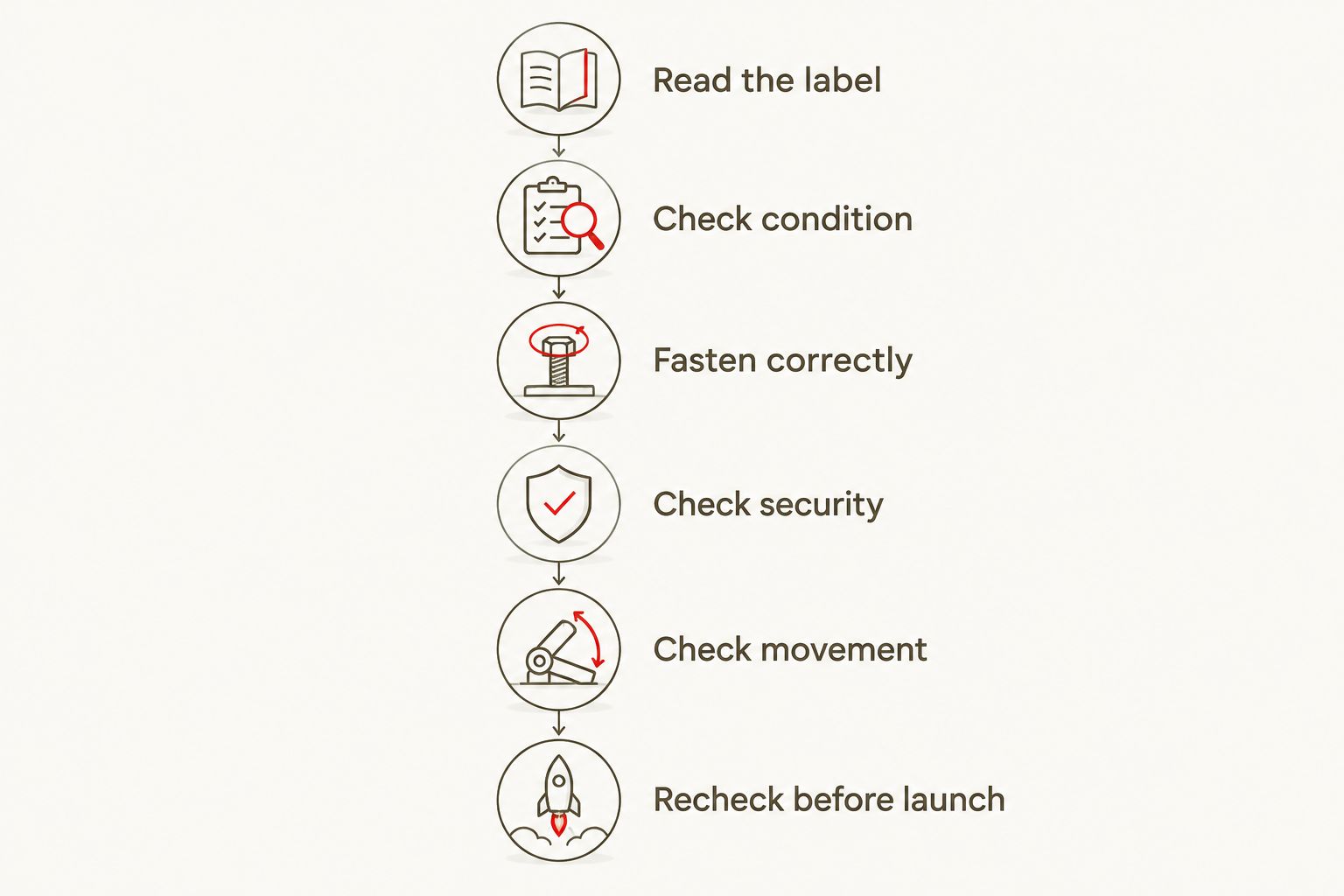
A dry-land fit check does not prove how a device will behave in water. Any familiarisation in water should follow the manufacturer's guidance and take place under controlled conditions with competent supervision, not during an improvised test beside a launch point.
Can a child take the lifejacket off near shore?
Being near shore does not remove the requirement to wear a suitable PFD while kayaking. The same applies to calm water and short trips.
Do not use water depth as the deciding factor. A child who falls from a kayak still needs immediate flotation, and an adult cannot assume that standing up or reaching the bank will be straightforward.
If a child becomes uncomfortable, return to a safe landing place and address the fit on land. Do not continue paddling with the device unfastened or loosened beyond a secure fit.
What else should you check before taking children kayaking?
Start with conditions and your ability to manage a capsize. A suitable PFD supports the wearer; it does not steer a drifting kayak, prevent cold exposure or bring a child back aboard.
Check the following before leaving shore:
- Weather and water: assess wind, current, tide where relevant, visibility and the forecast for the return journey.
- Supervision: have a capable adult actively responsible for the child, rather than assuming everyone in the group is watching.
- Recovery: know how you will assist the child and recover or leave the kayak safely after a capsize.
- Communication: carry a suitable means of calling for help that remains accessible after entering the water.
- Clothing: dress for water exposure as well as the air temperature. A waterproof jacket is not a flotation device or a substitute for immersion protection.
- Shore contact: tell someone your route and expected return, and explain what to do if you do not return.
Choose a supervised introductory session if you cannot confidently manage those checks. A family outing is not the place to learn a recovery method for the first time.
We sell kayaks and outdoor equipment, but choosing a kayak is only part of preparing for a family trip. Sort the child's suitable flotation, fit and supervision before choosing accessories.
What should you ask a kayak hire provider?
Tell the provider each child's age, weight and swimming ability before booking. Ask whether they can supply suitable child-specific PFDs and whether someone will check the fit before launch.
Ask how the session is supervised, what conditions cause cancellation and how a child would be recovered after a capsize. A supplied PFD is not a reason to skip those questions.
For a 2026 family booking, confirm the arrangements directly rather than relying on an old photograph or a general equipment list. If the supplied device does not fit securely, do not launch with it.
FAQ
Do children need a life jacket kayaking in Ireland even if they can swim?
Yes. Swimming ability does not remove the requirement to wear a suitable PFD while kayaking in the Republic of Ireland. It affects which device is appropriate, not whether the child must wear one.
What age must children wear a lifejacket on a kayak in Ireland?
Children under 16 years must wear a suitable PFD on open pleasure craft, and the separate rule for pleasure craft less than 7 metres long applies to everyone aboard while underway. Turning 16 does not exempt a teenager paddling an ordinary small kayak.
Does my child need their own lifejacket in a tandem kayak?
Yes. Each child needs their own suitable, correctly fitted PFD in a tandem kayak. An adult sharing the craft does not replace the child's flotation.
Can my child wear an adult buoyancy aid if I tighten the straps?
Only a device whose manufacturer-stated sizing and intended use suit the child is appropriate. Tightening an adult device does not establish that it fits securely or provides suitable support.
Is a 50 N buoyancy aid suitable for a child who cannot swim?
A 50 N buoyancy aid is not a suitable default choice for a non-swimmer. These buoyancy aids are intended for competent swimmers in sheltered water with help close at hand; seek an appropriate child-specific lifejacket instead.
Can children remove their PFD while paddling close to the bank?
No. Staying close to the bank does not remove the requirement to wear a suitable PFD while kayaking. Land safely before removing or substantially readjusting the device.
Does this kayaking law also cover Northern Ireland?
This article explains the Republic of Ireland's pleasure-craft requirements, not Northern Ireland's legal framework. Check the rules and local access conditions for the exact place you intend to paddle.
One last thing
A child can outgrow a lifejacket without its fabric looking worn. Recheck the labelled weight range and actual fit before the next trip, not just when you buy the device.
Before your next launch in 2026, have the child sit in the kayak wearing the complete outfit and properly fastened PFD. A fit problem found on land is a reason to change the setup, not something to tolerate once afloat.