

How long do inflatable kayaks last?
Inflatable kayaks have no single reliable lifespan in years: construction, use, repairs and storage all affect how long an individual boat remains serviceable. For your 2026 paddling plans in Ireland, judge the kayak by its seams, fabric, valves and pressure retention—not its age alone.
- How long do inflatable kayaks last? Condition and construction matter more than a universal replacement age.
- We recommend checking inflatable kayak seams, valves and pressure retention before trusting an older boat.
- Dry storage, careful handling and correct inflation help protect an inflatable kayak between outings.
- A repairable puncture differs from spreading seam failure; follow the manufacturer's repair guidance.
How long do inflatable kayaks last?
An inflatable kayak lasts only as long as its fabric, seams and air chambers remain fit for use. There is no dependable whole-category expiry date. A calendar cannot tell you whether a valve leaks, a seam is separating or the underside has worn thin.
Start with the manufacturer's manual for your exact model. Check its inspection, inflation, storage and repair instructions, along with any stated service-life guidance. A warranty period is not a prediction of how long the kayak will remain usable.
If you're choosing your first boat in 2026, our guide to kayaks for beginners in Ireland covers the wider buying decision. For lifespan, focus on what you can inspect, maintain and repair.
Use this condition check before deciding whether an older inflatable deserves another outing:
| Check | Serviceable signs | Signs that need attention |
|---|---|---|
| Fabric | Surface remains intact, without exposed reinforcement | Cracking, deep abrasion, peeling or exposed threads |
| Seams | Joins remain closed and retain their original shape | Lifting edges, separation or unusual bulging |
| Valves | Close correctly and retain air | Damaged seals, loose fittings or persistent leakage |
| Chambers | Hold their intended shape at specified pressure | Unexplained pressure loss or distortion |
| Previous repairs | Patch edges remain bonded | Lifting edges, renewed leakage or damage spreading nearby |
Passing a visual check alone does not prove a kayak is safe. Combine inspection with the manufacturer's pressure-check procedure, and resolve defects before launching.
Why this matters
A lifespan estimate is useful only if it helps you make a decision. You need to know whether to keep using the kayak, repair a specific fault or stop using it until a specialist has assessed the damage.
For paddlers in Ireland, the practical question is also where the boat dries after a wet outing. A kayak that fits neatly into a bag still needs somewhere suitable to drain, open out and dry before storage.
Choose an inflatable kayak around the care routine you can actually maintain. Compact storage is a benefit. Packing a damp boat away and forgetting it is not a maintenance plan.
Why inflatable kayak lifespan varies
These factors explain why two apparently similar kayaks do not necessarily age alike. None provides a reliable years-to-failure calculation on its own.
- Construction. Fabric reinforcement, coatings, chamber design and seam construction differ between models. Read the specifications rather than judging durability from appearance.
- Sun and heat exposure. UV exposure ages materials, while heat changes air pressure. Follow the manufacturer's instructions when a boat sits out of the water.
- Abrasion and punctures. Dragging across gravel, rubbing against rough banks and carrying exposed hooks create avoidable damage risks.
- Inflation practice. Different chambers can have different pressure requirements. Use the specified pressure and a suitable gauge rather than judging firmness by hand.
- Cleaning and drying. Sand, salt residue and trapped moisture need attention after use. Remove debris and dry accessible surfaces before packing.
- Storage and repairs. Storage conditions, tight folds and incompatible repair materials affect the boat's condition. Use the model's care and repair instructions.
Frequency of use matters, but the number of outings does not tell the whole story. A careful launch from a clear bank creates different wear from repeated dragging over sharp stones.
Does kayak construction change how long it lasts?
Construction changes how you inspect and care for an inflatable kayak. It does not supply a guaranteed lifespan. Check the actual model rather than assuming that a material name or construction label settles the question.
A fabric-covered kayak can hide moisture or debris between its cover and internal chambers. An exposed coated-fabric hull makes the outer surface accessible, but that surface still needs protection from abrasion. Drop-stitch construction describes an internal structure; it is not a promise that seams, valves or coatings cannot fail.
| Construction | Best for | Practical advantage | Care drawback |
|---|---|---|---|
| Fabric-covered chambers | Owners prepared to remove and dry accessible components | Separate components can be inspected individually where the design permits | Moisture can remain between the cover and chambers |
| Exposed coated-fabric hull | Owners who want direct access to the outer surface | Wear and surface contamination are easier to see | The exposed hull still needs careful handling on rough ground |
| Drop-stitch panels | Buyers choosing a design with inflated structural panels | Panels form part of the kayak's intended shape and stiffness | Correct chamber pressure and seam inspection remain essential |
Do not buy on a promised lifespan alone. For a 2026 purchase, ask whether the instructions explain drying, valve servicing and approved repairs clearly. Confirm which components are replaceable before relying on that feature.
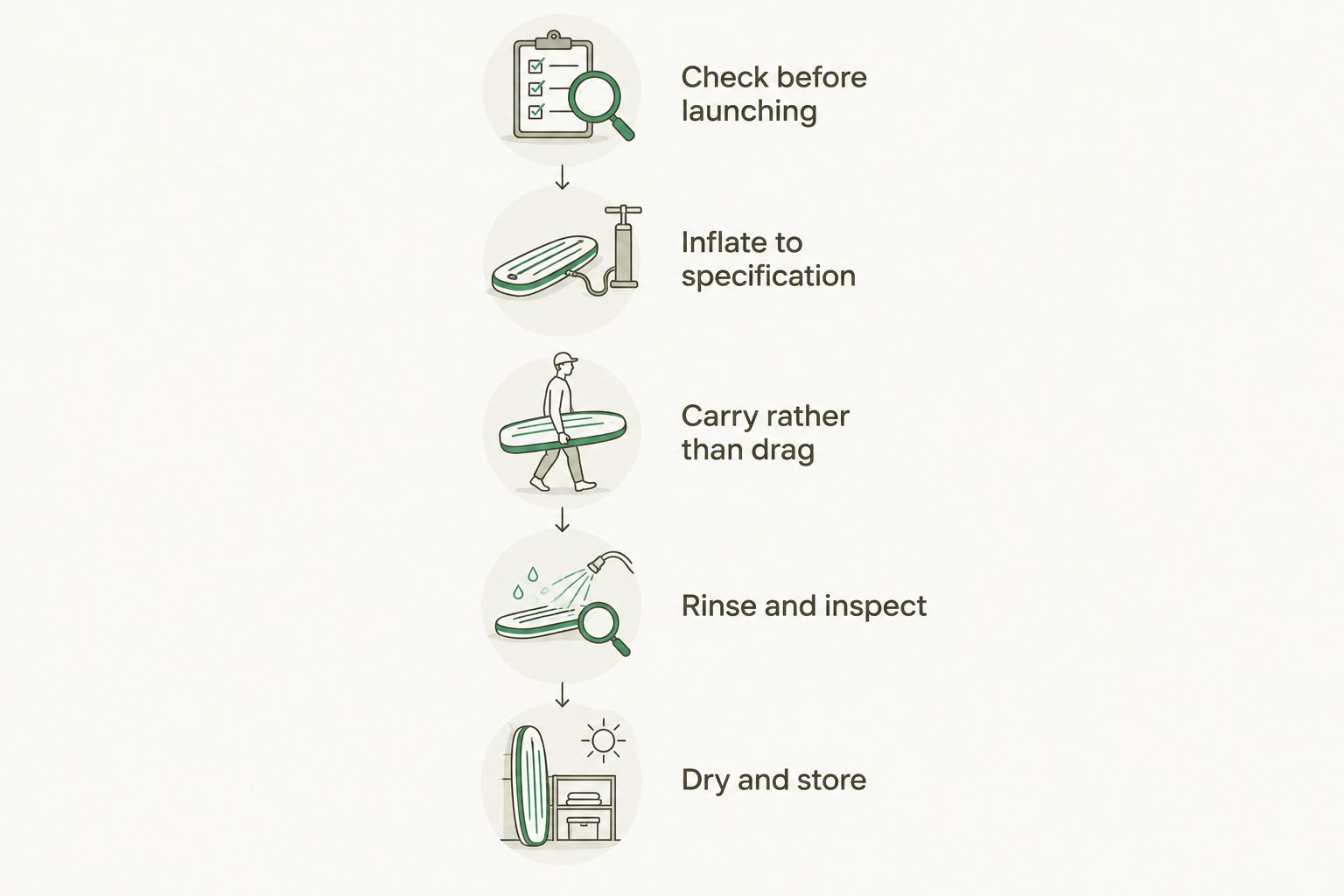
How do you help an inflatable kayak last longer?
Build your routine around the whole outing, not just the paddle. Preparation, launching, cleaning and storage each give you a chance to prevent damage or catch it early.
Check before launching
Unroll the kayak on clean ground. Look along the underside, folds, seams and valve surrounds before inflation, then inspect the inflated shape using the manufacturer's instructions.
Remove grit from valve areas before closing them. Fit seats and removable components correctly, and keep sharp accessories away from the chambers. Do not launch with an unexplained leak.
Inflate to specification
Follow the chamber order and pressure limits in the manual. Never borrow a pressure figure from a different kayak, even if both boats look similar.
Use a compatible pump and a gauge suitable for the specified pressure. Our guide to foot pumps for inflatable kayaks and paddleboards explains the equipment choice; your kayak's own instructions still control inflation.
Carry rather than drag
Inspect the launch point for sharp stones, broken glass and other hazards. Use the intended carrying points and get help when the loaded boat is awkward to handle.
Keep hooks, knives and other sharp tackle secured. If you're fishing from an inflatable, organise tackle before launching rather than leaving loose hooks beside an air chamber.
Rinse and inspect
After use, remove sand and other debris. Rinse salt residue with fresh water, and use only cleaning products approved for the kayak's material.
Check wear points while cleaning. The underside, seat contact areas, folds and fittings deserve attention because dirt can hide damage there.
Dry and store
Remove detachable parts where the manual permits. Drain trapped water, open accessible areas and let the boat dry before packing it away.
Store it as the manufacturer directs, away from damaging heat, sunlight and sharp objects. For your 2026 routine, decide where drying happens before choosing where the packed bag lives.
How can you tell an inflatable kayak is wearing out?
Look for changes, not just obvious holes. New distortion, peeling material or a seam that no longer lies flat deserves attention even when the boat still appears to hold air.
Inspect the boat in good light. Compare matching areas on opposite sides, and check whether a suspicious mark is surface dirt, superficial scuffing or damage through the coating.
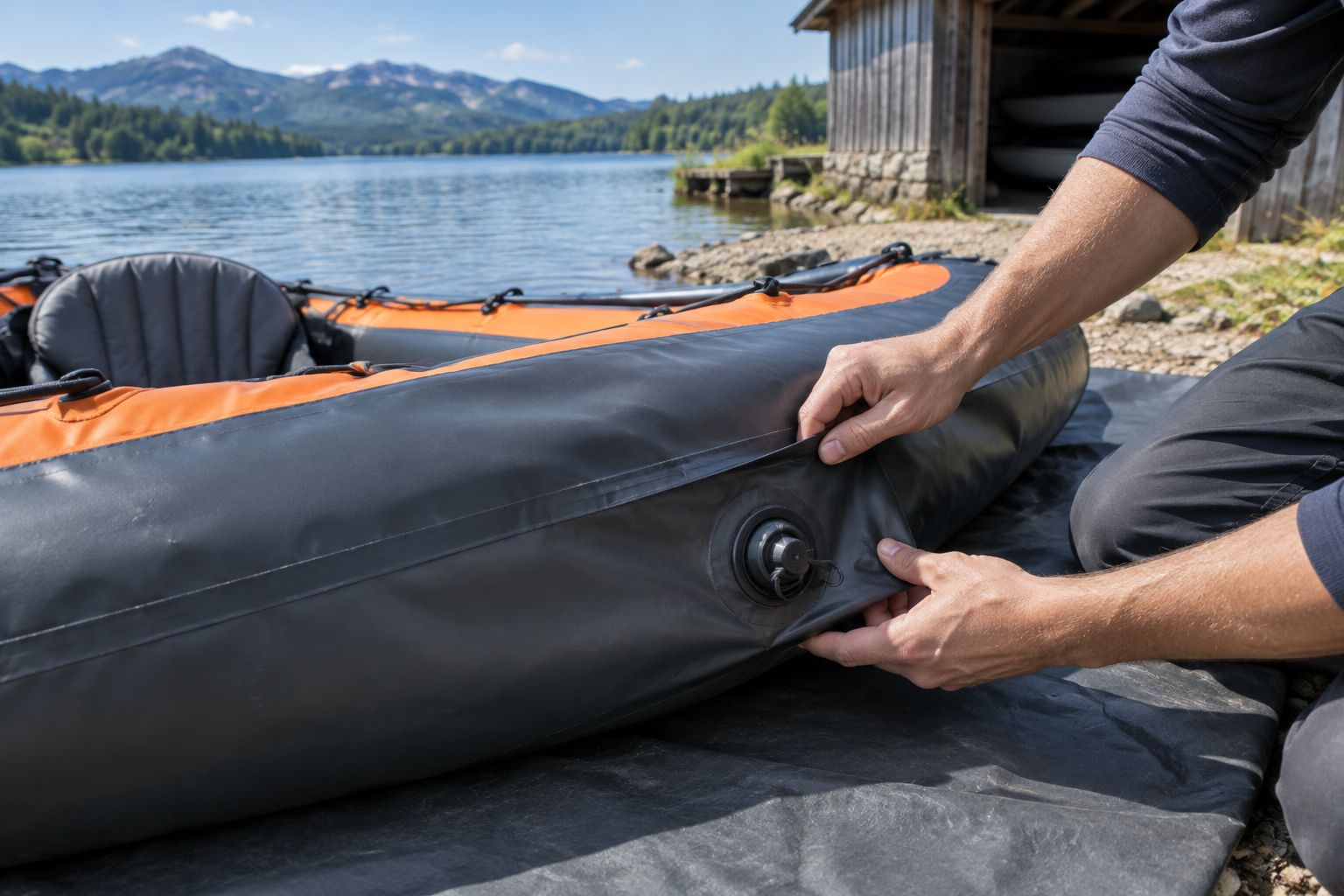
Treat these as reasons to stop and investigate:
- A chamber repeatedly loses pressure without an identified explanation.
- Seam edges lift, separate or change shape.
- Fabric becomes cracked, brittle, sticky or starts peeling.
- A valve remains unreliable after approved cleaning or servicing.
- A repaired area leaks again or damage spreads beyond it.
Do not use repeated topping-up as a substitute for finding a fault. Temperature changes affect pressure, so compare readings under similar conditions and follow the manufacturer's testing method. Suspected leakage needs a diagnosis before your next trip.
Should you repair or replace an inflatable kayak?
An isolated puncture is a different problem from widespread material deterioration. Repair decisions depend on the damage location, the kayak's construction and the manufacturer's limits—not simply whether a patch can cover the mark.
Use compatible repair materials and follow the full preparation and curing instructions. If damage involves seams, internal structures or areas the manual excludes from home repair, get advice from the manufacturer or a qualified repairer.
| Decision | Best for | Advantage | Limitation |
|---|---|---|---|
| Approved home repair | Isolated damage explicitly covered by the repair instructions | Lets you address a defined, permitted fault | Depends on correct materials, preparation and testing |
| Specialist assessment | Uncertain leaks, seam concerns or structural damage | Gives you a damage-specific repair decision | Does not guarantee that a safe repair is possible |
| Retire the kayak | Damage judged beyond safe repair | Removes an unserviceable boat from use | Requires a replacement if you want to continue paddling |
Keep a simple repair record in 2026. Note the location, repair material and any subsequent pressure loss. A recurring fault is easier to recognise when you are not relying on memory.
Can an unused inflatable kayak deteriorate in storage?
Yes. An unused inflatable kayak still needs inspection because storage does not stop material ageing or prevent damage from heat, damp, pests and contact with sharp objects.
Unpack it before the next outing, not at the launch point. Check folds, valves, seams and previous repairs, then carry out the manufacturer's inflation and pressure-retention checks.
For winter storage in Ireland, choose a suitable dry space rather than assuming a closed garden shed or car boot will protect the boat. Check the actual conditions where you plan to leave it.
Is an older inflatable kayak safe to buy second-hand?
Age alone cannot establish whether a second-hand inflatable kayak is safe. Ask to inspect it inflated, read its model information and examine any repairs before making a decision.
Ask how it was stored and whether it has leaked. Check that the manual, pressure specifications and suitable repair materials can be identified. Missing care information makes a proper assessment harder.
Walk away from unexplained pressure loss or visible structural damage. A seller's assurance is not a replacement for an inspection or manufacturer guidance.
FAQ
How long do inflatable kayaks last with good care?
Good care does not establish a fixed lifespan for an inflatable kayak. Follow the model's service-life guidance and judge continued use by fabric condition, seam integrity, valves and pressure retention.
Does salt water ruin an inflatable kayak?
Salt-water use requires the cleaning routine specified by the manufacturer. Rinse salt residue with fresh water and dry the kayak and accessible components before storage.
Can I leave my inflatable kayak inflated between trips?
Follow your kayak manufacturer's storage instructions before leaving it inflated. Keep it away from damaging heat and sunlight, and check the required storage pressure rather than leaving it at paddling pressure by default.
Does a puncture mean I need a new inflatable kayak?
A puncture does not automatically mean you need a new kayak. An isolated fault can qualify for an approved repair, but seam damage, spreading deterioration and excluded repair areas need specialist advice.
Why does my inflatable kayak feel softer after launching?
Cooling can reduce the air pressure inside an inflatable kayak. Check pressure using the manufacturer's method, and investigate persistent or unexplained pressure loss rather than assuming temperature explains it.
Can I pack an inflatable kayak away wet?
Do not leave an inflatable kayak stored wet. If you must bag it temporarily for transport, unpack it afterwards, drain trapped water and dry accessible surfaces before longer storage.
What's the most useful check before using an older inflatable kayak?
Check the kayak's seams, fabric, valves and pressure retention together. No single check proves serviceability, and unresolved leaks or structural defects mean you should not launch.
One last thing
A kayak can feel dry outside while water remains beneath a removable floor or inside its fabric cover. Check the hidden areas your model lets you access before closing the bag.
Make that your final check after every outing in 2026. The storage bag is for a dry kayak, not for finishing the drying process.