

Is a dry bag actually waterproof?
Yes, a dry bag is waterproof when its fabric, seams and closure are designed to keep water out and you seal it correctly. That does not mean every dry bag is safe to submerge: protection from rain and splashes is different from protection underwater.
- Is a dry bag waterproof? Yes, but rain protection does not automatically mean submersion protection.
- A roll-top dry bag needs an undamaged body and a correctly closed opening to protect your kit.
- For kayaking, choose documented immersion protection; for hillwalking, prioritise reliable closure and protected packing.
- IEC 60529 distinguishes temporary immersion protection from protection under manufacturer-specified deeper immersion conditions.
Is a dry bag actually waterproof?
A dry bag is only as waterproof as the complete bag, including its opening. Waterproof fabric alone does not establish whether water can enter through stitching, a zip, a valve or an incorrectly folded closure.
Choose protection for the exposure your equipment will face. Our guide to dry bags for hillwalking and bushcraft trips in Ireland covers packing for trips on land; paddling adds the possibility of immersion.
| Storage option | Best for | Main advantage | Main limitation |
|---|---|---|---|
| Roll-top dry bag with stated rain and splash protection | Spare clothing inside a walking rucksack | Flexible storage that separates dry kit | Do not assume it can withstand immersion |
| Bag with documented immersion protection | Equipment exposed to accidental dunking | Protection supported by stated test conditions | Depth, duration and closure requirements still apply |
| Water-resistant kit bag | Carrying equipment in damp conditions | Useful general storage | Water resistance is not proof of a watertight enclosure |
| Container with documented immersion protection | Water-sensitive valuables | A defined enclosure with stated protection | Its seal still needs cleaning, inspection and correct closure |
For a 2026 purchase, check the exact model's instructions rather than relying on the words dry bag in a listing. No stated immersion protection means you should not plan to submerge it.
Why this matters
A wet spare jumper is inconvenient. A wet sleeping bag or failed phone creates a more serious problem when you need warmth or communication outdoors.
Start with the consequence of a leak. Clothing inside a rucksack needs protection from rain entering the pack, while equipment carried on a kayak also needs protection against a possible capsize.
We recommend choosing dry storage by exposure first and capacity second. A bag that holds everything but cannot close properly is the wrong size for that load.
How do you close a roll-top dry bag properly?
Follow the instructions supplied with your particular bag. Roll-top designs differ, so there is no universal roll count that establishes waterproofness across every model.
- Inspect the bag. Check the body, base and seams for cuts, worn patches or separation. Check that the buckle and closure strip are intact.
- Pack dry kit. Keep wet clothing and damp towels outside the compartment holding your dry layers.
- Leave closure space. Stop filling before the contents reach the area needed to fold the opening correctly.
- Clean the opening. Remove grit, grass and anything caught between the surfaces that will fold together.
- Roll and fasten. Flatten the opening, make the folds specified by the manufacturer and secure the fastening as directed.
- Check the seal. Make sure bulky contents are not pushing against the folds or pulling the opening apart.
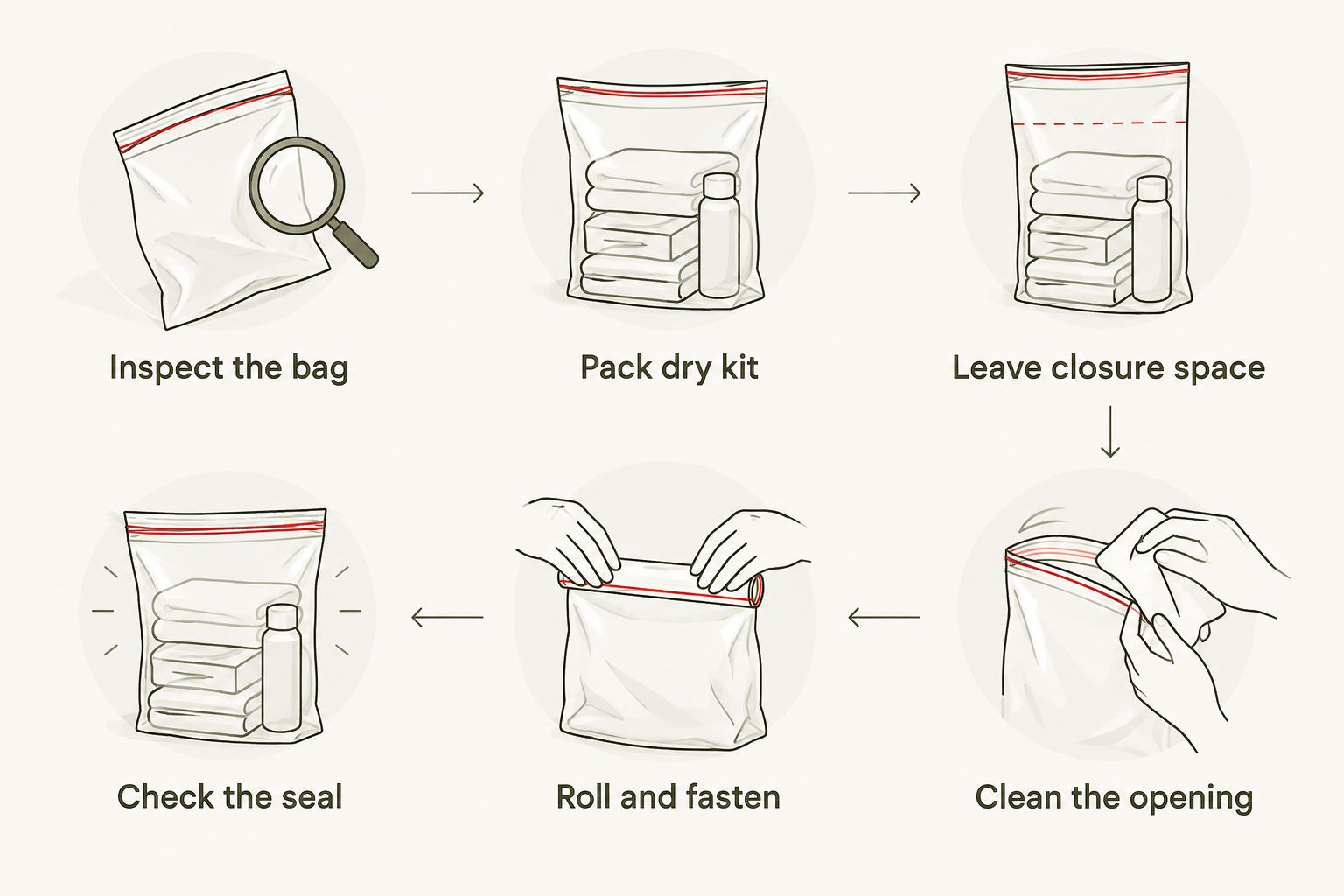
The buckle holds the closure in position; fastening it is not a substitute for making the folds. If you cannot complete the specified closure without forcing the contents down, remove equipment or choose a larger bag.
Why dry-bag waterproofness varies
The same description can cover bags intended for different uses. These construction and use factors determine whether a particular bag suits your trip:
- Body material: The fabric or film must remain intact. A puncture creates a route for water regardless of the original specification.
- Seam construction: Joined panels need a waterproof joining method. Stitching alone does not establish that a seam is watertight.
- Closure design: Roll tops, specialist zips and other closures have different operating instructions and limitations.
- Packing level: Overfilling leaves insufficient material to close a roll top as intended.
- Exposure: Rain, splashes and immersion place different demands on the enclosure. Underwater pressure increases with depth.
- Condition: Dirt, abrasion, damaged coatings and worn sealing surfaces can compromise protection.
When comparing dry bags in 2026, read the limitations alongside the headline description. An explanation of intended use is more useful than an unsupported claim that a bag is completely waterproof.
Can you put a dry bag underwater?
Only deliberately submerge a dry bag when its manufacturer states that the complete bag is suitable for immersion under specified conditions. A bag sold for rain and splash protection is not automatically suitable for swimming, towing or underwater storage.
Keep the distinction between an accidental dunk and sustained immersion clear. Do not extend a brief-immersion claim to a longer period or greater depth.
For kayaking, pack around the possibility of getting wet without treating the bag as infallible. Put essential electronics in an additional enclosure whose protection matches the intended exposure, and inspect both closures before launch.
A dry bag is storage equipment, not a substitute for a life jacket or buoyancy aid. Trapped air does not turn an ordinary bag into personal flotation equipment.
What do IPX7 and IPX8 mean for waterproof bags?
IEC 60529 defines the IP classification system for enclosure protection. Where a bag manufacturer supplies an IP rating, check that the rating applies to the complete bag with its closure secured as instructed.
For the small enclosures relevant to this guide, IPX7 describes temporary immersion testing at 1 metre for 30 minutes under the standard's test conditions. It is not an unrestricted promise of protection during swimming, repeated handling or every form of water exposure.
IPX8 covers immersion under conditions specified by the manufacturer and agreed for the product. Read those conditions: the code alone does not tell you the permitted depth and duration.
| Marking or description | What to check | What not to assume |
|---|---|---|
| Water-resistant | The stated intended use | That it is suitable for immersion |
| Waterproof, without test details | Closure instructions and exposure limits | Unlimited protection underwater |
| IPX7 | Whether the complete enclosure carries the rating | That moving water or longer immersion is covered |
| IPX8 | The manufacturer's specified depth and duration | That every IPX8 product has identical limits |
For a 2026 buying decision, an actual rating with clear instructions is more useful than an isolated waterproof claim. Do not transfer a rating from an internal pouch to the outer carry bag, or from one model to another.
How should you pack a dry bag for an Irish outdoor trip?
Keep dry equipment together and wet equipment separate. A waterproof enclosure cannot remove moisture from clothing you put inside it.
For hillwalking, place your spare layers and sleeping equipment inside protected storage within the rucksack. Keep sharp tools and exposed hooks away from the bag's fabric, including equipment stored in neighbouring compartments.
For paddling, choose a storage position that does not interfere with your movement or access to safety equipment. Follow the kayak or paddleboard manufacturer's guidance on carrying and securing luggage; do not improvise a tether around your body.
Pack frequently used items where you can reach them without emptying the main dry compartment. Every opening is a chance to introduce rain, spray or wet hands.
A practical packing check for your next 2026 trip is simple: can you close the bag correctly, carry it without stressing the opening, and reach essential items without exposing everything else?
Should you put a phone inside a dry bag?
Use a phone enclosure with documented protection appropriate to the exposure, rather than relying only on a general-purpose dry bag. A separate case also lets you access the phone without opening the compartment holding spare clothing.
Keep the phone enclosure accessible without compromising safe movement. Do not assume a dry bag protects a phone from impact, crushing or temperature simply because it excludes water.
Can you pack a wet jacket with dry clothes?
Keep a wet jacket separate from dry clothes. Water already inside the bag can wet the contents even when no water enters from outside.
If space is limited, use separate enclosed compartments and check that each closes properly. Do not force extra clothing into the closure area of the bag holding your dry layers.
How can you check a dry bag before trusting it?
Start with inspection and the manufacturer's testing advice. A home check helps you find obvious problems; it does not certify a bag or establish an immersion rating.
- Look closely at the base, folded areas and panel joins.
- Flex the opening gently and check for cracking or separation.
- Examine the closure for sand, dried mud and trapped fibres.
- Check any zip or valve according to its instructions.
- If the manufacturer permits a water check, use dry absorbent paper inside instead of valuable equipment.
- Dry the outside before opening so you do not mistake drips from the opening for a leak.
Do not submerge a splash-protection bag simply to see what happens. Test within its stated use, and retire it from protecting essential kit if you find damage or unexplained moisture.
A bag that passes a home check still needs inspection before later trips. Dragging it over rough ground or packing it against a hook can change its condition after that check.
How do you clean and store a dry bag?
Follow the care instructions for the bag's material and closure. Remove dirt before it becomes trapped in folds or sealing surfaces, and use only the cleaning products the manufacturer allows.
After use, empty the bag and let the inside and outside dry before storage. Putting a damp bag away closed traps moisture with it.
Avoid storing sharp equipment inside an unprotected dry bag. Keep the closure relaxed during storage if the manufacturer's instructions call for it, rather than leaving it tightly folded indefinitely.
Before your first outing after storage in 2026, repeat the inspection. Look at the bag itself rather than assuming its condition is unchanged because it has not been used recently.
FAQ
Is a dry bag waterproof in heavy rain?
A dry bag designed for rain protection keeps rain out when its body, seams and closure are intact and you close it correctly. Check the exact model's intended use and keep the opening sheltered when accessing equipment.
Can I swim with a dry bag?
Use a bag for swimming only when its manufacturer explicitly approves that use. A general dry bag is not automatically a swimming bag, tow float or personal flotation device.
How many times should I roll the top of a dry bag?
Make the number of rolls specified by the bag's manufacturer. Leave enough empty space to complete those folds without contents pressing against the closure.
Why is the inside of my dry bag damp?
Moisture inside a dry bag can come from wet contents, condensation, an opening exposed during use or a leak. Dry the bag and inspect its body, seams and closure before using it again for essential equipment.
Does IPX7 mean a dry bag is fully waterproof?
IPX7 describes temporary immersion protection under defined test conditions, including 1 metre for 30 minutes for small enclosures. It does not mean unlimited depth, unlimited time or protection during every activity.
Is a waterproof tackle bag the same as a dry bag?
A waterproof tackle bag and a dry bag are not automatically interchangeable. Compare the complete enclosure's stated exposure limits, construction and closure instructions rather than the product category alone.
Will a dry bag float if I drop it?
Do not assume a packed dry bag will float. Its behaviour depends on its contents and trapped air, and floating does not establish that the closure will keep water out.
One last thing
Dry the outside before you open the bag. Water sitting around a closure can fall onto dry contents as you unroll it, even when the bag has kept water out throughout the trip.
Move under shelter, wipe around the opening and keep wet hands away from spare layers. That final handling step matters as much as closing the bag correctly before you leave.