

Gas camping stoves for outdoor education groups: complete 2026 guide
Outdoor education gas camping is supervised outdoor cooking with portable gas stoves, aimed at teaching practical skills and preparing meals for learners. This 2026 guide covers gas camping stoves for outdoor education groups in Ireland, where equipment choice must account for learner experience, staff supervision, cookware and changing weather.
- For gas camping stoves for outdoor education, choose controllable cooking stations before adding more burners.
- We recommend the GoSystem Dynasty Compact II for small outdoor cooking stations, not simultaneous multi-pan meals.
- Match camping cookware and the exact approved fuel to each stove before learners arrive.
- Use gas stoves outdoors only, with trained supervision and a clear shutdown procedure.
Why gas camping stoves matter for outdoor education groups
A group cooking lesson is not just a bigger camping meal. You need learners to see the controls, understand the hazards and practise without crowding a hot pan. Choose equipment around the lesson, not just the number of mouths to feed.
Start with your existing pots and menu. Our guide to camping cookware for group trips in Ireland helps you consider that part of the setup before choosing burners.
Your constraints decide the format. A walking group needs manageable loads. A base-camp class needs work surfaces and clear cooking stations. An instructor preparing food while learners complete another activity needs a different arrangement again.
For your 2026 programme, write separate requirements for teaching and catering. A stove that suits a small demonstration does not automatically suit a shared meal with several pans. Keep a no-cook alternative ready when conditions or supervision make cooking unsuitable.
How to choose and use your group cooking setup
Define the lesson before choosing the stove
Write a simple session plan on paper first. Decide whether learners will boil water, simmer a meal or watch an instructor demonstrate safe operation. Those tasks place different demands on the stove and the person supervising it.
Separate food preparation from burner operation. Learners can measure ingredients, organise utensils and discuss fuel choices without all handling a lit stove. This gives everyone a useful role while keeping the cooking area manageable.
Make the success criteria visible. A finished meal is only part of the outcome; learners should also explain why the stove position, cookware and shutdown sequence matter. Do not make speed the main measure of a beginner session.
- Name the cooking skill you want learners to practise.
- List the meal, pots and utensils needed for that skill.
- Decide which tasks learners perform and which staff control.
- Write the conditions that will stop the cooking activity.
- Prepare an alternative activity that needs no flame.
Match the stove format to the journey
Lay out your existing equipment before buying anything. Compare packed size, the assembled cooking position and the way the pot sits on its supports. Read the stove instructions rather than judging suitability from a photograph.
A tabletop cooker belongs on a suitable level surface. A canister-top stove puts the pot above the fuel container, so assess the complete setup carefully. A remote-canister stove separates burner and fuel through a hose, but that hose introduces another item to position and inspect.
For Ireland trips in 2026, assess the route and cooking site together. Carrying equipment to a sheltered campsite is different from running a lesson at an exposed stopping point. Do not choose a compact stove and then compensate with oversized cookware.
- Identify whether equipment travels by vehicle or in rucksacks.
- Check the complete stove-and-pot arrangement while cold.
- Compare the stove's permitted cookware with your existing pots.
- Confirm that the site offers a suitable outdoor cooking position.
- Reject any setup that depends on improvised supports.
The decision sequence is straightforward: define the activity, inspect the stove format, then check the cookware and fuel. Leave the purchase until those checks agree.
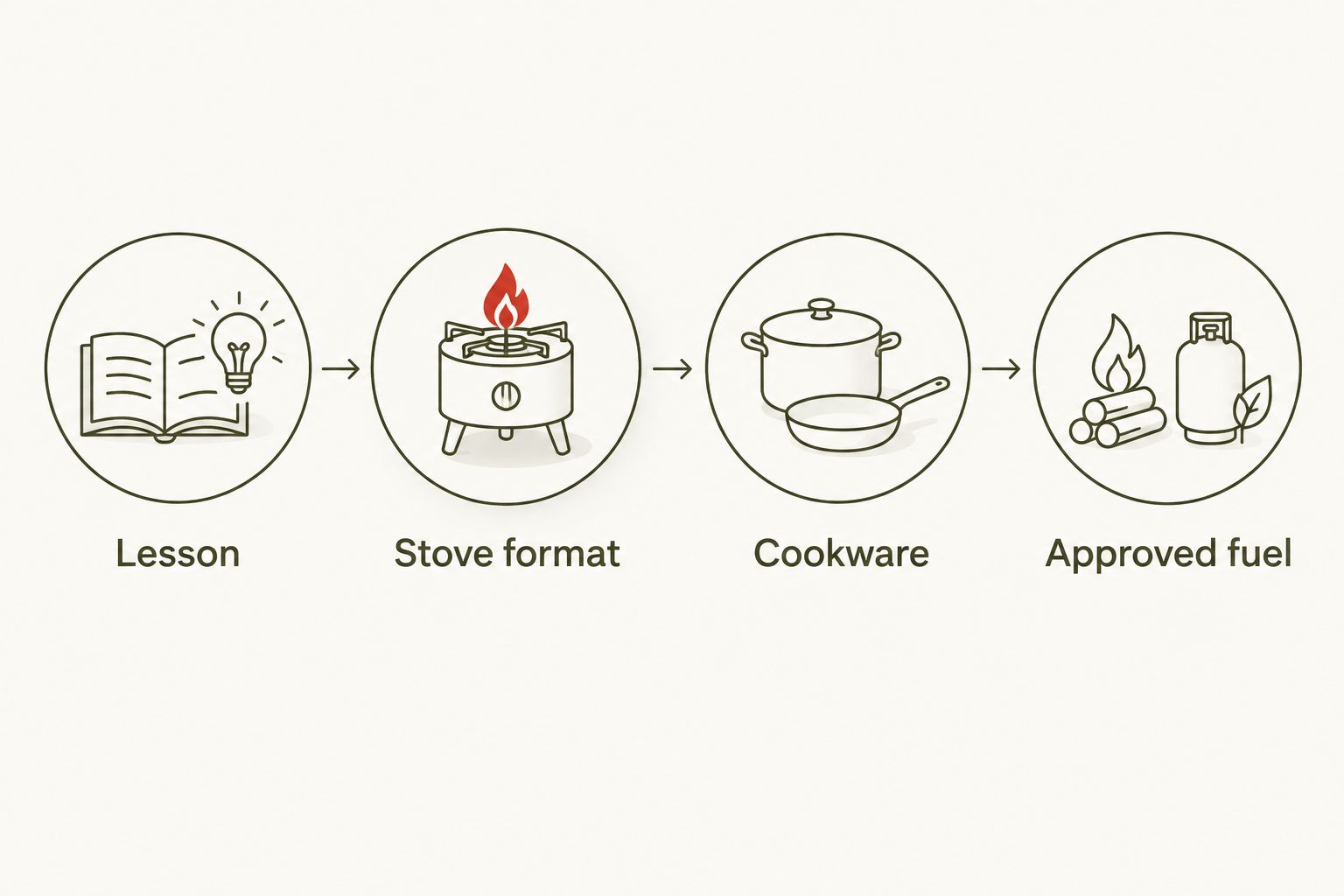
Check the cookware and approved fuel together
Use the stove manual and fuel label as your starting point. Record the exact connection and fuel specification the manufacturer permits. Similar-looking cartridges are not proof of compatibility, and an adapter is not a substitute for approval.
Our guide to choosing the right camping stove fuel type explains the selection questions. Keep the final decision tied to the instructions for your exact stove.
We recommend the GoSystem Dynasty Compact II for small outdoor cooking stations, not simultaneous multi-pan meals. Its supplied description identifies a self-contained, single-burner portable gas cooker. Check its manual for fuel, cookware limits and operating conditions before adding it to a teaching kit.
For water-heating equipment, the NGT Aluminium Outdoor Kettle has a stated capacity of 1.1 litres, a weight of 170 g and dimensions of 152 × 88 mm. Those figures help with packing; they do not establish compatibility with a particular stove. Confirm the kettle base sits securely on approved pot supports.
- Record the approved fuel beside each stove's equipment entry.
- Check seals and connections as directed by the manufacturer.
- Confirm permitted pot sizes before planning the menu.
- Label incompatible fuel systems clearly in the equipment store.
- Keep the operating instructions with the group kit.
Set up the cooking area before learners gather
Walk the site without carrying a lit stove. Choose a level, stable outdoor position away from tent fabric, dry vegetation and through-traffic. Follow the manufacturer's required clearances rather than inventing a universal distance.
Gas stoves produce carbon monoxide when combustion is incomplete. Never use an outdoor camping stove inside a tent, tent porch, vehicle or other enclosed space. Rain is a reason to change the plan, not to move the burner into accommodation.
Create separate places for preparation, cooking and serving. Keep the route to drinking water and washing facilities clear. An instructor should see the controls and hot cookware without standing where learners need to pass.
- Position the stove on the surface specified in its instructions.
- Keep fuel away from heat and direct sunlight.
- Move bags, loose clothing and spare utensils out of the cooking area.
- Identify where hot cookware will rest after removal.
- Check that emergency access remains clear.
A well-organised station makes the lesson easier to follow. Demonstrate the layout while everything is cold, so learners understand where they belong before you introduce a flame.
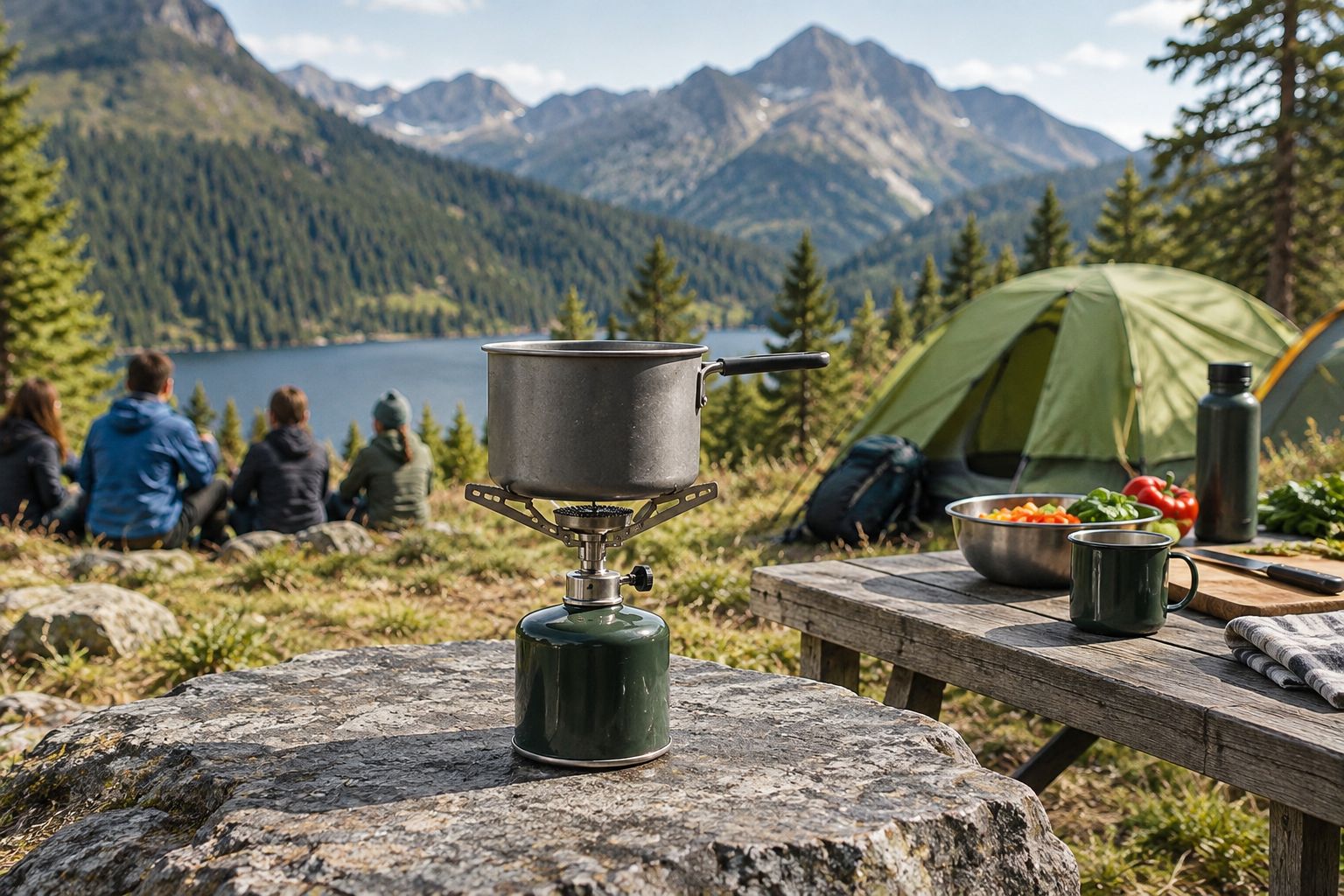
Demonstrate the controls before handing over tasks
Start with a cold demonstration using the manufacturer's instructions. Show the control, fuel connection, ignition method and shutdown sequence. Explain which surfaces remain hot after the flame disappears.
Do not treat built-in ignition as a complete safety system. Staff still need to recognise a failed ignition attempt, a suspected leak and an unstable pot. If you suspect a leak, stop using the equipment and follow the manufacturer's instructions; never search for a leak with a flame.
In your 2026 teaching plan, make supervision a named responsibility. Follow your organisation's safeguarding and activity policies rather than inventing a universal learner-to-stove ratio. Add another cooking station only when staff can supervise it properly.
- Demonstrate assembly and controls with the stove cold.
- Explain the permitted ignition sequence from the manual.
- Assign a clear operator and supervisor for each active station.
- Keep learners from reaching across the burner or hot cookware.
- Practise the shutdown sequence before cooking starts.
Test the menu before the group session
Run the planned meal yourself using the exact stove, cookware and approved fuel. Record what happens instead of relying on an advertised boil time. Include preparation, heating, serving and cooling in the rehearsal.
Wind and temperature affect the cooking setup. Follow the stove instructions on wind protection; never wrap a windscreen around a fuel container or improvise shielding that traps heat. If conditions prevent safe operation, use the alternative meal plan.
Match equipment to the task, not to an assumed group-serving figure. A 1.1-litre kettle is a water-heating item, not proof that a whole class can be served in a single batch. Determine quantities from your actual menu and the cookware's safe working limits.
- Rehearse the complete recipe with the intended equipment.
- Record fuel use from your own trial rather than guessing runtime.
- Check simmer control for food that needs gentle heat.
- Include handwashing and food-hygiene arrangements in the plan.
- Confirm a practical no-cook meal for cancelled cooking sessions.
Once the requirements are clear, we offer a single-burner cooker and a small outdoor kettle to consider. Check compatibility before treating them as a paired setup. Neither product replaces your session risk assessment or the stove's operating instructions.


Inspect and record the kit after every session
Let the stove and cookware cool before packing. Shut down and disconnect fuel only as the manufacturer directs. Keep used equipment separate from checked equipment until inspection is complete.
Use a paper equipment log or an ordinary spreadsheet. Record the stove identity, inspection findings and any faults reported during the session. Remove suspect equipment from use; do not leave the next instructor to discover the problem at ignition.
For the rest of your 2026 programme, keep the same approved setup wherever practical. A familiar system supports consistent teaching, but familiarity never replaces the pre-use check.
- Clean and dry equipment according to its instructions.
- Inspect pot supports, controls, seals and hoses where fitted.
- Record damage and remove faulty equipment from the active kit.
- Store fuel as directed by its label and your organisation's policy.
- Review the menu and station layout after the lesson.
Compare the options for your group
There is no universal group stove. Choose the format that suits your cooking task and transport plan, then check the exact model's instructions. The kettle below is a companion item, not an alternative burner.
| Option | Best for | Practical advantage | Key limitation |
|---|---|---|---|
| GoSystem Dynasty Compact II | Small outdoor cooking stations | Self-contained single-burner format | One burner; approved fuel and cookware still need checking |
| Canister-top gas stove | Walking groups using compatible small pots | Compact cooking arrangement | Pot sits above the canister; assess stability carefully |
| Remote-canister gas stove | Groups seeking a separate burner and fuel position | Separates cookware support from the fuel container | Hose routing and connections need inspection |
| Multi-burner gas cooker | Instructor-led base-camp catering | Allows separate pans on separate burners | More equipment and active cooking tasks to supervise |
| NGT Aluminium Outdoor Kettle | Small water-heating tasks | Folding handle and stated 170 g weight | Not a cooking stove; compatibility needs checking |
Common mistakes outdoor education groups make
- Buying for catering and expecting a teaching setup. Feeding learners and teaching learners to cook are different jobs. Set requirements for each before ordering equipment.
- Increasing burners without increasing supervision. More active stations mean more controls, hot pans and learner movements to watch. Keep the session within staff capacity.
- Moving cooking into a tent when rain starts. Outdoor camping stoves stay outdoors. Stop cooking when you cannot provide a safe position.
- Mixing fuel systems in an unlabelled kit box. Staff need to identify the approved fuel for each stove immediately. Keep instructions and equipment records together.
- Using a large shared pot on a small stove. Group portions do not override cookware limits. Change the cooking arrangement instead of improvising support.
FAQ
What's the best gas camping stove for an outdoor education group?
The best format matches your lesson, cookware and supervision plan. We recommend the GoSystem Dynasty Compact II for small outdoor cooking stations, not simultaneous multi-pan meals; check its operating instructions before selecting it.
Can pupils operate gas camping stoves?
Learner operation must follow your organisation's activity policies and the stove manufacturer's instructions. Assess experience, demonstrate the controls and provide direct supervision; watching a demonstration does not establish competence.
Can we cook in a tent porch if it rains?
No. Outdoor gas camping stoves must not be used in tents, tent porches, vehicles or enclosed spaces because of fire and carbon monoxide hazards. Change or cancel the cooking activity instead.
How many stoves does an outdoor education group need?
Base the number on your menu, cooking stations and available supervision. Rehearse the session before adding burners; there is no universal stove-per-learner figure.
Which gas cartridge should we buy?
Buy only the fuel and connection specified for your exact stove. Check the manual and cartridge label together, and do not assume that similar-looking cartridges are interchangeable.
Is a single-burner cooker better than a multi-burner cooker?
A single burner suits a focused cooking task; multiple burners suit separate pans when staff can supervise them. Choose around the session rather than treating extra burners as an automatic improvement.
Is the NGT kettle suitable for a whole class?
The NGT Aluminium Outdoor Kettle has a stated capacity of 1.1 litres, not a stated class-serving capacity. Work from your actual quantities and confirm stove compatibility before planning repeated heating batches.
One last thing
Practise shutting down before practising cooking. Ask learners to explain the shutdown sequence with a cold stove, then identify where the hot pot will go. That simple rehearsal exposes gaps before food, steam and a flame compete for attention.
Keep that check in every 2026 session. A familiar stove still needs a deliberate start and finish.