

Hunting jackets for gamekeepers in Ireland: complete 2026 guide
Gamekeeper field clothing is workwear built to keep you dry, mobile and organised while managing land and wildlife in Ireland. This 2026 guide explains how to choose a jacket for wet rounds, woodland work and exposed ground without confusing warmth with weather protection.
- Choose field jackets for gamekeepers by weather protection, movement and pocket access—not colour alone.
- Our recommendation: choose a waterproof shell with removable warmth for mixed Irish estate work.
- Härkila Forest Hunter GTX Jacket suits active forest and upland work; check the full specification before choosing.
- Test every jacket with your working layers, gloves and normal pocket load.
Why field jackets matter for gamekeepers
A gamekeeper's jacket must work through changing tasks. Walking a boundary, checking feeders, handling a dog and sitting in a vehicle place different demands on the same garment. A coat that feels comfortable standing indoors tells you little about how it handles those jobs.
In Ireland, plan your clothing around the local forecast and the ground you actually cover. Rain protection matters on exposed rounds. Freedom through the shoulders matters when reaching, carrying and bending. Neither replaces the other.
Choose the jacket around your busiest working task, then add protection for the weather. For a useful starting point on shell selection, read our guide to waterproof jackets for hillwalking in Ireland. Apply the weather checks, but test the fit against your own estate duties.
Your 2026 shortlist should separate three questions: does the jacket keep rain out, does it let you work comfortably, and does it carry essentials without getting in the way? Treating those as separate checks makes the decision clearer.
How to choose a gamekeeper's jacket
Define your working conditions
Start with the jacket you already own. Note where it fails during ordinary work before looking at a replacement. Wet cuffs, a hem that lifts when you bend and pockets trapped under a belt are specific problems. A vague wish for a better coat is not.
Divide your duties into active work and periods of little movement. A brisk woodland round creates a different clothing requirement from standing on exposed ground. Your jacket needs to accommodate both, but the insulation does not have to stay fixed inside it.
For your 2026 buying list, identify the main job and the worst weather you expect to work through. Keep occasional uses secondary. Otherwise, you risk choosing a bulky jacket for a task you rarely do.
- List your main routes: woodland, open ground or yard work.
- Record where your current jacket lets water enter.
- Separate walking duties from stationary checks.
- Note equipment that sits over the jacket, including belts and straps.
Check rain protection beyond the fabric
Read the label and manufacturer specification first. Waterproof and water-repellent are different descriptions. A water-repellent outer surface helps water bead, but that wording alone does not establish that the complete jacket is waterproof.
Inspect the seams, front fastening, hood and cuffs. Rain protection depends on the whole garment, not just a fabric name. A hood also needs to stay in position when you turn your head. Good coverage is no use if it blocks your view.
Breathability matters during active work, but it does not eliminate sweat. Adjust layers and ventilation before you become too warm. Do not use a breathability claim as permission to wear excessive insulation uphill.
- Check whether the specification explicitly describes waterproof construction.
- Look for information about seam sealing and zip protection.
- Turn your head with the hood adjusted and fastened.
- Close the cuffs over your usual sleeves and gloves.
- Check the front fastening without removing your gloves.
Match the jacket type to your workload
Try your existing shell over a separate warm layer before buying another jacket. This simple test shows whether removable insulation already solves the problem. If the shell fits properly and remains serviceable, replacing it is not the first move.
An uninsulated waterproof shell suits changing activity because you control warmth underneath. A lined jacket reduces the need for a separate midlayer, but fixed warmth is harder to remove. A softshell offers a different balance of movement and weather resistance; do not assume it replaces a waterproof shell.
Our recommendation: we favour a waterproof shell with removable warmth for mixed Irish estate work. The trade-off is carrying and adjusting another layer. If your duties involve long periods of little movement, give warmth more weight in the decision.
- Keep a serviceable shell if a separate midlayer fixes the cold.
- Choose removable warmth for duties that alternate walking and waiting.
- Check an insulated jacket for comfort during your most active task.
- Treat a softshell as a distinct option, not automatic rain protection.
Test movement with your real layers
Put on the clothing you expect to wear beneath the jacket. A fit check over a thin shirt misses the pressure created by a winter midlayer. Fasten the jacket fully, then move as you would at work.
Use 5 movements for the fit test: reach forward, raise your arms, bend, crouch and sit. These are practical checks, not a performance rating. Watch for tightness across the back, sleeves that pull away from your wrists and a hem that exposes your lower back.
Check seated comfort too. A longer jacket gives coverage when standing, but its front can bunch when you sit in a vehicle. The right length depends on your duties and body shape—not simply on choosing the longest coat.
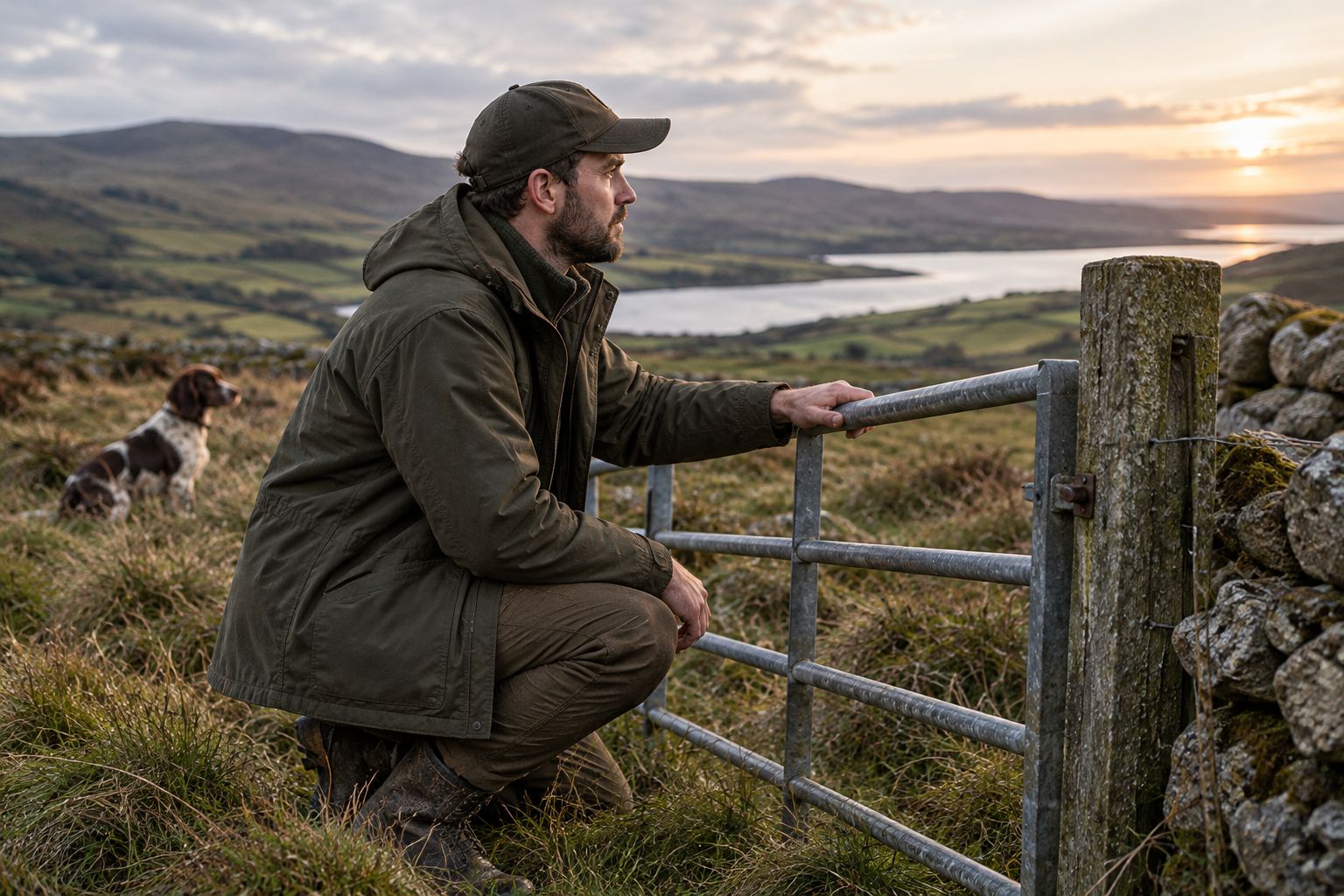
A useful fit leaves room for your layers without letting the jacket swing around your body. Tightness and excess fabric create different problems. Test both before choosing a size.
- Complete all 5 movements with the jacket fully fastened.
- Repeat the checks over your thickest intended midlayer.
- Sit down and inspect where the front hem gathers.
- Reach forward while wearing your normal shoulder straps.
- Adjust the hood, hem and cuffs before rejecting the fit.
Arrange pockets around your equipment
Use the items you actually carry to test the pockets. Empty pockets tell you little about working comfort. A phone, notebook, gloves and keys change the way a jacket hangs and how easily you reach its fastenings.
Test 2 pocket loads: everyday essentials and your fuller working load. Walk, bend and sit with each. Keep hard or sharp tools in suitable protective storage rather than loose beside a phone or against the jacket lining.
Pockets described as weather-protected still need checking against the manufacturer's instructions. Do not treat a jacket pocket as a substitute for suitable waterproof protection for electronics. Wet gloves and repeated access also bring moisture inside.
- Load the pockets with your everyday essentials.
- Repeat the test with your fuller working load.
- Reach each fastening while wearing gloves.
- Check access beneath belts and shoulder straps.
- Separate wet items from electronics and paperwork.
Plan cleaning and drying before buying
Read the care instructions before choosing the jacket. A garment you cannot maintain properly is a poor match for regular estate work. Mud, sweat and repeated use make cleaning part of the buying decision, not an afterthought.
Follow the garment label for washing, drying and reproofing. Do not apply one care routine to every fabric or membrane. Surface water repellency and the jacket's waterproof construction perform different jobs; restoring one does not repair damage to the other.
For your 2026 work kit, decide where the jacket will dry between rounds. Spread it so air reaches the sleeves and lining, subject to the care instructions. Avoid improvising with direct heat when the label does not permit it.
- Read the wash and drying instructions in full.
- Check which cleaning and reproofing products the maker permits.
- Empty pockets before cleaning or drying.
- Inspect cuffs, seams and high-wear areas regularly.
- Repair damage rather than relying on reproofing to cover it.
Compare jacket options for Irish gamekeepers
Choose by working pattern rather than treating every field jacket as interchangeable. The options below have different strengths. None removes the need to check fit, construction and care instructions.
| Option | Best for | Main advantage | Key limitation |
|---|---|---|---|
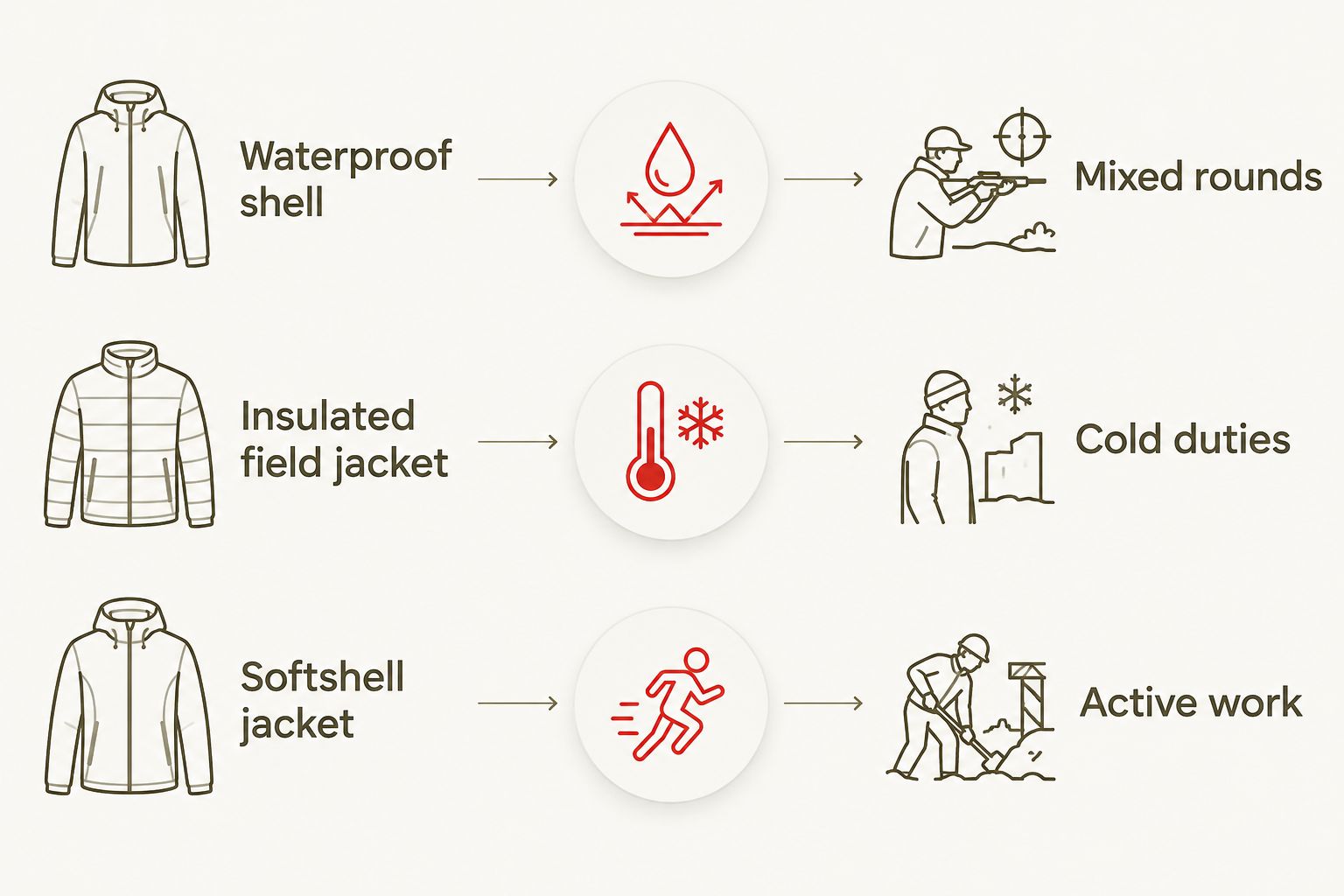
| Uninsulated waterproof shell | Mixed rounds with changing effort | Lets you adjust warmth with separate layers | Requires another layer when you stop or conditions turn cold |
| Insulated field jacket | Cold duties with limited movement | Keeps warmth within one garment | Fixed insulation is harder to adjust during strenuous work |
| Softshell jacket | Active work where its stated weather resistance matches conditions | Offers an alternative balance of movement and protection | Do not assume it provides waterproof protection |
| Härkila Forest Hunter GTX Jacket | Active forest and upland work | Its product description identifies quiet, lightweight and durable material | Choose only after checking the complete weather specification and fit |
The Härkila Forest Hunter GTX Jacket is described as designed for active work in challenging forest and upland terrain. That makes it relevant to gamekeepers whose rounds involve those settings. Its stated quiet, lightweight and durable material addresses movement and contact noise, but does not establish resistance to every snag or working hazard.
Our recommendation: we would shortlist the Härkila Forest Hunter GTX Jacket for active forest and upland duties, then test layered fit before choosing. Do not infer insulation, pocket layout or hood details from the product name.
Common jacket mistakes gamekeepers make
Buying warmth before checking the workload
A heavy lining feels appealing on a cold morning. It also stays with you when the round becomes strenuous. Choose insulation around your activity, not just the temperature at the start of the day. Separate warmth gives you another adjustment; fixed warmth simplifies dressing but reduces flexibility.
Choosing colour instead of construction
Green, brown and patterned fabrics do not tell you whether seams are sealed or cuffs close properly. Start with rain protection and movement. If your workplace requires visibility clothing, follow that requirement rather than treating a subdued colour as the default.
Filling every pocket
Large storage capacity is not a reason to carry everything in the jacket. Heavy pockets pull on the fabric and make seated work awkward. Use appropriate separate storage for bulky equipment, then keep frequently used essentials accessible.
Assuming quiet fabric is snag-proof
Quiet material addresses sound from movement and contact. It does not prove that a jacket will withstand barbed wire, sharp branches or abrasive tools. Inspect the garment after contact and keep it clear of sharp working surfaces.
Replacing a jacket before checking its condition
A wet-feeling outer surface needs diagnosis, not an immediate replacement order. Check care needs, visible damage and the route by which moisture entered. In 2026, the useful buying decision is still the same: replace a jacket that no longer meets your work requirements, not one that simply needs permitted maintenance.
FAQ
What's the best jacket type for a gamekeeper in Ireland?
A waterproof shell with separate warmth is our recommendation for mixed active and stationary duties in Ireland. An insulated jacket is a better match when cold, low-movement work dominates your day.
Is a softshell better than a waterproof jacket for estate work?
A softshell is not a direct replacement for a waterproof jacket. Choose it only where its stated weather resistance matches your conditions, and check the specification rather than relying on the category name.
Should a gamekeeper's jacket be insulated?
Choose fixed insulation when cold duties with limited movement are your main use. For rounds that alternate strenuous walking and waiting, separate insulation gives you more control over warmth.
How do I check whether a field jacket fits properly?
Try the jacket over your working layers, then reach, raise your arms, bend, crouch and sit. Check that the sleeves and hem retain coverage without restricting your shoulders or gathering uncomfortably when seated.
Is the Härkila Forest Hunter GTX Jacket suitable for gamekeepers?
The Härkila Forest Hunter GTX Jacket is a relevant shortlist option for active forest and upland work. Its description identifies quiet, lightweight and durable material; check the full weather specification and layered fit before choosing.
Can I keep my phone dry in a jacket pocket?
Do not assume a jacket pocket provides waterproof protection for a phone. Check the pocket specification and use suitable separate waterproof protection when your work exposes electronics to rain.
How should I clean a waterproof field jacket?
Follow the garment's own washing, drying and reproofing instructions. Do not assume a cleaning product or heat treatment suitable for one jacket is suitable for another.
One last thing
Test the jacket after loading its pockets, not before. A comfortable empty coat can pull differently once you add your working essentials. Repeat the movement and seated checks with the load you will actually carry.
Before your next 2026 round, give your current jacket 10 minutes of inspection and fit testing. Treat that as a practical checklist session, not a durability test. You will have a clearer replacement brief: the exact leak, restriction or access problem the next jacket must solve.