

Inflatable kayaks for fishing guides in Ireland: complete 2026 guide
Fishing guides’ inflatable kayak selection is the process of matching a portable fishing craft to a guided route, with the aim of keeping clients supported and tackle manageable. This 2026 guide to inflatable kayaks for fishing guides covers Irish launch sites, loaded handling, client access and the work between bookings.
- For inflatable kayaks for fishing guides, choose route suitability and loaded handling before packed size.
- In Ireland, assess wind exposure, landing access and client recovery before choosing a fishing kayak.
- We recommend checking seat access, tackle storage and manufacturer instructions before adding kayak fishing accessories.
- A tandem keeps guide and client together; separate kayaks require independent paddling skills and a clear supervision plan.
Why inflatable kayaks matter for fishing guides
An inflatable kayak addresses a transport and storage problem. You can pack the craft down between trips instead of keeping a rigid hull on a rack. The trade-off is preparation: inflation, inspection, cleaning and complete drying become part of your working day.
A guided trip adds another requirement. You must manage someone else’s paddling ability while watching the route, tackle and changing conditions. A kayak that suits your own fishing does not automatically suit a paying client.
If your clients are new to paddling, start with our kayaks for beginners in Ireland guide. Choose the client experience first. Choose the hull second.
For your 2026 bookings, write down the intended water, client experience and fishing method before comparing equipment. Those details decide whether portability is useful or whether another craft is the better working platform.
Choose an inflatable kayak around your guided trip
Define your operating water
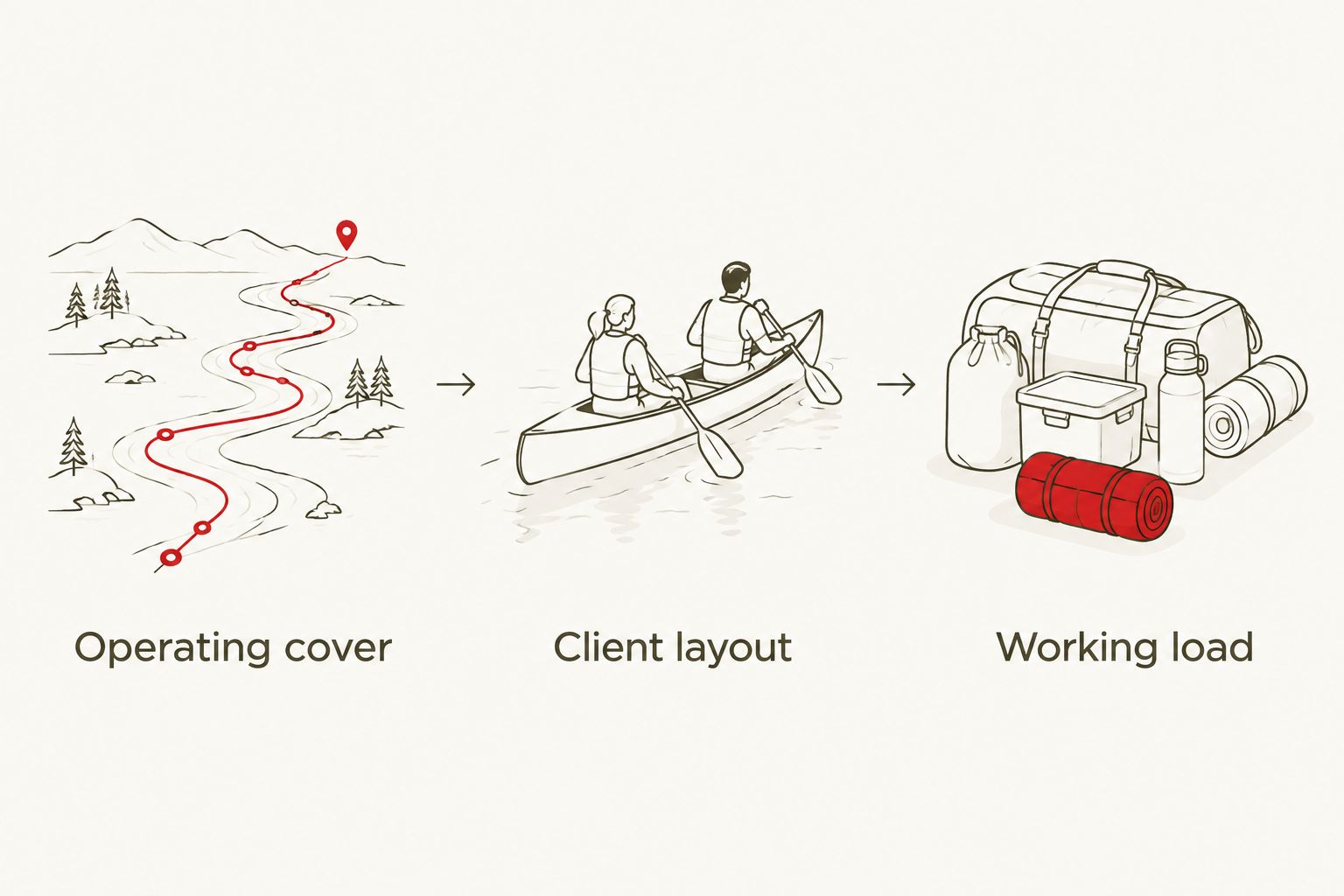
Start with a map and a shore inspection. Identify the launch, intended fishing area, alternative landings and sections where wind or current complicates the return. Check permission to launch and the fishing rules that apply to the water and target species.
Do not treat an Irish lake, river and sheltered coastal inlet as interchangeable. A sheltered launch does not prove the whole route is sheltered. Offshore wind, tidal flow, river obstacles and exposed crossings need separate decisions.
Read the kayak manufacturer’s intended-use guidance. A recreational label is not evidence that a craft suits commercial guiding, moving water or coastal fishing. Confirm that your insurance covers the activity, water and equipment you intend to use.
- Launch access: inspect footing, carrying distance and space for inflation.
- Wind exposure: identify exposed reaches and alternative landings.
- Current hazards: mark weirs, obstructions and tidal sections.
- Return route: plan the journey back before selecting fishing spots.
- Operating cover: confirm permissions, insurance and intended-use restrictions.
Match the layout to your client
Assess the client’s mobility, confidence and paddling experience before choosing seats. A tandem puts you in the same craft, which helps with instruction and shared positioning. It also means every paddle stroke, cast and movement affects both occupants.
Separate kayaks give each angler their own fishing space. They also require the client to control a craft independently. Do not choose that arrangement simply because it leaves more room for tackle.
Test entry and exit on land, then practise afloat in controlled conditions with appropriate safety support. Check whether the client can reach the paddle, sit comfortably and follow instructions without leaning across the tubes. Seating capacity is not the same as a workable guided layout.
- Check seat adjustment while wearing paddling clothing and a flotation device.
- Confirm that both paddlers have clear paddle strokes.
- Keep casting areas separate from faces, hands and exposed tubes.
- Check whether the client can enter and leave without standing on unsupported surfaces.
- Match the craft arrangement to your supervision and rescue plan.
Check the complete working load
Use a scale and a written kit list. Include occupants, clothing, paddles, safety equipment, drinking water, tackle, seats and every accessory that travels aboard. Compare the total with the manufacturer’s stated load limit.
A capacity figure does not tell you how a fully loaded kayak handles. Follow the loading instructions and assess trim, manoeuvring, paddle clearance and access to essential equipment. Do not copy an arbitrary loading margin from an unrelated craft.
We recommend this approach to inflatable kayaks for fishing guides in Ireland: judge the craft with the working load aboard, not empty on the shop floor. Accessories belong after that assessment, not before it.
Build a load sheet for each client layout in 2026. Recheck it when you change seats, add electronics or carry different fishing equipment.
- Weigh the complete kit rather than estimating from packed appearance.
- Include removable accessories in the total load.
- Follow the manufacturer’s loading and weight-distribution instructions.
- Keep essential safety equipment reachable from the seat.
- Test turning and return paddling before carrying clients.
Organise tackle without blocking recovery
Lay out your existing tackle on the floor beside the packed kayak. Separate essential fishing tools from spare equipment. You need a usable cockpit, not a floating version of your entire tackle collection.
Hooks, knives and exposed lure points need controlled storage around inflatable tubes. Keep the landing net and hook-removal tools accessible, but place them where they cannot obstruct paddling or a recovery attempt. Loose line and trailing straps create avoidable snag points.
Measure the space behind and beside the seat before choosing a box. The supplied Madcat storage options both measure 35 cm long, 22 cm wide and 8 cm high. Those dimensions are a fit check, not proof that either box suits your kayak.
- Keep unused hooks and lures inside closed storage.
- Cover sharp tools when they are not in use.
- Leave seat access and the recovery area clear.
- Store dense items according to the kayak’s loading instructions.
- Secure boxes using suitable attachment points without creating loose loops.
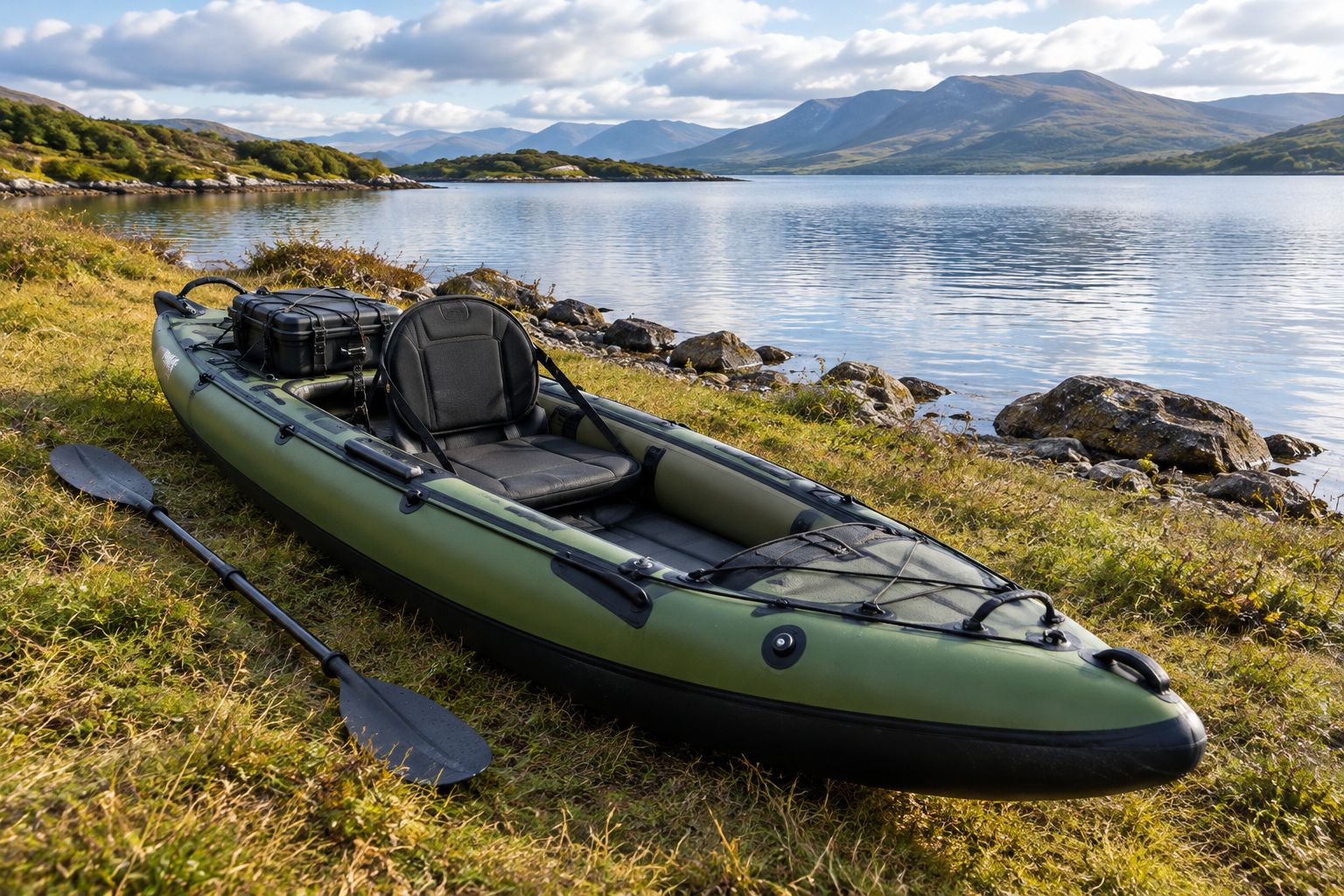
The following storage options suit different packing habits. Neither product description establishes that the box floats or provides a suitable kayak attachment system. Check both points separately, and test access while seated.
| Storage option | Best for | Useful feature | Key limitation |
|---|---|---|---|
| Madcat Waterproof Fishing Storage System, 4 Compartment | Guides separating small tackle into defined sections | Compartmented storage in a 35x22x8cm box | Check whether larger tools fit the divided layout |
| Madcat Waterproof Fishing Storage System, 1 Compartment | Guides keeping larger items together | Undivided storage in a 35x22x8cm box | Small items need their own organisation |
We suggest measuring the storage area before choosing either layout. A waterproof box still needs securing, and a tidy box still needs to remain accessible.


Prepare flotation and recovery equipment
Start with correctly fitted personal flotation equipment suitable for paddling and the intended conditions. Check the device instructions, condition and service requirements. A flotation device does not replace immersion protection, paddling ability or a practised recovery plan.
Choose clothing for the water as well as the air. Rainwear keeps rain off; that does not make it immersion protection. Assess cold-water exposure and choose appropriate equipment with qualified paddling advice where needed.
Practise recovery with the actual seat, tackle and client layout. A clear empty kayak behaves differently from one carrying rods, bags and an inexperienced occupant. Carry communications suited to the route, protected from water and reachable after a capsize.
- Fit and check each person’s flotation device before launch.
- Match immersion protection to the conditions and activity.
- Practise assisted recovery with appropriate training and support.
- Keep rescue access clear of tackle and loose attachments.
- Leave a route and overdue-action plan with a responsible shore contact.
Standardise inflation and inspection
Follow the kayak’s manual, not a pressure figure copied from a paddleboard or another inflatable. Different chambers can require different pressures. Use a compatible pump and gauge, and follow any instructions about temperature changes and pressure checks.
Inspect the hull on clean ground before inflation. Look at seams, valves, the floor, seat fixings and accessory attachments. Remove grit and sharp objects from the launch preparation area. Do not drag the craft over stones to save a carry.
For your 2026 operating checklist, record defects and repairs against the individual kayak. A puncture kit is useful equipment, but carrying one does not justify launching a damaged craft or attempting repairs afloat.
- Check every chamber against its own inflation instructions.
- Inspect valves and seams before loading tackle.
- Confirm that seats and removable fins are correctly fitted.
- Carry the manufacturer-compatible repair materials.
- Remove a defective kayak from client use until properly repaired and checked.
Rehearse the trip and reset between bookings
Run the intended sequence without a client first, using appropriate support. Inflate, load, launch, paddle, fish, land and pack away. Record where equipment gets in the way and which tasks require you to stop supervising the fishing area.
Then practise the client briefing on shore. Explain paddle handling, casting boundaries, staying seated, what happens if tackle snags and what to do if someone enters the water. Keep the instructions short enough to remember.
After each trip, follow the manufacturer’s cleaning and drying instructions. Check current Irish biosecurity guidance when moving between waters. Your 2026 diary needs space for inspection and drying, not just the hours spent fishing.
- Rehearse the launch and landing with the working load.
- Confirm cancellation criteria before accepting the booking.
- Brief clients before handing over rods or launching.
- Inspect the kayak and tackle after every outing.
- Clean, dry and store equipment according to its instructions.
Compare the working options
Inflatable is a transport format, not a suitability rating. Compare the arrangements below against the route and client, then check the specific craft’s instructions. No construction type removes the need for appropriate training, safety equipment and operating cover.
| Option | Best for | Main advantage | Key limitation |
|---|---|---|---|
| Tandem inflatable kayak | Guide and client sharing a suitable route | Shared craft keeps instruction and positioning together | Casting, paddling and recovery space must work for both occupants |
| Separate inflatable kayaks | Clients who can paddle independently under your supervision | Each angler has a separate fishing space | Separation adds communication and supervision demands |
| Rigid fishing kayak | Guides with suitable transport and storage | Avoids inflation and deflation between trips | Hull transport and storage remain part of the job |
| Suitable small fishing boat | Guided trips needing a different seating or working arrangement | Offers another platform to assess for the activity | Launch access, storage and operating requirements still need checking |
For inflatable kayaks for fishing guides, we recommend choosing the layout that keeps instruction, paddling and recovery workable together. Portability wins only when it solves a real transport problem without compromising the trip.
Common mistakes fishing guides make
Buying around packed size alone
A compact bag solves storage, not client handling. Check the loaded craft, seating and recovery access before deciding that it fits your operation. Reject a convenient transport solution if the guided layout does not work.
Treating tandem capacity as fishing space
A kayak that carries both occupants still needs room for paddle strokes, rods, tools and a safe landing sequence. Rehearse casting directions and tackle handovers. Do not discover crossed rods and blocked paddle strokes during a booking.
Adding electronics before checking the basics
A fishfinder brings mounting, power, cables and transducer arrangements into the cockpit. None of those should obstruct paddling or recovery. Confirm manufacturer-approved attachment methods before modifying inflatable surfaces or adding a motor system.
Using one launch to judge the whole route
A calm bay can lead into exposed water. Walk through the outward and return journey, including alternative landings. Set conditions for changing or cancelling the trip before the client arrives, not after launching.
Packing away wet equipment between waters
A rushed turnaround leaves inspection, drying and biosecurity unfinished. Build those tasks into the booking schedule. If the kayak cannot be reset properly, change the schedule rather than hiding the problem inside its storage bag.
FAQ
What are the best inflatable kayaks for fishing guides in Ireland?
The best inflatable kayak for a fishing guide is one whose intended use, loaded handling and recovery arrangements match the route and client. Choose from the manufacturer’s specifications and a practical assessment, not packed size alone.
Is a tandem inflatable kayak better for guiding a beginner?
A tandem keeps the guide and beginner in the same craft, which helps with shared instruction and positioning. It is only suitable when seating, paddle clearance, casting space and recovery arrangements work for both occupants.
Can I use an inflatable fishing kayak on the Irish coast?
Use an inflatable kayak on the coast only when the specific craft, your skills and your operating plan suit the conditions. Check manufacturer guidance, wind, tides, landing access, communications and insurance before choosing a coastal route.
How do I work out the load for a guided kayak trip?
Add the weight of every occupant and every item carried aboard, then compare the total with the manufacturer’s load limit. Include clothing, seats, paddles, safety equipment, tackle and accessories, and assess the loaded craft’s handling.
What pressure should I use in an inflatable fishing kayak?
Use the pressure specified by the manufacturer for each chamber of that kayak. Follow the instructions for the pump, gauge and temperature-related checks rather than borrowing a pressure from another inflatable.
Can fishing hooks damage an inflatable kayak?
Sharp hooks can puncture inflatable materials, so keep unused hooks and lures in closed storage. Control exposed points during casting, landing and hook removal, and keep knives covered when not in use.
Do I need a drysuit for guided kayak fishing in Ireland?
Choose immersion protection according to the water conditions, route and activity, with qualified advice where needed. Ordinary waterproof clothing is not a substitute for equipment designed for immersion.
Can I fit a fishfinder or motor to an inflatable kayak?
Fit accessories only through attachment methods and equipment the kayak manufacturer approves. Include their weight in the load assessment and check that mounts, cables and power equipment leave paddling and recovery access clear.
One last thing
Test the landing sequence before testing the fishing. Ask where the client puts the rod, how the paddle stays controlled and how the net comes ashore. A layout that only works while everyone remains seated is not ready for a guided trip.
Before your next 2026 booking, rehearse that sequence with the full kit. Move anything that blocks an exit. Leave unnecessary equipment ashore.