

Best camping kettles for outdoor brews in Ireland
Best overall for campsite brews: the Vango 1.6L Stainless Steel Kettle. Best for carrying to a fishing spot or walking camp: the NGT 1.1L Aluminium Outdoor Kettle. We recommend choosing your camping kettle around how you travel, how much water you need and the stove you use in Ireland.
- The Vango 1.6L Stainless Steel Kettle is our default camping kettle for campsite tea and coffee.
- Choose the NGT 1.1L Aluminium Outdoor Kettle for carried kit: its stated weight is 170g.
- Vango offers whistling action and a removable lid; NGT offers anodised aluminium and a folding handle.
- Match your outdoor kettle to your camping stove, and measure your actual water needs before choosing.
Why this matters
A kettle earns its place when you make regular hot drinks outdoors. A spout gives you a dedicated pouring point, while keeping your brewing water separate from the pot used for dinner makes the next cup simpler.
For your 2026 camping kit, start with the cooking system rather than buying each piece separately. Our guide to camping cookware sets for solo campers in Ireland helps you decide whether a separate kettle belongs alongside your cooking pot.
Choose the Vango for campsite use; choose the NGT when the kettle travels in your pack. Neither choice removes the need for a stable stove, safe outdoor cooking space and clean drinking water.
What makes the best camping kettle?
The best camping kettle fits the way you actually make a brew. These are the checks that matter before you choose.
- Capacity: Match the kettle to the water you use in one brewing round. Vango holds 1.6 litres; NGT holds 1.1 litres. Follow the product's filling instructions rather than treating stated capacity as permission to fill to the rim.
- Carry weight: Look at stated weight when you carry everything. The NGT specification gives you a clear figure: 170g.
- Packing: A folding handle helps the kettle fit among other kit. Both options have one, but the body still needs room in your bag or storage box.
- Handling: Check the lid, handle and pouring position. Vango specifies a removable lid and a heat-resistant folding handle. Use protection when handling hot cookware.
- Stove fit: Check that the kettle sits securely on your stove supports. Material alone does not establish compatibility with every burner or heat source.
- Brewing features: Vango has whistling action. That is useful for a dedicated brew setup, but you still need to watch the stove.
Keep those priorities in order. A compact kettle that sits badly on your burner is the wrong choice, regardless of how neatly it packs.
Camping kettles at a glance
These 2026 picks serve different jobs. Vango is the campsite default; NGT is the option for carried kit.
| Kettle | Best for | Standout feature | Stated capacity | Key limitation |
|---|---|---|---|---|
| Vango 1.6L Stainless Steel Kettle With Folding Handle | Campsite and car-camping brews | Whistling action, removable lid and heat-resistant folding handle | 1.6 litres | More capacity than a small solo brew needs |
| NGT Aluminium Outdoor Kettle | Walk-in fishing sessions and carried camping kit | Anodised aluminium construction with a stated weight of 170g | 1.1 litres | Less water per batch than Vango |
Do not read the table as a speed test. Your burner, water quantity and conditions affect the boil, and neither kettle has a boil-time figure in this comparison.
1. Vango: best camping kettle for campsite brews
The Vango 1.6L Stainless Steel Kettle is a dedicated water-boiling kettle with whistling action and a removable lid. Its folding heat-resistant handle is designed to help with packing. The 1.6-litre capacity makes it the stronger starting point when you prepare a larger round of drinks.
For car camping in Ireland, capacity and straightforward handling take priority over shaving weight from every item. Vango suits a brew station where the stove, cups and water stay together rather than moving between fishing spots.
Vango pros
- Larger capacity: Its 1.6 litres gives you more water per batch than the NGT's 1.1 litres.
- Whistling action: A useful feature when hot drinks are the kettle's main job.
- Removable lid: Gives you a separate opening for filling and access to the inside.
- Folding handle: Helps you pack the kettle between trips without leaving the handle upright.
Vango cons
- The 1.6-litre capacity is unnecessary if your usual brew needs much less water.
- A dedicated kettle adds another vessel if your cooking pot already handles your drinks.
- Whistling action does not replace staying beside the stove while it operates.
Best for: campsite tea and coffee
Choose Vango when your kettle stays near the car, campervan or campsite kitchen. It also suits a shared setup where several drinks are made together, provided your measured water requirement fits the permitted fill level.
Do not fill it fully out of habit. Measure the water for the drinks you are making and heat that amount, following the kettle's instructions.
Verdict: Buy the Vango for a dedicated campsite brew setup in 2026. Skip a separate kettle if your existing pot already does the job well.
2. NGT: best camping kettle for carried kit
The NGT Aluminium Outdoor Kettle has a 1.1-litre capacity, anodised aluminium construction and a folding handle. Its stated weight is 170g, with listed dimensions of 152 × 88mm. Those specifications make it easier to judge against the space and weight allowance in your pack.
NGT is the better fit when you carry your brew kit to the bank or into camp. The smaller capacity is the trade-off: you get less water per batch than with the Vango.
NGT pros
- Known carry weight: The stated 170g lets you account for the kettle in your packed kit.
- Compact listed dimensions: The 152 × 88mm specification gives you a starting point for checking storage space.
- Folding handle: Helps the kettle fit around the rest of your cookware.
- Anodised aluminium body: A clearly specified material rather than an unspecified metal construction.
NGT cons
- Its 1.1-litre capacity gives you less water per batch than the Vango.
- A larger brewing round needs another boil if it exceeds the permitted fill level.
- It still adds a separate vessel if you already carry a suitable cooking pot.
Best for: walking to your brew spot
Choose NGT for a fishing session where the kettle, stove and water travel with you. It also suits a camping setup where you want a dedicated kettle but need to keep a close eye on packed weight.
For your 2026 pack, check the complete system. The kettle is only part of the load; you also carry the burner, fuel, water and drinking vessel.
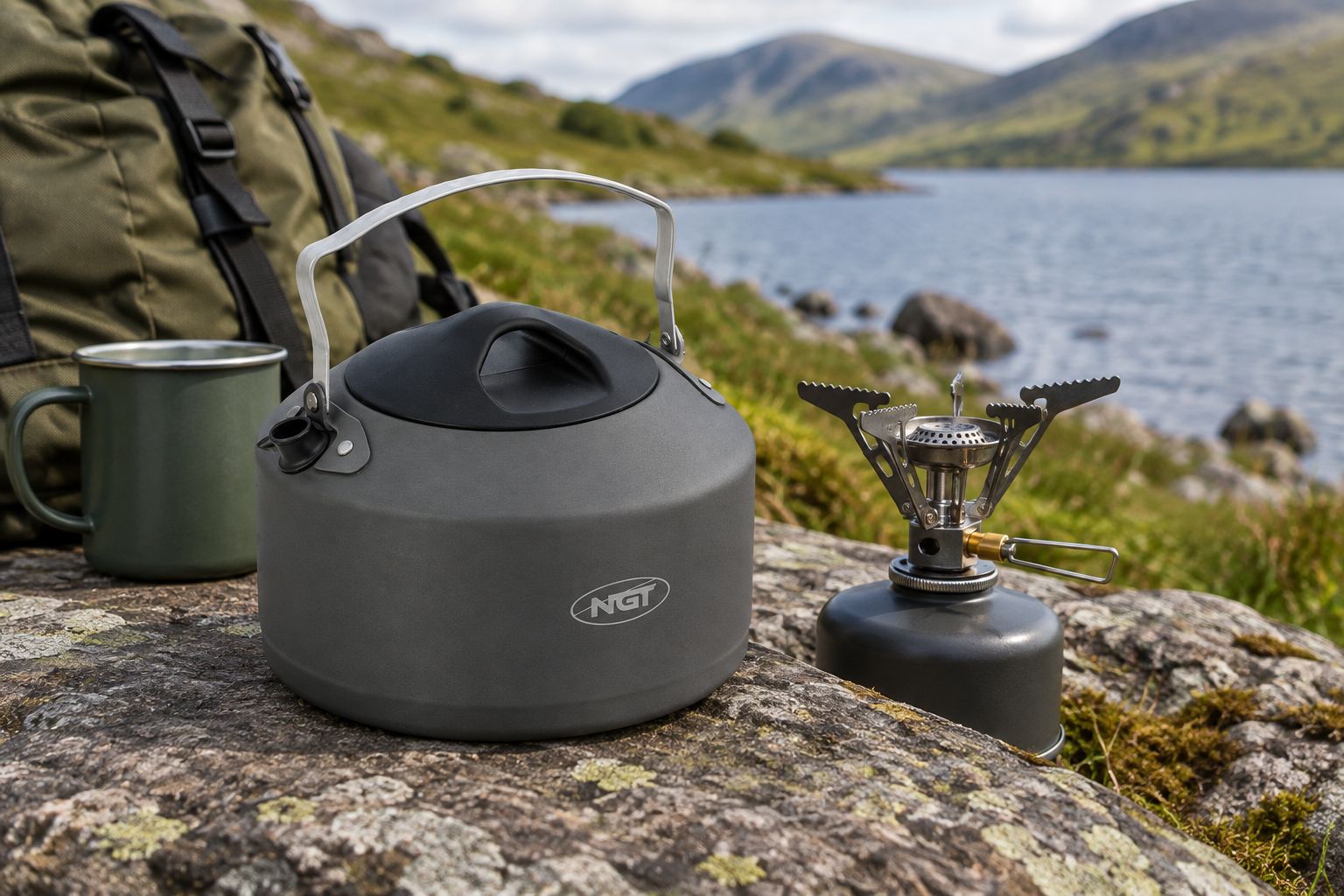
Check the kettle's fit on your burner before leaving home. A tidy pack is useful; a stable cooking setup is essential.
Verdict: Buy the NGT for carried fishing and camping kit. Skip it for larger brewing rounds that need more water in one batch.
Choose around your actual brew routine
Before buying a camping kettle in 2026, make your usual round of drinks at home. Measure the water you actually use, then compare that requirement with the kettle's filling instructions.
That check is more useful than a generic claim about cups. Mugs differ, and the water needed for tea, coffee and breakfast is not always the same.
- Campsite kitchen: Start with Vango when a larger brewing round matters more than a tightly packed bag.
- Carried kit: Start with NGT when you want a stated kettle weight and compact dimensions.
- Existing cooking pot: Keep using it if it pours safely and already meets your brewing needs. A separate kettle is not compulsory.
Keep the kettle's job clear. It boils your brewing water; it does not replace the pan you use to cook a meal.


Match the kettle to the stove
A camping kettle and camping stove need to work together. Check the support arrangement and the manufacturer's instructions before using either kettle on your burner.
Set up on a level, stable surface outdoors, away from dry vegetation and passing feet. Do not operate a fuel-burning stove inside a tent or enclosed sleeping space. Keep children away from the stove and the pouring area.
Wind matters when you cook outdoors in Ireland. Follow the stove manufacturer's guidance on shelter and wind protection; do not improvise an enclosure that traps heat around a gas canister.
Use the following checks before your first brew:
- The kettle rests securely on the supports without rocking.
- The handle is accessible without reaching across the flame.
- The lid and spout can release steam without pointing towards your hand or face.
- You have somewhere stable to place the hot kettle after switching off the stove.
- Your cup is positioned safely before you start pouring.
A heat-resistant handle is not permission to grab any hot surface. Keep suitable handling protection with the brew kit and follow the kettle's instructions.
Keep brewing and packing simple
Use drinking water for your brew. Do not assume that boiling makes every collected water source suitable, because boiling does not remove chemical contamination.
Measure the water before heating it, and never let the kettle boil dry. Stay with the stove, switch it off before moving the kettle and pour away from other people.
After the kettle cools, empty it and dry it before packing. Check the handle, lid and spout for damage, and keep fuel containers separate from drinking vessels and food.
For an Irish fishing session, plan where the hot kettle will go before the rods are out. A busy bank is not the place to balance boiling water among tackle bags, loose line and feet.
How the kettles rank
The 2026 ranking follows the criteria above: capacity, carry weight, packing, handling, stove fit and brewing features. Vango takes the campsite slot because it combines 1.6-litre capacity with whistling action, a removable lid and a folding heat-resistant handle.
NGT takes the carried-kit slot because its specifications state a 170g weight and 152 × 88mm dimensions. This is a specification-based buying guide, not a claim of timed testing or measured fuel savings.
Which camping kettle should you choose?
Choose Vango if you want a default kettle for campsite tea and coffee. Choose NGT if you carry your brew kit to the spot. The right choice follows your routine, not the material name alone.
If you remain undecided, measure one normal brewing round and check your stove supports. Those checks settle the practical questions before you add another piece of cookware.
FAQ
What's the best camping kettle for campsite use in Ireland?
The Vango 1.6L Stainless Steel Kettle is our default choice for campsite brews. It combines 1.6-litre capacity with whistling action, a removable lid and a folding heat-resistant handle.
What's the best camping kettle for carrying to a fishing spot?
The NGT 1.1L Aluminium Outdoor Kettle is our pick for carried fishing kit. Its stated weight is 170g, and its listed dimensions are 152 × 88mm.
Is the Vango kettle better than the NGT kettle?
Vango is better for a larger brewing round, while NGT fits the carried-kit use case. Vango holds 1.6 litres and NGT holds 1.1 litres; follow each kettle's filling instructions.
How many cups does a camping kettle make?
The number of cups depends on your cup size and the kettle's permitted fill level. Measure your usual brewing round rather than relying on a generic cup count.
Can I use either camping kettle on any stove?
Do not assume either kettle fits every stove. Check the burner supports, kettle instructions and stove manufacturer's guidance before use.
Do I need a kettle if I already have a camping pot?
You do not need a separate kettle if your pot safely handles your brewing water. A dedicated kettle gives you a spout and keeps the brew vessel separate from meal preparation.
Does a whistling kettle mean I can leave the stove unattended?
No, whistling action does not make an unattended stove safe. Stay with the stove and switch it off before moving or pouring from the kettle.
One last thing
Measure the water, not the number of people. Your usual mugs and brewing routine tell you more than a generic group-size label. Do that check once at home, then choose the kettle that fits the round and your carrying setup.