

Best electric fillet knives for preparing fish
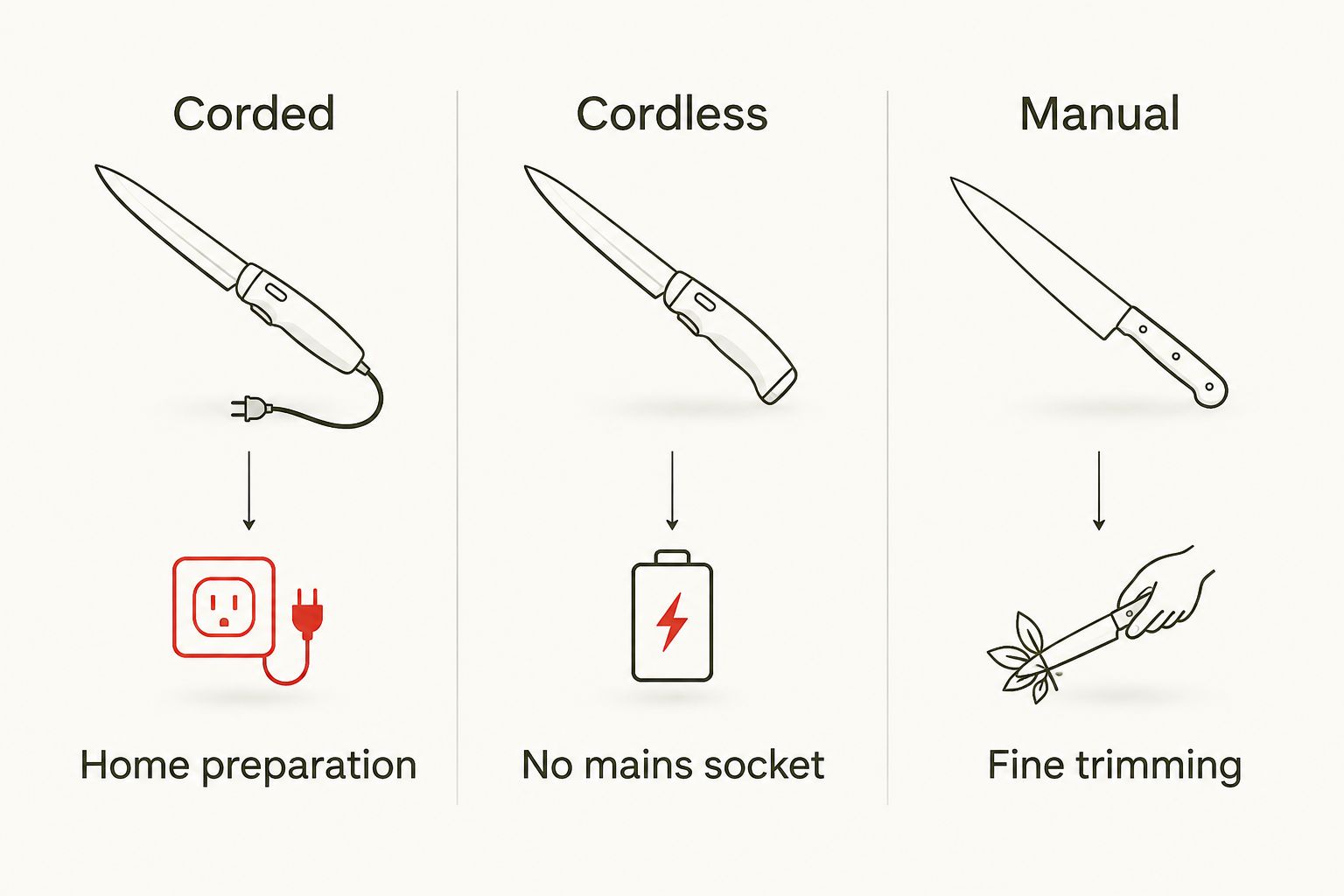
Best overall for home preparation: a corded electric fillet knife. Best for a dry prep station without mains power: a cordless electric fillet knife. Best for occasional fish and fine trimming: a manual fillet knife. We compare these options for anglers in Ireland, with the checks that matter before you choose in 2026.
- Choose a corded electric fillet knife for repeated preparation at a dry home worktop.
- Choose a cordless electric fillet knife when your safe preparation area has no mains socket.
- Keep a manual fillet knife for delicate trimming and occasional fish preparation.
- Check blade fit, replacement blades, cleaning instructions and Irish electrical compatibility before buying.
Why this matters
An electric fillet knife powers the cutting action. You still control the angle, depth and direction. It does not identify bones or correct a poor cut.
Your preparation area decides which type makes sense. A dry kitchen worktop suits a corded knife; a sheltered table without a socket suits a cordless model. Neither belongs on a moving boat or an unstable board.
Start with the job, not the motor. Our guide to knives for fishing and gutting your catch covers the wider choice when filleting is only part of your preparation.
What makes the best electric fillet knife in 2026?
Choose on these criteria. A powerful motor does not compensate for a blade you cannot guide comfortably.
- Blade suitability: Match blade length and shape to the fish you prepare. Check that the manufacturer describes the blade as suitable for filleting, not simply carving.
- Grip and trigger control: You need a secure hold and a trigger you can release without changing your grip. Check the controls with the power disconnected.
- Power compatibility: A corded knife must suit your electricity supply. A cordless knife needs a compatible charger and a clear charging routine.
- Cleaning access: Look for removable blades and clear instructions for cleaning around the blade connection. Do not assume the handle is washable under a tap.
- Replacement parts: Check the exact blade fitting and battery arrangement. Similar-looking parts are not proof of compatibility.
- Safe storage: Blades need protection between uses. The knife also needs a way to prevent accidental operation, as specified in its instructions.
Choose the knife you can control, clean and maintain—not the one with the longest feature list. Check the complete setup before buying: handle, blades, power source and storage.
Electric fillet knives at a glance
This is a ranking of knife types by use case, not a claim that every model within a type performs equally. The manual option is included because electrical power is not necessary for every fish-preparation job.
| Rank | Option | Best for | Standout feature | Key limitation |
|---|---|---|---|---|
| 1 | Corded electric fillet knife | Repeated preparation at home | No battery charging during use | Needs a suitable socket and careful cable placement |
| 2 | Cordless electric fillet knife | A dry prep area without mains power | No trailing mains cable while cutting | Battery charge limits the session |
| 3 | Manual fillet knife | Occasional fish and fine trimming | Direct control without electrical equipment | Your hand supplies the cutting action |
The choice starts with your working area. Choose power only after you know where the board will sit and how you will keep the equipment dry.
1. Corded electric fillet knife: best for home preparation
A corded electric fillet knife runs from a mains socket. Its powered blades provide the cutting action while you guide the handle. It suits a fixed preparation area where you can arrange the board, cable and fish before switching on.
The main benefit is straightforward: you do not stop to recharge a battery. That does not mean unlimited continuous operation. Follow the manufacturer's operating limits and stop if the knife behaves abnormally.
For a 2026 purchase in Ireland, check the rating label. Ireland's nominal domestic supply is 230 V at 50 Hz; the knife must explicitly support that supply. A plug adaptor changes the connection, not the appliance's voltage rating.
Corded electric fillet knife pros:
- No battery charging routine before preparation.
- Suits a dedicated home worktop with a nearby socket.
- Leaves battery condition out of your maintenance checks.
Corded electric fillet knife cons:
- The cable needs a clear route away from the blade and wet areas.
- Preparation is restricted by access to a suitable socket.
- An imported model needs its electrical rating checked carefully.
Before choosing, picture the cable route. It must not cross the cutting board or pull against the handle as you move. Keep plugs and electrical connections away from water, and follow the appliance instructions.
Best for: Anglers who regularly prepare retained fish at a dry home worktop.
Verdict: Buy a corded electric fillet knife for a fixed, suitable home setup. Skip it for locations without safe mains access.
2. Cordless electric fillet knife: best without a mains socket
A cordless electric fillet knife uses battery power. It removes the trailing mains cable during cutting, making it a practical option for a dry, sheltered preparation table away from a socket.
Cordless does not mean waterproof. Keep the handle, battery connections and charging equipment dry unless the instructions explicitly permit otherwise. Outdoor use still requires a stable work area.
Check whether the battery is removable or built into the handle. Also check how the knife charges and what the instructions say about storage. Those details affect your preparation routine more than a headline feature does.
Cordless electric fillet knife pros:
- No mains cable moving beside the cutting board.
- Works at a suitable preparation station without a socket.
- Lets you position the board independently of a mains lead.
Cordless electric fillet knife cons:
- You need to charge it before use.
- Battery capacity limits how long you can work.
- Battery and charger compatibility require separate checks.
Do not choose a cordless model on an unsupported runtime promise. Read the manufacturer's stated conditions and operating instructions. Fish size, blade condition and cutting technique all affect the work the knife must do.
For Irish trips in 2026, plan the safe prep area first. A sheltered table on firm ground is a different proposition from cutting on a kayak seat or boat gunwale. Removing the cable does not remove the need for a stable board.
Best for: Anglers preparing fish at a dry, fixed station without mains access.
Verdict: Buy a cordless electric fillet knife when cable-free preparation solves a real setup problem. Skip it if charging adds a problem you do not need.
3. Manual fillet knife: best for occasional fish and fine trimming
A manual fillet knife has no powered cutting action. You move the blade yourself, controlling each stroke directly. It is the simplest option when you prepare fish occasionally or want careful trimming around a small fillet.
A suitable blade helps you follow the fish's contours. Choose length and flexibility for the fish and technique, rather than treating the longest blade as the best one. Keep the edge maintained.
A manual knife also works alongside an electric knife. You can use the powered tool for suitable main cuts and the manual blade for finishing. Each tool still needs safe handling.
Manual fillet knife pros:
- No socket, battery or charger required.
- Direct control for careful trimming.
- A simpler cleaning and storage routine than powered equipment.
Manual fillet knife cons:
- Your hand supplies all the cutting movement.
- A dull edge makes controlled cutting harder.
- Good results still depend on technique and blade suitability.
Do not confuse a general outdoor knife with a dedicated fillet knife. A blade that suits another task does not automatically suit close work along a backbone or under a fillet.
Best for: Occasional fish preparation, smaller jobs and finishing cuts.
Verdict: Buy a manual fillet knife for occasional preparation. Hold off on electric equipment until your routine gives it a clear purpose.
How these options rank
The ranking puts home preparation first, preparation without a socket second, and fine control third. It follows the criteria above: blade suitability, control, power compatibility, cleaning, replacement parts and storage.
There is no universal winner across those jobs. A corded electric fillet knife is the default for repeated home preparation; a manual fillet knife is the default for occasional use. Choose cordless when the preparation area makes a cable impractical.
Before your first cut: a practical setup check
A good knife needs a good working area. Complete these checks before connecting power or fitting a battery.
Prepare the board
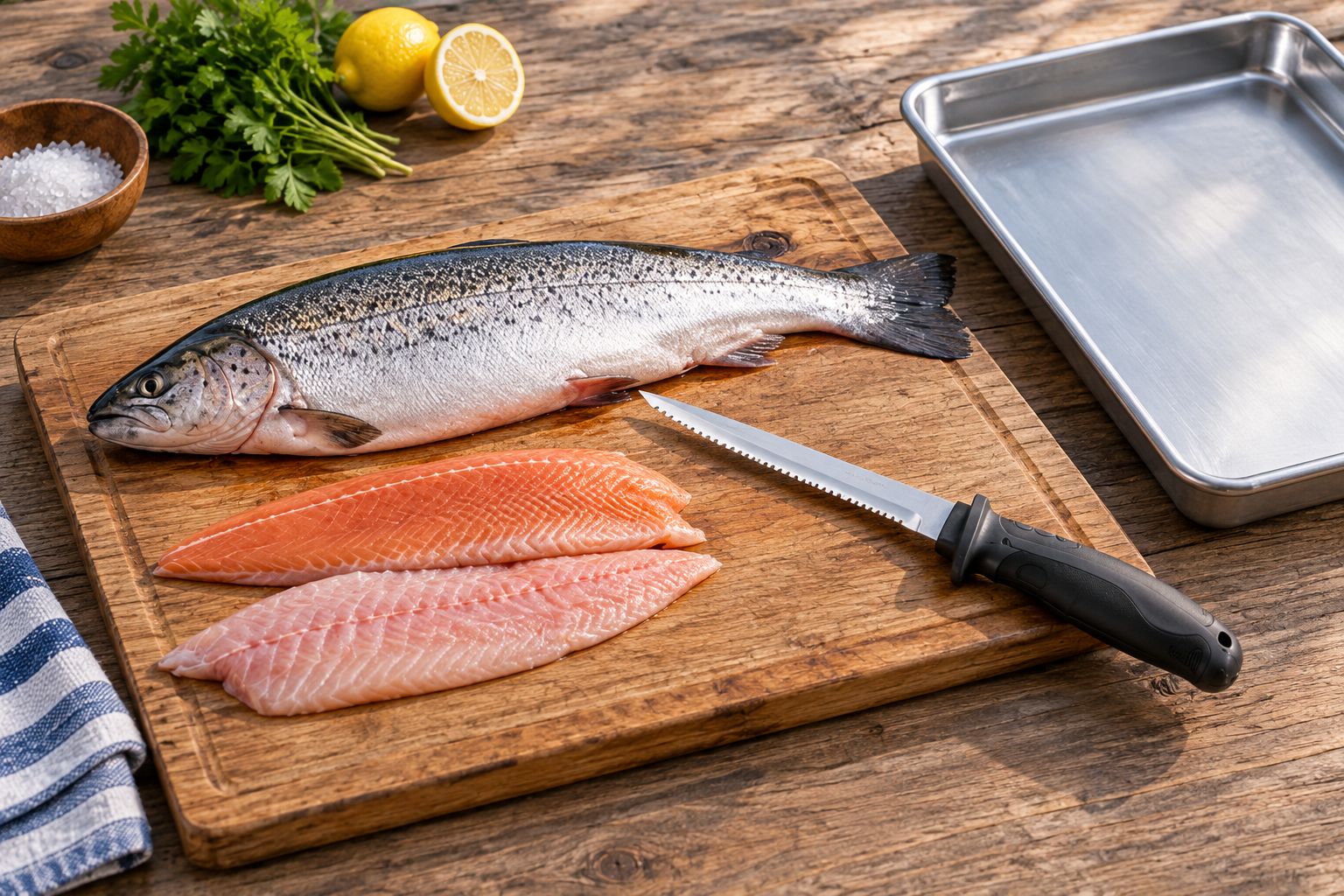
Set the board on a firm, level surface. Prevent it sliding with a suitable non-slip support. Leave enough space for the fish, your guiding hand and the full cutting movement.
Keep other equipment off the board. A cluttered worktop makes it harder to move the knife without catching a cable or knocking something into the cutting area.
Check the blade connection
Follow the instructions for fitting the blades. Check that they are correctly seated before operation. Disconnect the power source before handling or changing them, as directed by the manufacturer.
Do not force a blade into a connection that does not fit. Replacement blades must match the exact knife model and fitting.
Separate fish and electrical equipment
Keep the plug, charger and any spare battery away from the fish-preparation area. Keep your hands and the handle as dry as the task allows. Stop and correct the setup if water reaches electrical connections.
Keep raw fish separate from ready-to-eat food. Clean the board, tools and work surface after preparation rather than carrying contamination into the next kitchen task.
Keep fish chilled
For fish intended for eating, cold storage matters before and after cutting. Food Safety Authority of Ireland guidance recommends keeping a fridge at 5°C or below. Put prepared fish back into suitable chilled storage promptly.
Your 2026 preparation kit should cover the full job: safe cutting, cleaning and cold storage. A powered knife only addresses the cutting action.
Cleaning and blade care
Disconnect the knife before cleaning or removing blades. Follow its instructions rather than borrowing a cleaning method from another model. A removable blade does not mean a dishwasher-safe blade.
Clean food residue from the permitted parts, then dry them before storage. Pay attention to the blade connection. Do not immerse the powered handle or battery unless the manufacturer explicitly allows it.
Electric fillet knife blades commonly use a paired, serrated cutting arrangement. Do not run them through a sharpener intended for a plain manual blade. Follow the maker's maintenance advice and use the specified replacement when needed.
Check the knife before its next use. Damaged cables, loose connections or abnormal operation are reasons to stop using it—not reasons to push through the remaining fish.
Which fillet knife should you choose in 2026?
We recommend a corded electric fillet knife for repeated fish preparation at a dry home worktop in Ireland. Choose it only after confirming electrical compatibility, blade suitability and a safe cable route.
Choose a cordless electric fillet knife when your proper preparation station has no socket. Keep the charging routine and battery care in the decision. Portability is useful only when the cutting area is safe.
For occasional preparation, choose a manual fillet knife first. You avoid electrical equipment and retain direct control. Add a powered knife when it answers a specific need, not simply because it has a motor.
FAQ
What's the best electric fillet knife for preparing fish at home?
A corded electric fillet knife is the default choice for repeated preparation at a dry home worktop. Check electrical compatibility, blade suitability and a safe cable route before choosing a model.
Is a cordless electric fillet knife better than a corded one?
A cordless electric fillet knife is better suited to a dry preparation station without a mains socket. A corded knife avoids battery charging but needs safe socket access and cable placement.
Do I need an electric fillet knife for occasional fish preparation?
No, a suitable manual fillet knife is the simpler choice for occasional preparation. Electric power supplies the cutting action, but you still need control and technique.
Can I use an imported electric fillet knife in Ireland?
Use an imported electric fillet knife only if its rating supports Ireland's 230 V, 50 Hz supply and its connection is suitable. A plug adaptor does not convert voltage.
Can I sharpen electric fillet knife blades with an ordinary sharpener?
Do not use an ordinary plain-blade sharpener on electric fillet knife blades unless the manufacturer specifies that method. Paired serrated blades need model-specific maintenance instructions.
Can I wash an electric fillet knife under the tap?
Do not wash the powered handle under the tap unless the manufacturer's instructions explicitly allow it. Disconnect power and clean removable blades according to the instructions.
Can I use a cordless electric fillet knife on a kayak?
Do not prepare fish with a powered knife on an unstable kayak surface. Use a dry, stable preparation station with a secure board and clear space for your hands.
What temperature should I keep prepared fish at?
Keep prepared fish chilled in a fridge at 5°C or below, following Food Safety Authority of Ireland fridge guidance. Return fish to chilled storage promptly after preparation.
One last thing
Keep a manual fillet knife alongside your powered knife. It handles finishing cuts without a trigger, cable or charging check. Before replacing equipment, inspect your board setup and blade condition; the motor cannot correct either one.