

Neoprene gloves for kayaking: best choices 2026
Best overall for kayaking: a full-finger neoprene glove with a grippy palm and a close cuff. None of the named gloves below is confirmed as neoprene, so there is no verified neoprene winner here. Best listed alternative for wet conditions above the water: Sealskinz Harling. Best for cold, windy bank fishing: Savage Gear Softshell Winter Gloves.
- The best neoprene gloves for kayaking have full fingers, a secure grip and cuffs that work with your sleeves; no listed model is confirmed as neoprene.
- Sealskinz Harling is the best listed waterproof-glove alternative for wet conditions above the water, not a verified immersion glove.
- Savage Gear Softshell Winter Gloves suit cold, windy fishing when keeping your hands warm matters more than handling wet tackle.
- For paddling in Ireland, test glove grip and cuff fit together before judging warmth alone.
Why this matters on Irish water
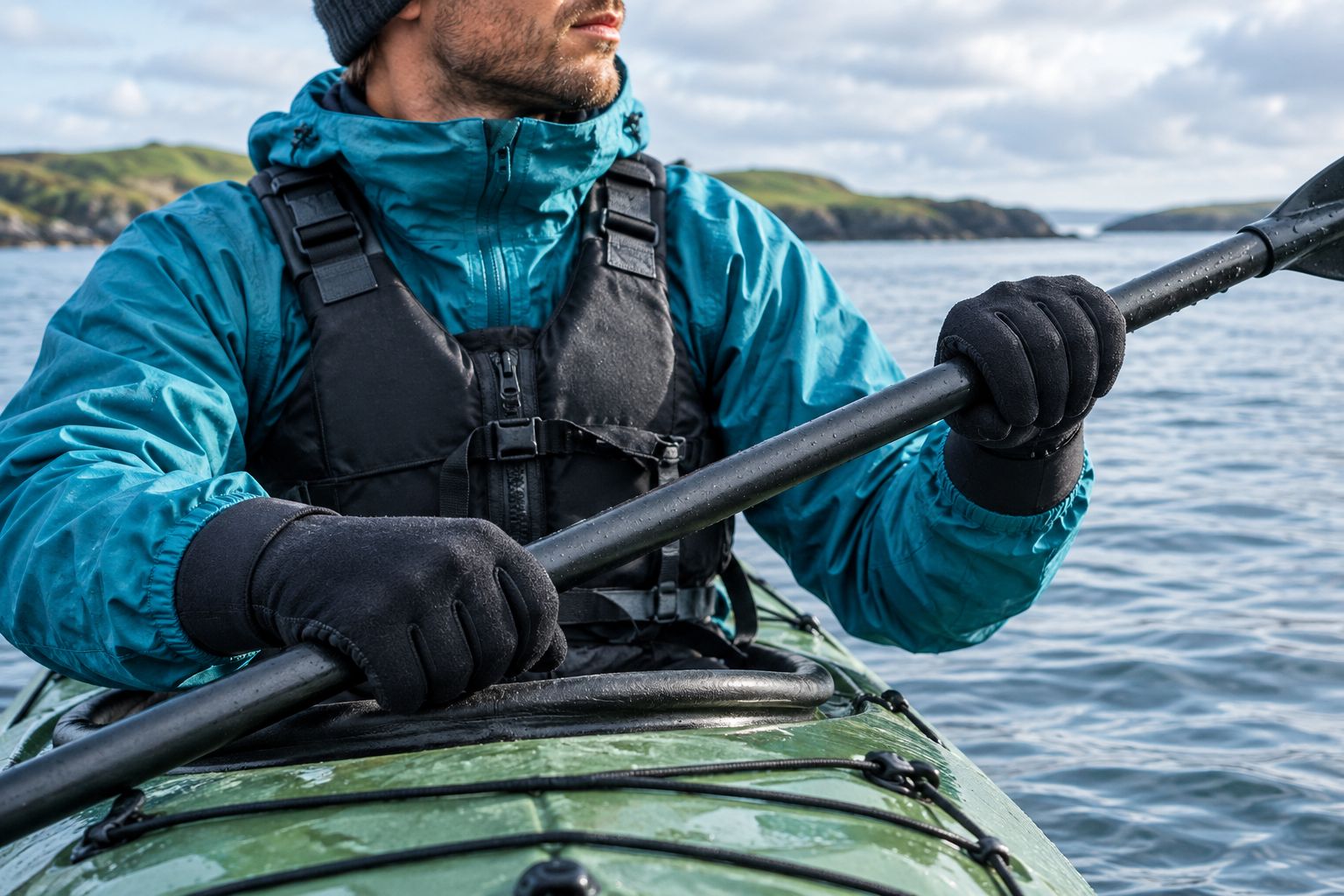
A glove has two different jobs on a kayaking trip: hold a wet paddle and keep your fingers working. Add fishing, and you also need enough control to manage line, clips and hooks. A glove that feels warm while standing on shore can be awkward once you start paddling.
In 2026, the useful question is not simply whether a glove is called waterproof. It is whether its palm stays secure on your paddle, its fingers let you handle your gear and its cuff sits properly with your sleeve. If you are building a cold-water kit, our guide to neoprene socks for kayaking and watersports in Ireland covers the same fit-versus-warmth decision for your feet.
Sealskinz Harling is our best listed waterproof-glove alternative for kayakers who expect rain and spray, but it is not a confirmed neoprene or immersion glove. If neoprene is non-negotiable, use the buying checks below rather than treating a different material as an exact substitute.
What makes the best neoprene gloves for kayaking?
Judge gloves in the order you will notice problems on the water. Warmth matters, but it does not rescue a glove that slips on a wet paddle or makes your fingers too clumsy to use.
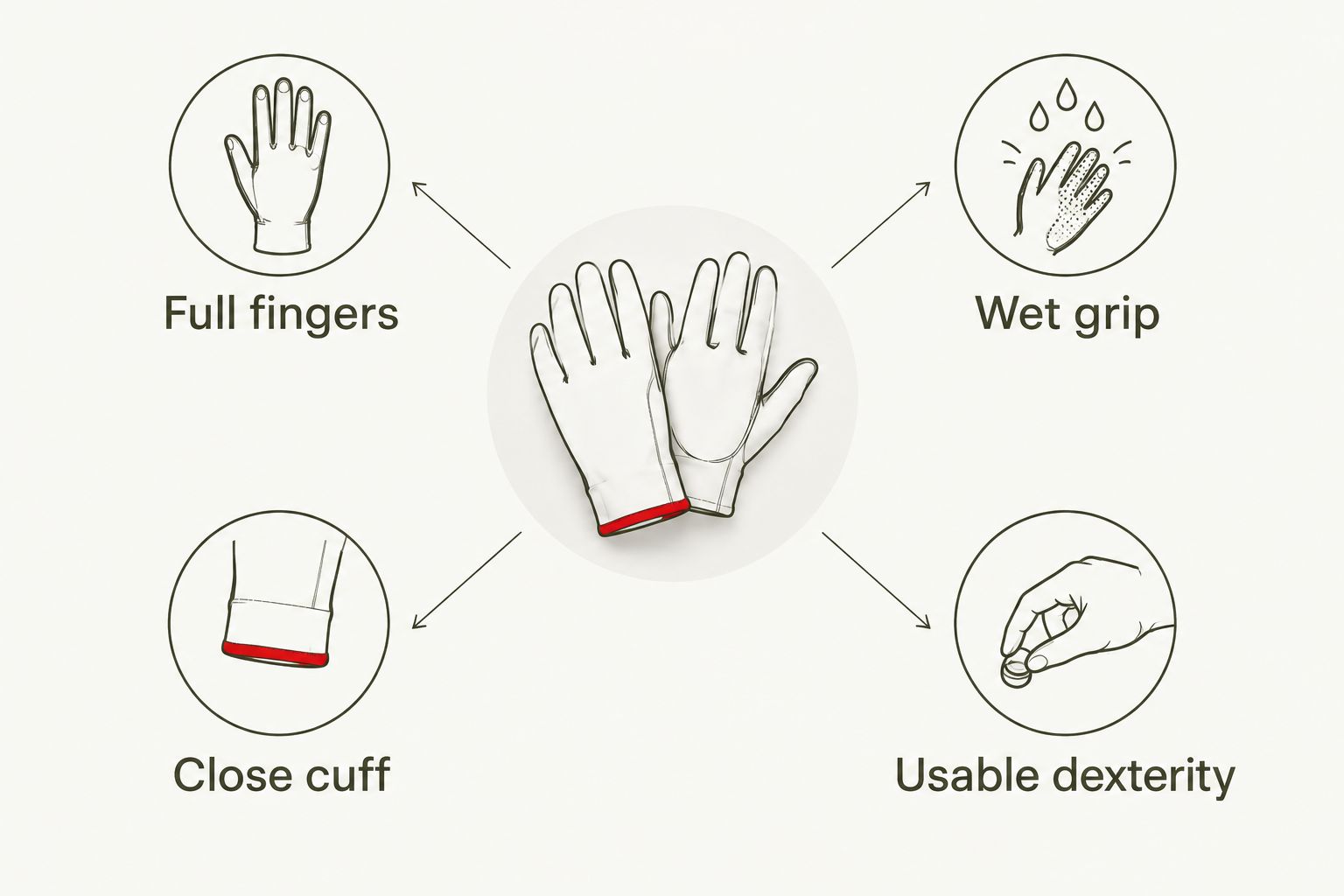
- Full fingers: Covered fingertips make more sense for cold paddling than a half-finger design. Half-finger gloves trade coverage for direct contact with small tackle.
- Wet grip: Hold a paddle shaft or a similar handle with damp hands. A secure palm matters whenever you repeat the same stroke.
- Close cuff: Check how the glove meets your jacket or paddling sleeve. A gap leaves your wrist exposed; a bulky overlap can feel restrictive.
- Usable dexterity: Make a fist, grip a paddle and try the small tasks you expect to do. If a glove prevents them on land, do not expect it to improve afloat.
- Clear material claim: Look for neoprene stated in the product details. A marine name, a waterproof claim or a name containing “Neo” does not establish the material.
- Realistic water use: Rain, spray and putting a hand under water are different demands. Do not assume that a waterproof glove is specified for immersion.
Thickness is a trade-off, not a shortcut to a verdict. When comparing actual neoprene models, put a 2 mm glove, a 3 mm glove and a 5 mm glove through the same grip and dexterity checks. The thicker option generally gives you more material around your fingers; the thinner option generally leaves more room for fine movements. Those figures describe comparison points, not the thickness of any listed product.
A kayak angler has a further check: can you release your paddle grip, handle tackle and return to the paddle without fighting the glove? Try that sequence while wearing both gloves. It tells you more about practical fit than squeezing a glove in its packaging.
The listed gloves at a glance
The products below serve different jobs. They are ranked as practical alternatives, not as verified neoprene kayaking gloves. No supplied product description confirms that one of these four gloves is made of neoprene.
| Glove | Best for | Standout feature | Key limitation |
|---|---|---|---|
| Sealskinz Harling Waterproof All Weather Gloves | Rain and spray while kayaking | Described as waterproof, with warmth and breathability | Neoprene construction and immersion use are not confirmed |
| Savage Gear Softshell Winter Gloves | Cold, windy bank fishing | Described as warm winter gloves | Not established as neoprene or an immersion glove |
| MacWet All Grip No Slip Gloves | Grip-led tasks | Product description centres on grip | Warmth and immersion protection are not established |
| DAM Neo Tec Half Finger Gloves | Fine tackle work | Lightweight half-finger design | Exposed fingertips make them a poor cold-water paddling pick |
These are use-case slots, not four claims to the same crown. If you need a glove for routine hand contact with cold water, none of the supplied descriptions gives enough information to call it the winner. Check a dedicated full-finger neoprene glove’s material, fit and intended use before choosing it.
1. Sealskinz Harling: best listed option for rain and spray
Sealskinz Harling Waterproof All Weather Gloves are described as lightweight waterproof gloves that balance warmth and breathability. That makes them the clearest listed choice when your main problem is wet weather while your hands remain above the water most of the time. It does not make them a confirmed neoprene glove or establish performance when submerged.
For kayaking in Ireland in 2026, start by checking the cuff against your paddling sleeve. Then grip a paddle with both hands. Waterproof wording is useful, but you still need a secure hold and enough movement to control the boat.
Sealskinz Harling pros:
- The supplied description explicitly calls the glove waterproof.
- It also identifies warmth and breathability as intended qualities.
- Full-finger coverage fits the cold-weather use case better than the half-finger option in this list.
Sealskinz Harling cons:
- The supplied description does not identify neoprene as its material.
- Immersion suitability is not specified.
- Its description does not establish how the palm grips a wet paddle.
Best for: Kayakers choosing a listed glove for rain and spray, provided the glove passes a hands-on grip and cuff check. Verdict: Buy for that above-water use; hold if you specifically need neoprene or expect regular immersion.
2. Savage Gear Softshell Winter Gloves: best for cold bank fishing
Savage Gear Softshell Winter Gloves are described as warm, comfortable gloves for cold wind. They fit a different job from the first pick: keeping your hands covered while you fish from the bank, set up gear or wait between casts. Their product description does not establish that they are neoprene or made for paddling with wet hands.
That distinction matters. On a cold Irish fishing trip, a glove chosen for wind can be useful on shore without becoming your kayaking glove by default. Check whether you can still operate your reel and handle your line before deciding it belongs in your fishing kit.
Savage Gear Softshell Winter Gloves pros:
- The supplied description directly addresses cold wind.
- Full-finger coverage avoids the exposed fingertips of a half-finger glove.
- The stated use is a clear match for cold-weather fishing on land.
Savage Gear Softshell Winter Gloves cons:
- Neoprene construction is not established.
- The description does not confirm immersion use or wet-paddle grip.
- Warmth alone does not answer whether you can handle small tackle easily.
Best for: Anglers prioritising warmth during cold, windy sessions on shore. Verdict: Buy for bank fishing after checking tackle control; hold for kayaking until wet grip and water-use details are clear.
3. MacWet All Grip No Slip: best when grip leads the decision
MacWet All Grip No Slip Gloves have a grip-led product description. That makes them a sensible glove to assess if your main complaint is losing control of a handle, rather than needing more finger insulation. Grip is a practical kayaking criterion, but the supplied description does not say that these gloves provide neoprene warmth or protection during immersion.
Test a MacWet glove with the handle you actually use. A paddler should also check that the glove does not bunch at the palm during repeated strokes. An angler should check whether it gets in the way when moving between rod, reel and tackle.
MacWet All Grip No Slip Gloves pros:
- The product description makes grip the clear reason to consider them.
- They occupy a distinct use case from a winter-warmth glove.
- A handle-grip test gives you a straightforward way to judge fit.
MacWet All Grip No Slip Gloves cons:
- The supplied details do not confirm neoprene construction.
- Cold-water insulation and immersion protection are not established.
- The supplied description does not provide a kayaking-specific performance claim.
Best for: Buyers whose first priority is a secure hold and who can assess warmth separately. Verdict: Hold for cold-water kayaking; consider them for grip-led tasks only after a fit test.
4. DAM Neo Tec Half Finger: best for small tackle tasks
DAM Neo Tec Half Finger Gloves are described as lightweight, soft and stretchy fingerless gloves for fishing. Bare fingertips give you direct contact when handling small items. That is useful for a different task from keeping your whole hand covered on a cold paddle.
Do not read the product name as proof of neoprene. The supplied description does not explicitly identify the glove material as neoprene. In 2026, choose this design for the access it gives your fingertips, not as a full-finger cold-water solution.
DAM Neo Tec Half Finger Gloves pros:
- The half-finger design leaves fingertips available for fine tackle work.
- The description identifies them as lightweight and stretchy.
- Their intended fishing use is stated clearly.
DAM Neo Tec Half Finger Gloves cons:
- Exposed fingertips reduce coverage for cold paddling.
- Neoprene construction is not confirmed by the supplied description.
- The product details do not establish waterproof or immersion performance.
Best for: Anglers who need fingertip access while working with tackle. Verdict: Buy for fine fishing tasks if the fit works; skip as your only glove for cold-water kayaking.
Match the glove to the part of the trip
A kayaking and fishing trip is not one continuous glove task. Launching, paddling, fishing and packing up ask different things of your hands. In 2026, make the choice around the part where poor grip or cold fingers would cause the most trouble.
- Mostly paddling in spray: Prioritise a full-finger glove, a close cuff and secure wet grip. Sealskinz Harling is the best listed above-water wet-weather alternative, not a verified neoprene answer.
- Mostly fishing from shore in wind: Start with Savage Gear Softshell Winter Gloves and check that you can still use your tackle.
- A handle that keeps slipping: Assess MacWet All Grip No Slip Gloves for fit and control. Do not use grip wording as evidence of insulation.
- Small hooks and line work: DAM Neo Tec Half Finger Gloves give you fingertip access. Bring a different answer for full-finger coverage when cold paddling is the main job.
If you want one pair specifically for cold-water kayaking, narrow the search to gloves explicitly identified as neoprene and intended for that activity. Then test grip, fingers and cuffs together. Buying a glove with the right category name but the wrong fit still leaves you with a poor paddling glove.
Gloves to compare for your trip
These cards show the listed products discussed above. They are alternatives with different uses, not a set of confirmed neoprene gloves. Read the material and water-use details before making a kayaking decision.


How we ranked the listed options
The ranking follows the stated use of each glove, then checks that use against coverage, wet grip, cuff fit and finger control. A stated waterproof claim carries more weight for rain and spray than a product name that merely sounds water-related. A stated winter-warmth purpose carries more weight for bank fishing than an unverified kayaking claim.
The limit is equally important: no supplied description identifies one of the ranked gloves as a neoprene kayaking glove. This is a 2026 guide to the best listed alternatives and the checks needed to select actual neoprene gloves, not a claim that an unverified product contains a particular material. The cons stay in the ranking because the missing details change the buying decision.
Which neoprene gloves for kayaking should you choose?
Choose a full-finger glove explicitly described as neoprene if neoprene is your requirement. Look for a palm you can hold securely when wet, fingers you can use and cuffs that work with your sleeves. Do not award the sale to a glove on warmth alone.
Among the named products, Sealskinz Harling is the default for rain and spray above the water, subject to a grip and cuff check. Choose Savage Gear Softshell Winter Gloves instead when the main job is staying warm during cold bank fishing. MacWet serves a grip-first decision; DAM serves fine tackle work. None earns a verified neoprene or immersion verdict from the supplied details.
FAQ
What are the best neoprene gloves for kayaking in Ireland?
The best choice is a full-finger glove explicitly identified as neoprene, with secure wet grip and cuffs that fit your sleeves. None of the named gloves in this guide is confirmed as neoprene, so there is no verified product winner.
Are Sealskinz Harling gloves made of neoprene?
The supplied Sealskinz Harling description does not confirm neoprene construction. It describes the gloves as waterproof and mentions warmth and breathability, which does not establish the material.
Can I use waterproof gloves for cold-water kayaking?
You can assess waterproof gloves for rain and spray, but do not treat a waterproof claim as proof of immersion suitability. Check the product's stated use, wet-paddle grip and cuff fit before paddling.
Are half-finger gloves good for cold-water kayaking?
Half-finger gloves are a poor first choice when full fingertip coverage is your priority. DAM Neo Tec Half Finger Gloves make more sense for fishing tasks that need direct fingertip contact.
Is a thicker neoprene glove always better for kayaking?
No; compare warmth against your ability to grip and move your fingers. Try the same paddle and small-handling tasks in each thickness you are considering, rather than choosing by thickness alone.
Which listed glove is best for cold bank fishing?
Savage Gear Softshell Winter Gloves are the clearest listed match for cold, windy bank fishing. Their description addresses warmth in cold wind, but does not confirm neoprene or immersion use.
Does the name Neo Tec mean the DAM gloves are neoprene?
No; the supplied DAM Neo Tec description does not explicitly state that the gloves are neoprene. Check a material specification rather than inferring one from a product name.
What should I check when trying on kayaking gloves?
Check wet-handle grip, finger movement and how the cuffs meet your sleeves. Repeat the paddle grip and any tackle tasks you expect to do while wearing both gloves.
One last thing
A glove can pass a warmth check and fail the moment you pick up a paddle. Before choosing for an Irish kayaking trip in 2026, put on both gloves, grip the paddle and perform a small tackle task. If the glove cannot do all three jobs you need—coverage, grip and control—pick a different glove, regardless of its name.