

Portable Gas Heater for Camping: Best Types 2026
Best for cold-weather outdoor use: a propane cylinder heater. Best for compact packing: a cartridge gas heater. Best for a mild-weather base camp: a refillable butane heater. The right portable gas heater for camping in Ireland matches its approved fuel and operating conditions—not the size of your tent.
- Choose a portable gas heater for camping by approved location, fuel compatibility and carrying requirements.
- Propane suits colder outdoor conditions better than butane; check the heater's operating limits.
- Cartridge gas heaters suit compact packing, but fuel connections are not interchangeable.
- Never use a portable gas heater inside a tent, sleeping compartment or enclosed vehicle.
- Camping stoves cook food. They are not substitutes for dedicated space heaters.
Why this matters
A heater can make an outdoor sitting area more comfortable. It does not replace a sleeping bag, insulated mat or dry clothing. For an Irish camping trip in 2026, sort your overnight insulation before adding equipment that burns fuel.
Start with our guide to camping equipment for winter and cold-weather camping. A heater belongs in a separate plan for supervised outdoor use, not beside your bed.
We recommend a portable gas heater for camping only for supervised outdoor warmth—not for heating your sleeping space. For glamping accommodation, use the heating provided or approved by the operator. Do not bring a portable gas appliance into a pod, cabin or furnished tent without treating the accommodation's rules and the appliance instructions as separate requirements.
What makes the best portable gas heater for camping?
These criteria come before heat output. A powerful heater is the wrong choice if its instructions exclude your intended location.
- Approved location: Read the manufacturer's restrictions on outdoor use, enclosures and weather exposure. A tent porch is not automatically an outdoor operating area.
- Fuel compatibility: Match the stated gas, cartridge or cylinder connection, regulator and hose requirements. Similar-looking fittings prove nothing.
- Cold-weather suitability: Check the fuel and the appliance's operating limits. Butane and propane behave differently as temperatures fall.
- Complete carrying weight: Include the fuel container and any required regulator, hose and protective case. The heater alone is not the whole load.
- Stable placement: Look for a secure base and follow the stated clearances from clothing, furniture and other combustible materials.
- Control and shut-off: Check the controls and any stated safety devices. Never assume a heater has tip-over protection or an oxygen-depletion sensor.
For your 2026 shortlist, reject any heater whose instructions do not clearly identify the permitted fuel and operating environment. Do not rely on a product photo showing it near a tent.
Portable camping heaters at a glance
This comparison ranks fuel arrangements, not individual models. Safety devices, output and carrying weight depend on the exact appliance.
| Heater arrangement | Best for | Standout feature | Key limitation |
|---|---|---|---|
| Propane cylinder heater | Cold-weather outdoor base camps | Propane remains usable at lower temperatures than butane | Separate cylinder and connection equipment add to the load |
| Cartridge gas heater | Compact outdoor packing | Fuel attaches through the appliance's specified cartridge connection | Cartridge standards and fuel blends differ |
| Refillable butane heater | Mild-weather outdoor base camps | Refillable-cylinder arrangement for a stationary setup | Butane performs poorly as temperatures approach freezing |
There is no universal winner for camping and glamping. Choose the location first, the fuel second and the heater last.
1. Propane cylinder heater: best for cold-weather outdoor camping
A propane cylinder heater burns propane from a separate cylinder through the connection arrangement specified by its manufacturer. It suits a camp where you can transport and position the complete setup safely. The advantage is the fuel's behaviour in cold conditions, not permission to use the heater inside.
The NIST Chemistry WebBook lists propane's normal boiling point at approximately −42°C, compared with approximately −0.5°C for n-butane. Those physical properties explain the cold-weather distinction. They are not operating-temperature ratings for a particular heater, regulator or cylinder.
Propane cylinder heater pros:
- Propane is better suited than butane to colder outdoor conditions.
- A separate cylinder arrangement suits a stationary base camp.
- The fuel choice avoids relying on pure butane near freezing.
Propane cylinder heater cons:
- You must carry and secure the cylinder as well as the heater.
- The regulator, hose and fittings must match the appliance instructions.
- Outdoor placement still depends on permitted weather exposure and clearances.
Best for: Car campers planning supervised outdoor warmth during colder Irish trips.
Before choosing propane for a 2026 trip, check the heater's specified gas pressure and connection requirements. A hose that physically fits is not evidence of a correct setup. Follow the cylinder supplier's transport and storage instructions too.
Verdict: Buy for colder outdoor base camps only when the complete propane setup matches the manufacturer's requirements.
2. Cartridge gas heater: best for compact outdoor packing
A cartridge gas heater uses the cartridge type specified for that appliance. This arrangement avoids a separate refillable-cylinder setup, but it does not make every cartridge compatible. Threaded, bayonet and other connections are different systems.
Read the fuel label as carefully as the connector description. A cartridge containing butane is not the same fuel arrangement as one containing a propane blend, and neither should be substituted unless the heater permits it.
Cartridge gas heater pros:
- It avoids transporting a separate refillable cylinder.
- The cartridge connection forms part of the appliance's specified system.
- It suits trips where packing space matters more than a stationary setup.
Cartridge gas heater cons:
- You must carry the exact approved cartridge type.
- Cold-weather performance depends on the permitted fuel composition.
- Small packaging does not remove burn, fire or carbon-monoxide hazards.
Best for: Campers who want a compact heater arrangement for supervised outdoor use.
Check the complete packed dimensions rather than assuming that cartridge fuel means a pocket-sized heater. Include spare fuel in your packing plan, and protect cartridges as directed by their supplier. Never warm a cartridge with a flame or place it against the heater to improve performance.
Verdict: Buy for compact outdoor packing; skip any model whose approved cartridge or operating limits are unclear.
3. Refillable butane heater: best for mild-weather outdoor base camps
A refillable butane heater uses a compatible cylinder and the regulator arrangement specified by its manufacturer. It suits a stationary outdoor setup in conditions within the appliance's limits. Pure butane is a poor choice when you expect temperatures close to freezing.
A larger cylinder does not change butane's basic cold-weather behaviour. Nor does an established cooking setup prove that the same cylinder, regulator and hose are suitable for a heater.
Refillable butane heater pros:
- The refillable-cylinder arrangement suits a repeat base-camp setup.
- It separates fuel storage from the heater where the design requires it.
- Butane is an option for outdoor use in suitable mild conditions.
Refillable butane heater cons:
- Butane loses useful pressure as temperatures approach its boiling point.
- A separate cylinder and connection equipment increase the carrying load.
- Compatibility must be checked even if you already use butane for cooking.
Best for: Mild-weather car camping with a manufacturer-approved outdoor heater setup.
For Irish camping in 2026, check the overnight forecast rather than the afternoon temperature alone. If the planned use extends into colder evening conditions, reassess the fuel choice before leaving home. Do not improvise a way to heat the cylinder.
Verdict: Buy for suitable mild-weather outdoor use; skip pure butane when the forecast approaches freezing.
Match the fuel, regulator and hose
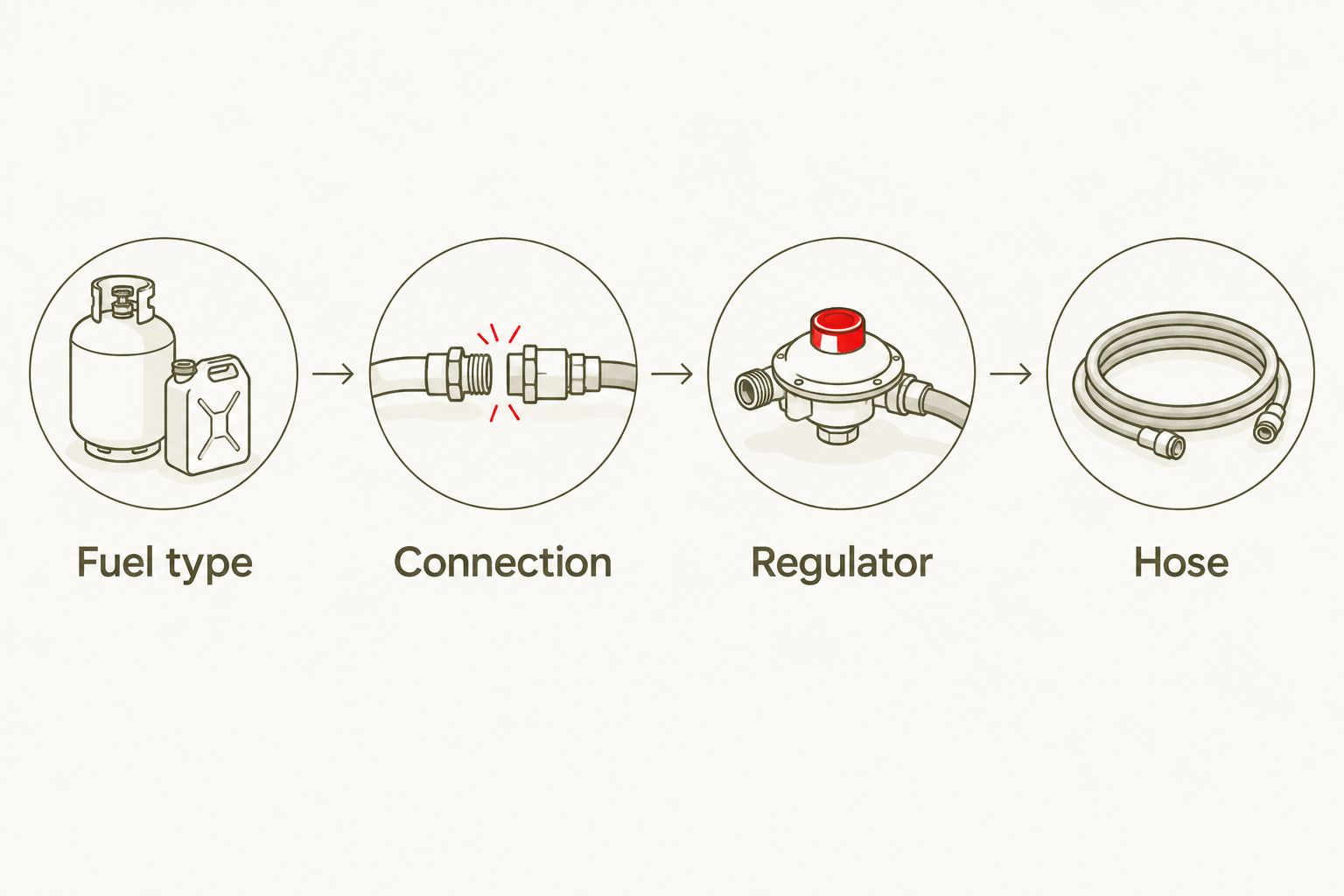
Treat the fuel connection as a complete system. Work through Fuel type, Connection, Regulator and Hose in that order. Each must match the heater's instructions; one correct component cannot make an incompatible arrangement safe.
Our guide to choosing the right camping stove fuel type explains fuel choices for cooking equipment. Heater compatibility remains a separate check against the heater manual.
The 9mm Butane Gas Hose & Clip Set | 1m is described as a 1-metre low-pressure butane hose. Its listed size does not establish compatibility with a heater. The Blue Butane Gas 907 | Full Cylinder is described for compatible camping stoves, heaters and outdoor appliances, with the correct regulator required.
These are fuel-system accessories, not heater recommendations. We advise checking the exact appliance requirements before selecting either component.


Safe placement comes before ignition
Never use a portable gas heater inside a tent, sleeping compartment or enclosed vehicle. An open door, cracked window or carbon-monoxide alarm does not turn an unsuitable location into an approved one. Do not use an outdoor heater inside glamping accommodation.
Follow this setup sequence every time:
- Read the instructions. Confirm the permitted location, fuel, connection procedure and weather restrictions.
- Choose stable ground. Keep the appliance upright and away from walking routes, children and pets.
- Set the clearances. Use the manufacturer's distances, not a guessed gap from tent fabric or furniture.
- Inspect the connection. Check the required components and carry out the instructed leak check. Never test for leaks with a flame.
- Stay with the heater. Shut it down before leaving the area or going to sleep, and allow it to cool before moving it.
Carbon monoxide is colourless and odourless. Headache, dizziness, nausea and confusion can indicate exposure. If you suspect carbon-monoxide poisoning, move everyone into fresh air immediately and call 112 or 999 in Ireland; do not re-enter the affected space.
How these heater types are ranked
The order follows the criteria above: operating location, fuel compatibility, cold-weather suitability, carrying requirements and stable placement. Propane leads for colder outdoor base camps because of its fuel properties. Cartridge arrangements take the compact-packing slot. Refillable butane takes the mild-weather base-camp slot.
This 2026 guide does not assign shared features to every heater in a category. Confirm output, controls, safety devices and clearances on the exact model you are considering.
Which portable camping heater should you choose?
Choose propane for colder outdoor base camps, an approved cartridge heater for compact packing, and refillable butane for suitable mild conditions. If your real aim is a warmer night's sleep, choose insulation rather than a portable gas heater.
We recommend separating outdoor sitting comfort from overnight warmth. For glamping, ask the operator about approved heating before packing anything that burns fuel. For tent camping, plan your sleeping system to work without a heater running.
FAQ
What's the best portable gas heater for camping in Ireland?
The best arrangement for colder outdoor base camps is a manufacturer-approved propane cylinder heater. An approved cartridge heater suits compact packing, while refillable butane suits mild conditions. Choose the exact model by its operating restrictions and fuel requirements.
Can I use a portable gas heater inside my tent?
No. Do not use a portable gas heater inside a tent, sleeping compartment or enclosed vehicle. An open flap or carbon-monoxide alarm does not make an unsuitable appliance safe for that location.
Is propane better than butane for cold-weather camping?
Propane is better suited to colder conditions because its boiling point is much lower than butane's. The heater, regulator and fuel container still have their own operating limits, which you must follow.
Can I heat a glamping pod with an outdoor gas heater?
No. Do not bring an outdoor gas heater into a glamping pod or other enclosed accommodation. Use the heating provided or approved by the accommodation operator.
Can I use my camping stove as a heater?
No. A camping stove is a cooking appliance, not a substitute for a dedicated space heater. Use it only for its intended purpose and in the location permitted by its instructions.
Will any butane hose and regulator fit my camping heater?
No. The gas type, regulator pressure, fittings and hose must match the heater's stated requirements. A physical fit does not prove compatibility.
Can I leave a camping gas heater running while I sleep?
No. Shut down a portable camping gas heater before sleeping and never use it in your sleeping space. Your sleeping bag, mat and clothing should provide overnight warmth without combustion heating.
Do tip-over protection and a carbon-monoxide alarm make tent use safe?
No. Safety devices do not change the appliance's approved operating location. Never assume a heater includes a particular device unless its documentation states it.
One last thing
A bigger heater will not fix heat loss through an unsuitable sleeping mat. Warmth underneath you matters as well as insulation around you. Before adding gas equipment to your 2026 camping kit, check the mat, sleeping bag and dry layers you already depend on.
Keep the heater outside. Make the sleeping system do the overnight work.