

Dog Cooling Vests for Working Dogs: 2026 Verdict
Working dog cooling vests are lightweight garments soaked in water or packed with gel inserts to pull heat off a dog's core during summer fieldwork, trials, and long days on the water. For gundogs and sporting breeds working hard in direct sun, the right vest is the difference between a normal day out and a trip to the vet.
- Dog cooling vests for working dogs work best as evaporative (wet-to-activate) styles for all-day fieldwork - re-wet every 30-60 minutes or they stop cooling.
- Ice-pack cooling vests cool faster but hold for only 20-40 minutes before the pack warms to skin temperature - fine for short bursts, not a full day.
- Double-coated breeds like Labradors and Springer Spaniels need shade and water access more than any vest - the vest is backup, not the fix.
- A cooling vest left on in direct sun with no airflow can trap heat rather than shed it - check the fabric, not just the label.
Why this matters for working dogs in Ireland
A dog's normal body temperature sits around 38-39°C. Once it climbs past 41°C, heatstroke sets in fast, and it can happen even on a mild Irish day if there's no wind and the dog is working hard - quartering ground, retrieving from water, or running flat out for 20 minutes straight.
Irish summers rarely hit 25°C, but that's not the point. A black Labrador working a bog in July with no breeze generates far more internal heat than the air temperature suggests. That's why a proper working dog accessories kit for summer needs cooling gear alongside the usual leads and slips, not instead of shade and water.
A dog cooling vest only helps if you use it correctly - fit, re-wetting schedule, and knowing when to pull it off matter more than which brand you buy.
Check your dog's heat risk before you buy anything
Not every working dog needs the same level of cooling protection. Sort this out first:
- Coat type - double-coated breeds (Labradors, Springer Spaniels, Retrievers) trap heat differently than short-coated pointers
- Age and weight - older and overweight dogs overheat faster and recover slower
- Work intensity - a day of steady quartering is different from repeated water retrieves
- Medical history - any dog with a prior heat stress episode is at higher risk every time after
- Breathing structure - flat-faced breeds struggle to pant off heat even with a vest on
Cool your dog manually before you spend on gear
The free method still works, and it's the first thing to try on a hot working day. Wet the belly, inner thighs, and paw pads directly with cool water - these areas move heat fastest because there's less fur and more blood flow close to the skin.
- Soak a towel and lay it under the dog during breaks, not over the back
- Offer water every 15-20 minutes during hard work, not just when the dog stops
- Work the shaded side of a field or hedge line when the sun is high
- Freeze a water bottle and let the dog lie against it during a rest
- Cut work sessions to 20-30 minutes with proper breaks on the hottest days
Choose a cooling vest once manual methods aren't enough
When a working day runs long, or shade isn't an option on open ground, a vest buys extra time. There are two main types on the market:
- Evaporative vests - soaked in water, they cool through evaporation as air moves across the fabric. Best for steady, all-day work.
- Gel or ice-pack vests - inserts chilled in a freezer or cold water, they cool fast but for a shorter window.
- Reflective/UV vests - reduce direct heat absorption rather than actively cooling, useful as a layer under an evaporative vest.
A dog first aid kit belongs in the vehicle alongside whichever vest you pick, in case cooling gear alone isn't enough on a bad day.
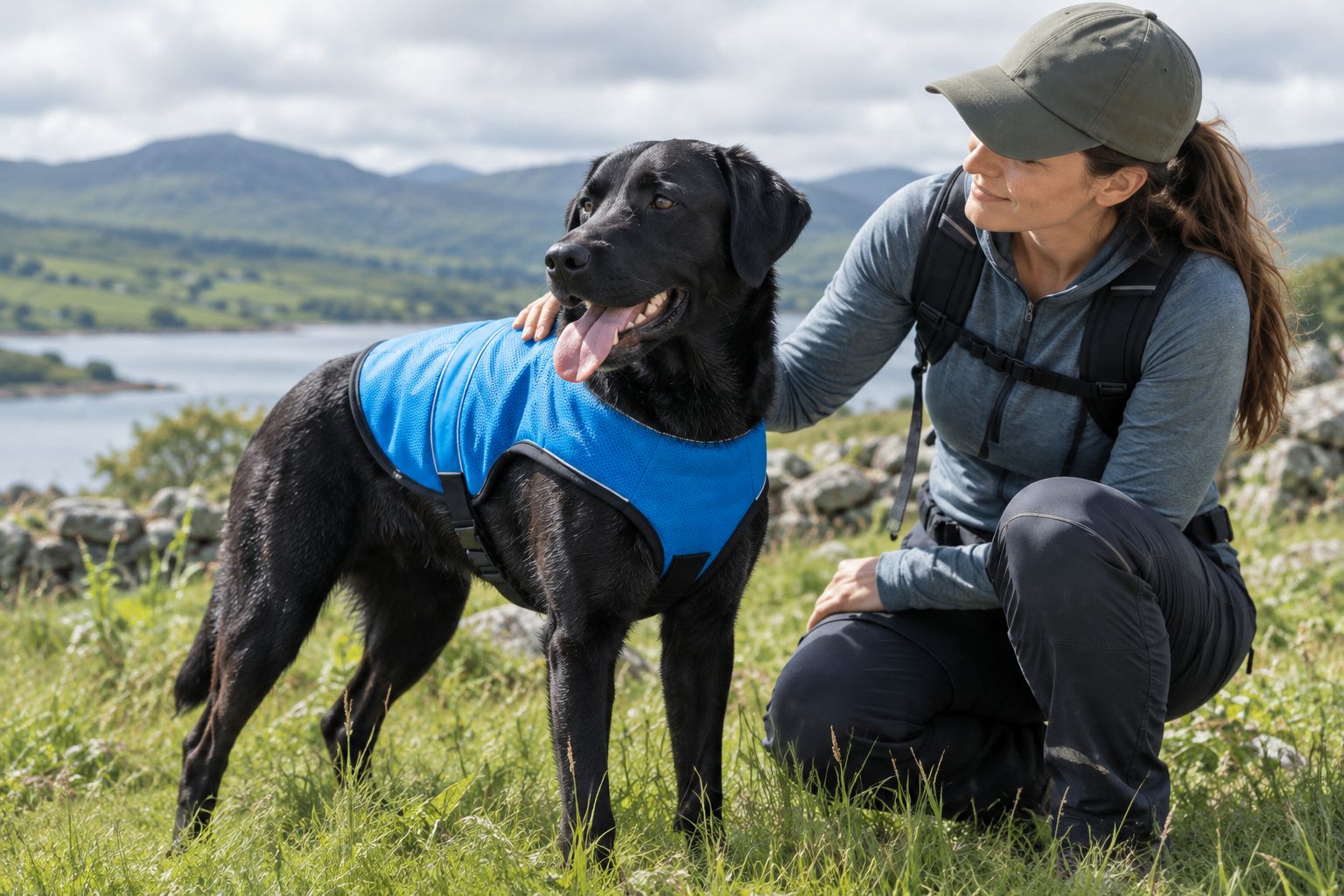
Fit the vest correctly for a working dog
A loose vest flaps and loses contact with the skin, which kills the cooling effect. A vest that's too tight restricts the shoulder movement a working dog needs for retrieving and swimming.
- Measure girth behind the front legs, not just neck-to-tail length
- Check the vest sits flat against the chest and belly with no gaps
- Confirm the dog can extend its front legs fully for a retrieve or a jump
- Avoid vests with hardware that sits directly over the spine
- Re-check fit after the first wash - some fabrics shrink slightly
Build a cooling routine into the work day
One vest fitted at 9am and forgotten about by noon does nothing. Evaporative vests need re-wetting on a schedule, not when someone remembers.
- Re-wet evaporative vests every 30-60 minutes in direct sun, faster in wind
- Swap ice-pack inserts every 20-40 minutes once they reach skin temperature
- Pull the vest off entirely during transport in an air-conditioned vehicle
- Pair the vest with scheduled water stops, not ad-hoc ones
- Check the dog's gums and breathing rate at each break, not just at the end
Watch for heatstroke warning signs regardless of what the dog is wearing
A vest reduces risk - it doesn't remove it. Know the signs before you need them.
- Heavy, uncontrolled panting that doesn't settle during a break
- Bright red or purple gums instead of the usual pink
- Wobbly back legs or a loss of coordination
- Vomiting or drooling far more than normal
- Collapse or refusal to keep moving
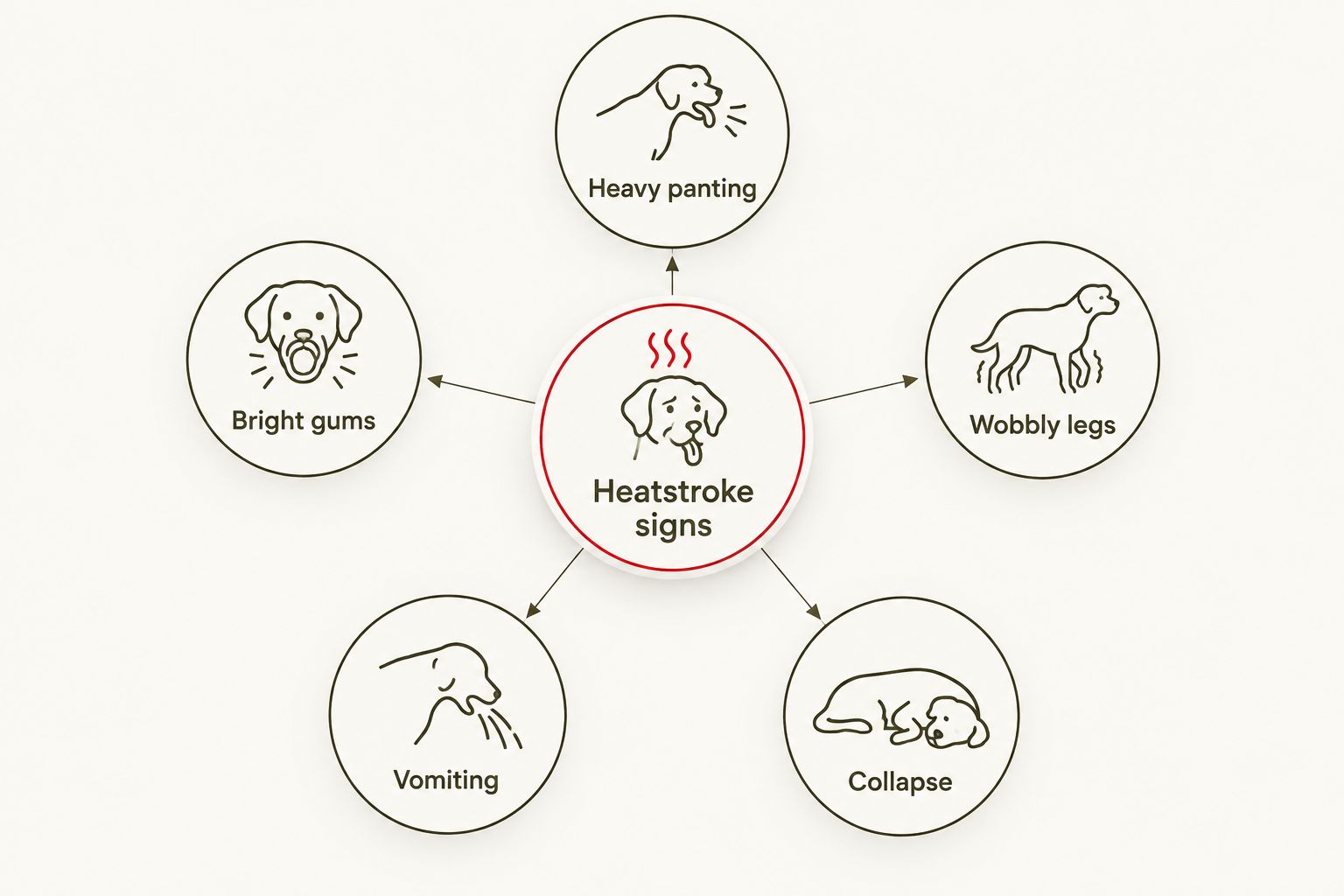
Any dog showing two or more of these signs needs to stop work immediately, move to shade, and get soaked with cool (not ice-cold) water while you get to a vet.
Store and maintain the vest between sessions
A cooling vest that's been left damp in a bag grows mildew fast, especially through an Irish summer with high humidity.
- Rinse the vest in fresh water after every use to clear sweat and field debris
- Dry it flat, out of direct sun, before storing
- Check gel inserts for leaks before the next freeze cycle
- Store away from rodents if kept in a shed or outbuilding over winter
Comparing cooling options for working dogs
| Option | Best for | Key limitation |
|---|---|---|
| Evaporative vest | All-day fieldwork, steady pace | Needs re-wetting every 30-60 minutes |
| Gel/ice-pack vest | Short, intense bursts of activity | Loses effect in 20-40 minutes |
| Reflective/UV vest | Layering under other cooling gear | Doesn't actively cool on its own |
| Cooling bandana/collar | Light work, walking between drives | Minimal effect on core temperature |
| Wet towel/manual method | Any dog, zero cost | Needs constant handler attention |
Verdict: an evaporative cooling vest wins for full working days in 2026, but no vest replaces shade, water, and scheduled breaks.
Common mistakes working dog owners make with cooling vests
- Leaving a wet vest on after work stops - a short-coated dog can chill fast once activity ends and the sun drops, even in an Irish summer
- Buying by neck size alone - a deep-chested spaniel or pointer type needs girth measured, not just collar size
- Treating the vest as a full substitute for water and shade - it buys time, it doesn't remove the need for breaks
- Forgetting to re-wet evaporative vests - a dry vest is just a layer of fabric doing nothing
- Working a double-coated dog in direct sun with no vest and no shade - the coat that keeps them warm in winter works against them in July and August
FAQ
What is the best cooling vest for working dogs?
An evaporative, wet-to-activate vest suits most working dogs in Ireland because it cools steadily across a full working day rather than a short burst. Gel or ice-pack vests cool faster but only hold for 20-40 minutes before needing a fresh pack.
Do cooling vests actually work for dogs?
Yes, when fitted correctly and kept wet or cold, a cooling vest lowers a dog's surface temperature through evaporation or direct cold contact. It stops working the moment an evaporative vest dries out or a gel pack warms to skin temperature.
How long does a dog cooling vest stay effective?
An evaporative vest stays effective for 30-60 minutes before it needs re-wetting, faster in wind or low humidity. A gel or ice-pack vest holds for roughly 20-40 minutes before the insert reaches skin temperature and stops cooling.
Can a cooling vest make a dog too cold?
It's uncommon but possible with ice-pack vests left on too long in cool or shaded conditions. Pull the vest off during transport, breaks in shade, or once the dog stops working hard.
What temperature is dangerous for a working dog in Ireland?
Heatstroke risk isn't only about air temperature - a dog working hard with no wind can overheat well below 25°C. Watch behaviour and gum colour over the thermometer reading.
Are ice-pack vests better than evaporative vests?
Ice-pack vests cool faster and suit short, intense bursts of work. Evaporative vests suit longer working days because they can be re-wetted repeatedly in the field.
Do double-coated dogs need a cooling vest?
Double-coated breeds like Labradors and Springer Spaniels benefit from cooling gear in direct sun, but shade and water access matter more than the vest itself. Use the vest as a supplement, not the main defence.
How do I know if my working dog has heatstroke?
Heavy uncontrolled panting, bright red or purple gums, wobbly back legs, vomiting, or collapse are the key signs. Any two together mean stop work, move to shade, and cool the dog with water immediately.
One last thing
The vest matters less than the schedule. A dog wearing the best evaporative cooling vest on the market still overheats if nobody re-wets it for two hours in direct sun - set a timer, not a reminder in your head, and check gum colour at every break through summer 2026.