
Fox Hunting Clothing Ireland: 2026 Field Kit
Pest control clothing for fox work in Ireland is quiet, waterproof field kit built to keep you dry, warm and mobile on wet farmland through 2026.
- Quiet waterproof layers beat fashion camo for Irish fox control work.
- Boots and trousers fail first on Irish mud — buy those before a jacket.
- Layer base, mid and shell so you can strip heat on long night walks.
- We stock field jackets, trousers and boots ready to ship across Ireland.
Why this matters
Irish fox control runs on sodden ground, hedgerows and long cold sits. Cotton jeans and a town jacket soak through in under an hour. Once wet, you lose heat, make noise and cut the session short. The right clothing keeps you out longer, quieter and safer on the land you manage.
Fox control clothing Ireland shoppers need gear that handles rain, wind and briar, not parade camo. That is the gap this guide closes for 2026.
Why fox control clothing matters for Irish land managers
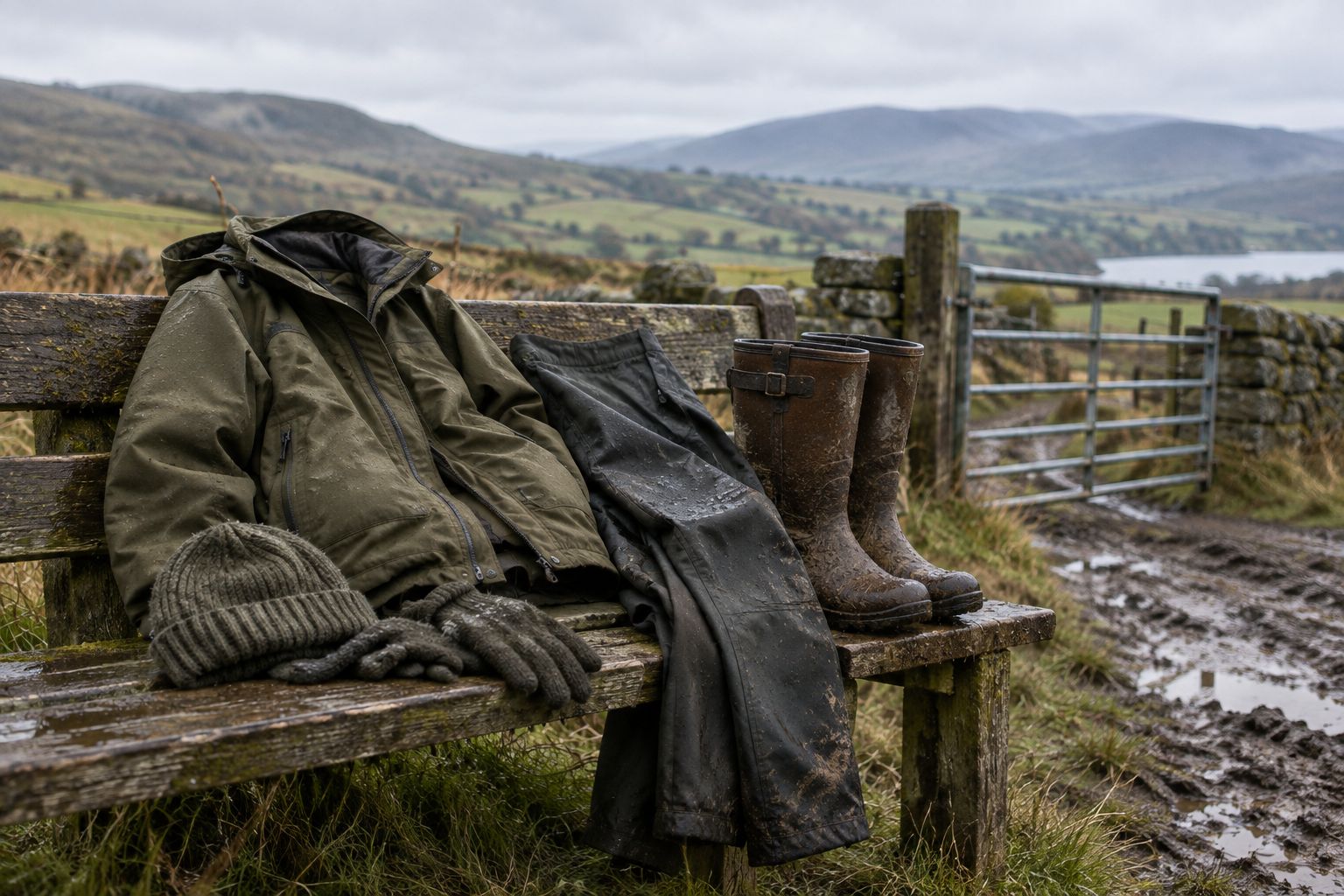
Irish weather does not pause for a night walk. Rain, mist and mud are normal from autumn through spring. You move through gorse, wire and wet grass. You need silent fabric, sealed seams and boots that do not suck off in clay.
Farm and estate work also means early starts and late finishes. A thin shell that works for a short walk fails on a four-hour sit. Build the kit for the longest night of the year, not the mildest evening.
Quiet waterproof layers plus solid boots are the core of fox control clothing in Ireland — we stock field jackets, trousers and boots built for wet Irish ground.
How to build fox control clothing for Ireland
Map your ground and hours
Walk the same ground you will work. Note mud depth, briar, fences and how long you stay still.
- List average night length in winter hours
- Mark boggy gateways and clay tracks
- Note wind exposure on open fields
- Check if you sit more than you walk
- Write down what soaked you last season
Choose a quiet outer shell first
Start with a field jacket that sheds rain and does not rustle. Soft shell or treated hard shell both work if the fabric stays quiet when you raise an arm. A Deerhunter Eagle Jacket style cut gives coverage without bulk for Irish hedge lines.
- Pick dark green, brown or muted olive over bright camo
- Check hood fits over a beanie
- Test zip noise before you buy
- Prefer high collar for wind
- Avoid loud logos that flash under lamp
Fit waterproof trousers that move
Trousers fail before jackets on Irish farms. Water runs off the coat onto the legs. Choose articulated knees and a quiet face fabric. Härkila Scandinavian trousers type builds handle briar and wet grass without sounding like a crisp packet.
- Full-length side zips help over boots
- Reinforced seat and knees last longer in mud
- Pair with gaiters on deep wet ground
- Avoid jeans and soft cotton joggers
- Hem should clear the boot welt, not drag
Pick boots for Irish mud, not dry trails
Irish clay pulls lightweight trainers apart. You need grip, height and a waterproof membrane that still breathes on a long walk. Rubber boots suit short wet circuits; leather or GTX field boots suit mixed distance.
- Härkila Pro Hunter Ridge GTX boots cover mixed farmland miles
- Rubber options suit yard-to-field pest runs
- Size for a thick winter sock
- Break them in on short walks before a long night
- Clean mud off membranes so they keep working
Layer for cold Irish nights
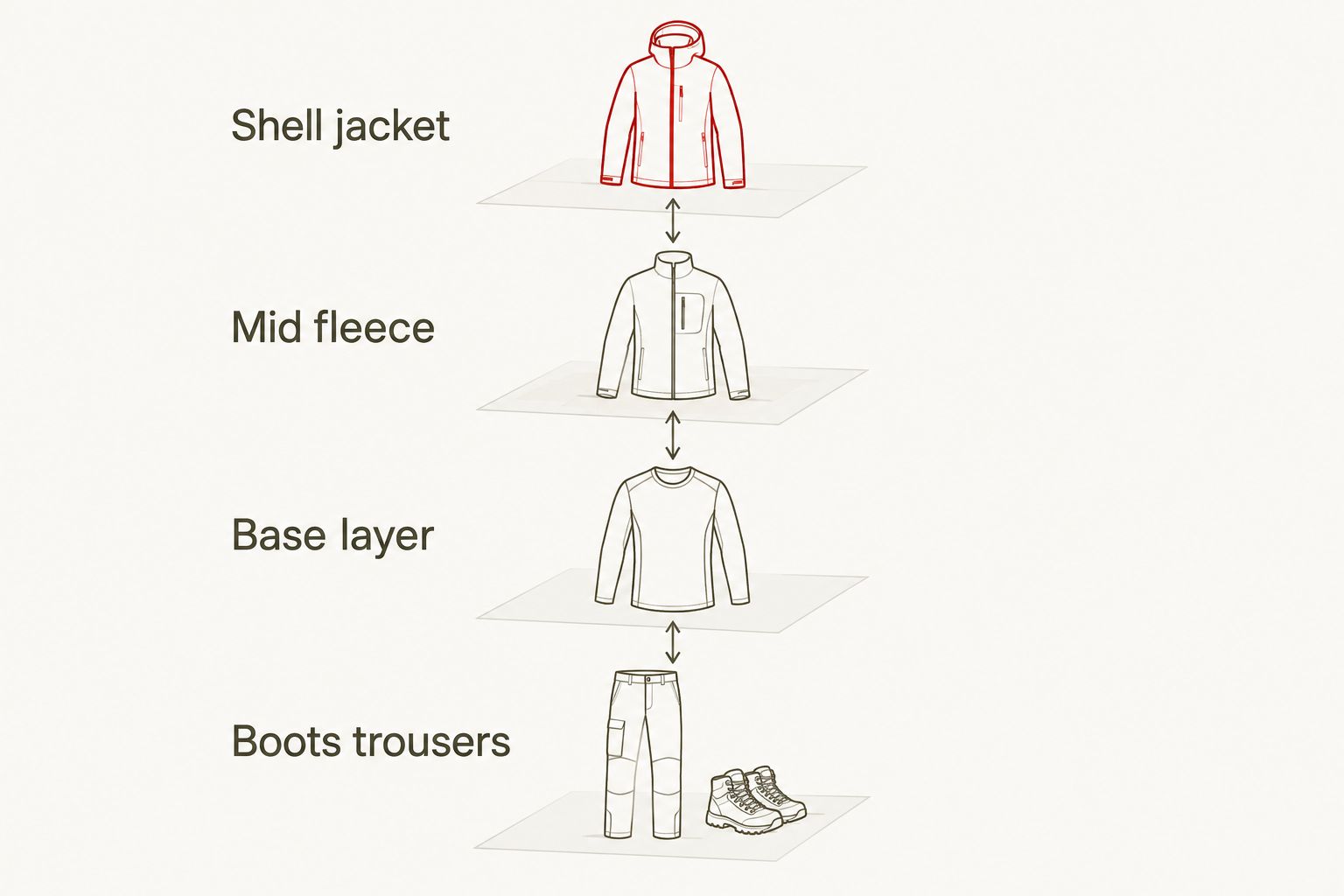
Base layer moves sweat. Mid layer holds heat. Shell blocks rain and wind. Strip the mid layer when you walk; add it when you sit. See our guide on how to layer clothing for cold weather for the full stack.
- Merino or synthetic base, never cotton
- Light fleece or grid mid for stop-start work
- Shell last, not first
- Spare dry socks in a zip bag
- Thin glove liner under a waterproof outer glove
Add gloves, headwear and small access gear
Hands and head dump heat fast in Irish wind. Quiet gloves with grip matter when you handle traps, lamps or gates. A dark beanie or boonie breaks outline without trapping sweat.
- Waterproof glove shell over thin liner
- Beanie that fits under the hood
- Neck gaiter for wind on open fields
- Small pack or game vest pockets for tools
- Headlamp with a red mode for close work
Test the full kit before a long session
Wear the full set on a wet evening walk near home. Sit for twenty minutes. Walk a muddy lane. Listen for fabric noise. Fix weak points now, not at midnight on the farm.
- Walk 30 minutes in rain or heavy dew
- Sit still and check cold spots
- Kneel and crawl once to test trousers
- Confirm boot grip on wet grass
- Reproof jackets and trousers before the 2026 season peak
Clothing options compared for Irish fox control
| Option | Best for | Key limitation |
|---|---|---|
| Soft-shell field jacket | Quiet movement on mixed walks | Less rain-proof in driving storms |
| Hard-shell waterproof jacket | All-night rain and wind | Can feel noisy if fabric is stiff |
| Waterproof field trousers | Briar, wet grass, kneel work | Hot on rare dry warm nights |
| Leather or GTX field boots | Distance on mixed ground | Need drying time after deep mud |
| Tall rubber boots | Short wet circuits and yards | Less support on long rocky walks |
| Layered mid fleece | Stop-start heat control | Useless without a shell on top |
Best for most Irish fox control nights in 2026: quiet soft or treated hard shell, waterproof trousers, and GTX or quality rubber boots matched to your ground.
Common mistakes Irish fox control workers make
- Buying camo before waterproofing. Pattern does not keep you dry. Rain gear does.
- Wearing cotton base layers. Cotton holds sweat and chills you on the sit.
- Skipping trousers. Water from the jacket runs straight onto jeans.
- New boots on night one. Blisters end the job faster than rain.
- One heavy coat, no layers. You overheat on the walk and freeze on the sit.
FAQ
What is the best fox control clothing for Ireland in 2026?
Quiet waterproof jacket and trousers with solid field or rubber boots. Layer a moisture-wicking base and a light mid so you can adjust heat on long Irish nights.
Do I need camouflage for fox control on Irish farms?
Muted greens and browns matter more than loud camo prints. Stay dark, matte and quiet. Bright logos and rustly fabric cost more animals than a plain olive shell.
Are wellington boots enough for fox control clothing Ireland kits?
Rubber boots work for short wet circuits and yard runs. For longer mixed ground walks, choose GTX or leather field boots with real ankle support.
How many layers should I wear for night pest control in Ireland?
Three: base, mid and shell. Add or drop the mid when you switch from walking to sitting. Cotton never belongs in the stack.
What colours work best for fox control clothing in Ireland?
Dark olive, tarmac green, brown and deep grey. Avoid pale beige that flashes under lamp and avoid shiny finishes.
Should pest control clothing be fully waterproof or just showerproof?
Fully waterproof with taped seams for Irish winter work. Showerproof fails on multi-hour rain and wet grass.
Where can I buy fox control field clothing in Ireland?
We carry field jackets, trousers and boots aimed at wet Irish ground, with Ireland-wide delivery on the range.
How often should I reproof outdoor clothing for 2026 seasons?
Reproof when water stops beading on the face fabric. For heavy winter use, check after every few wet nights and before the main cold stretch.
One last thing
Most kits fail at the ankle, not the chest. If your boot-to-trouser join leaks, the rest of the spend is wasted. Seal that gap with height, gaiters or a proper over-trouser hem before you upgrade the jacket again in 2026.