

How to Winterise a Boat Engine in Ireland (2026)
Winterising a small boat engine in Ireland means flushing it with fresh water, stabilising or draining the fuel, fogging the cylinders on two-stroke engines, and storing the battery somewhere dry and frost-free before the first hard frost hits. Skip the fuel step and ethanol-blend petrol left sitting in the tank over a damp Irish winter turns gummy inside the carburettor, which is the single most common reason engines won't start in spring.
- Winterising a boat engine means flushing, fuel stabilising, fogging and dry battery storage before the first frost.
- Petrol outboards need the full checklist; electric outboards mainly need battery care and a prop check.
- Ethanol-blend fuel left untreated over an Irish winter is the most common spring start-up failure.
- A 22 litre fuel tank with a level gauge and a proper engine flusher cover most small outboard jobs.
- Skip winterising in 2026 and you risk corrosion, a dead battery and a carburettor strip come March.
Why this matters
Most small boats in Ireland sit idle from October to March. That's five or six months of damp sheds, driveway frost and fuel quietly going stale in the tank.
A two-stroke or four-stroke outboard left un-flushed after its last saltwater trip corrodes from the inside out — you won't see it until the impeller fails or the powerhead seizes. Storing it right under a boat cover built for winter buys you a dry spring start instead of a mechanic's bill.
Getting this wrong in 2026 costs more than a service call — a seized lower unit or a corroded carb often means a full strip-down, and that's weeks lost at the start of the season when the fishing is best.
How do you winterise a small boat engine in Ireland?
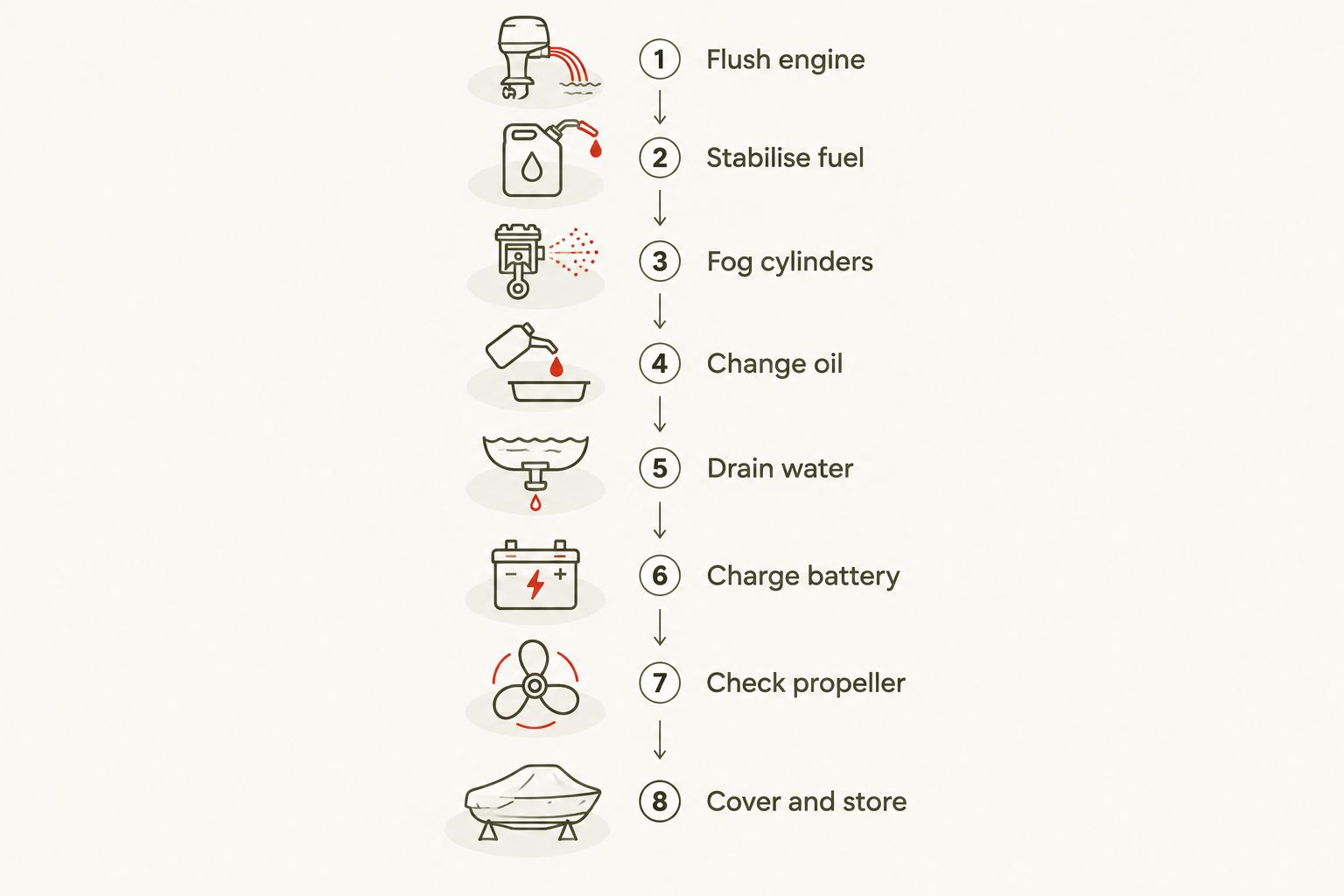
Work through these steps in order, whether the engine is a 2-stroke, 4-stroke, or sitting on a small dinghy at the back of the shed.
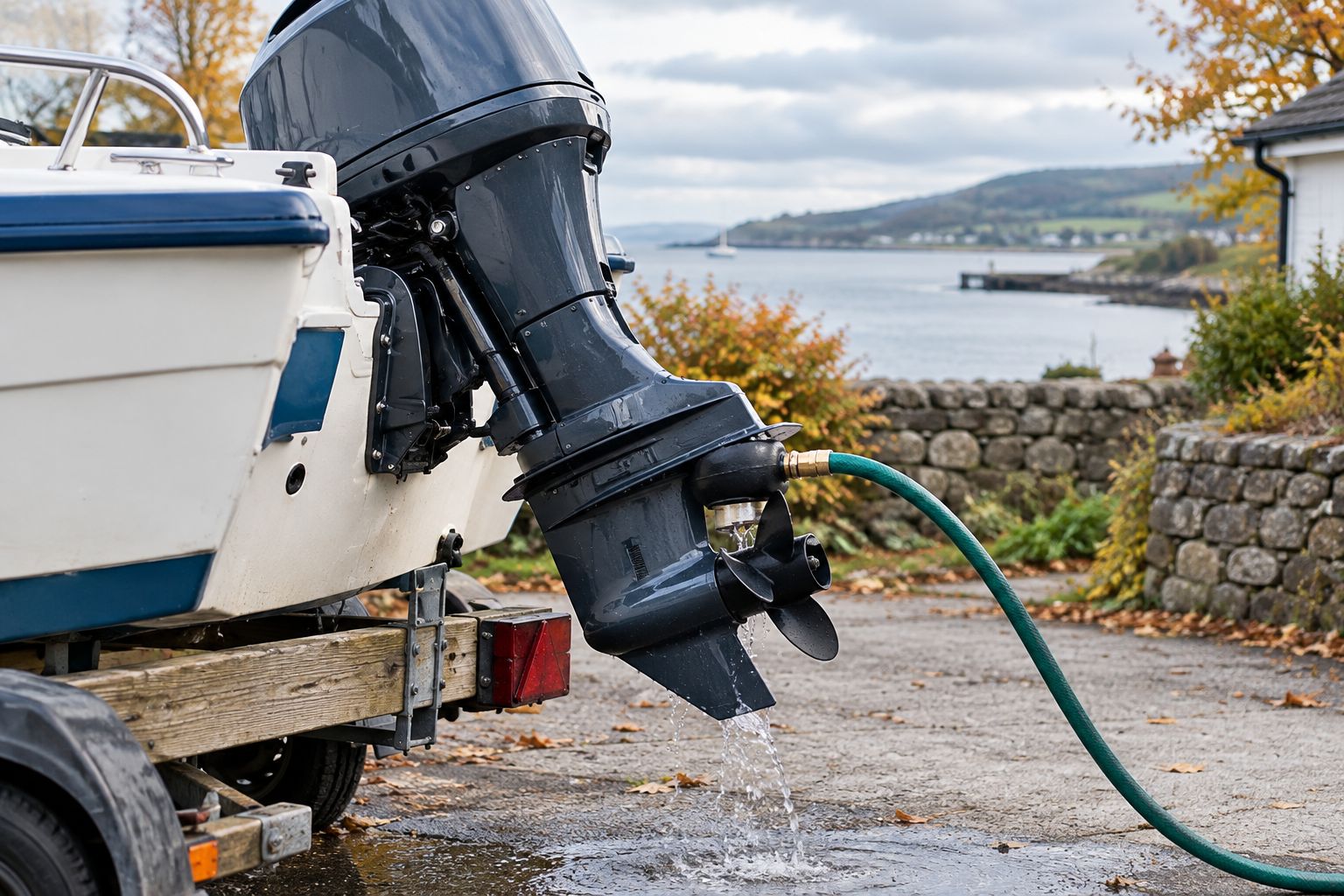
- Run the engine on a flusher first. Fresh water through the cooling system clears salt, sand and grit before you touch anything else.
- Add fuel stabiliser and run it through. Top up the tank, add stabiliser, then run the engine for 5-10 minutes so treated fuel reaches the carburettor.
- Fog the cylinders (2-stroke engines). Spray fogging oil into the air intake while the engine runs, then again just before it stops.
- Change the engine oil (4-stroke engines). Old oil holds acidic combustion by-products that sit against internal metal all winter.
- Drain the water and pull the bung. Open the drain plug and leave it out — trapped water expanding in a frost cracks the block.
- Disconnect and charge the battery. Store it indoors, off the concrete floor, on a trickle charger through the cold months.
- Check and grease the propeller. Fishing line wrapped around the shaft over a season eats through seals if it's left there.
- Cover and store the engine tilted down. This lets any residual water drain rather than pool in the lower unit.
Petrol outboard engines: the full winterising checklist
A petrol outboard, 2-stroke or 4-stroke, needs every step above. Fuel is the weak point — ethanol-blend petrol absorbs moisture over an Irish winter and separates in the tank, which is why stabiliser matters more here than in drier climates.
A 22 litre tank with a built-in level gauge makes it easy to see exactly how much treated fuel is left before you run the engine dry for storage, or to keep a fully stabilised tank ready for a quick spring start. Smaller 12 litre tanks work the same way for tenders and small tillers.
| Task | Petrol outboard | Electric outboard |
|---|---|---|
| Fuel stabilising | Required | Not needed |
| Flushing with fresh water | Required after every saltwater trip | Not needed |
| Fogging cylinders | Recommended on 2-stroke engines | Not applicable |
| Battery care | Only if electric start | Required — charge and store indoors |
| Corrosion check | Prop, lower unit, mounting bolts | Prop and mounting bolts only |
Electric outboard motors: what you actually need to do
Electric outboards skip most of the checklist above — no fuel, no fogging, no carburettor to gum up. The job is mostly about the battery.
Lithium battery packs used with electric trolling motors hold charge better through winter than lead-acid, but neither likes sitting at 0% or 100% for months. Charge to roughly the midpoint, store it somewhere that doesn't freeze, and check it once a month. Rinse the prop and shaft with fresh water if the motor ran in saltwater, same as a petrol lower unit, and store the electric outboard itself out of direct frost.


Why winterising steps vary boat to boat
Not every engine needs every step in the same order or with the same urgency. A few things change the checklist:
- Saltwater vs freshwater use — saltwater engines need flushing every trip, not just at lay-up.
- 2-stroke vs 4-stroke — only 2-strokes need fogging oil in the cylinders.
- Storage location — an unheated shed needs the drain plug out and water fully cleared; a heated garage is more forgiving.
- Engine age — older engines with worn seals corrode faster if flushing gets skipped.
- Fuel type — ethanol-blend petrol degrades faster than ethanol-free, so stabiliser timing matters more.
- How long it's stored — a boat back on the water by December needs less prep than one parked until April.
How often should you flush a boat engine in Ireland?
Flush a saltwater-run engine after every single trip, not just before winter storage — salt residue starts corroding the water pump and cooling passages within days. Freshwater-only engines need it less often but should still get a full flush before winter lay-up.
Do electric outboard motors need winterising?
Electric outboard motors need winterising, but it's a shorter job than a petrol engine — no fuel system, no fogging, mainly battery care and a rinse of the prop and shaft. Store the battery at a partial charge indoors and check it monthly through the winter.
Can you winterise a boat engine yourself?
You can winterise a boat engine yourself with basic tools — a flusher, fuel stabiliser, fogging oil and a battery charger cover the job for most small outboards. A full engine strip, gearbox oil change or anything involving the lower unit seals is worth handing to a mechanic if you're not confident.
FAQ
When should you winterise a boat engine in Ireland?
Winterise a boat engine before the first hard frost, usually late October or November in most of Ireland. Waiting until after a freeze risks a cracked block from trapped water.
Do you need to drain fuel completely for winter storage?
No — a full tank of stabilised fuel is better than an empty one, since an empty tank lets moist air condense inside. Add stabiliser, run the engine to circulate it, and leave the tank topped up.
How long can fuel sit in a boat engine over winter?
Fuel treated with stabiliser can sit for several months without breaking down, which covers a typical Irish winter lay-up. Untreated ethanol-blend fuel starts degrading within weeks.
Is fogging oil necessary for a 4-stroke engine?
Fogging oil is mainly for 2-stroke engines with exposed cylinder walls. 4-stroke engines benefit more from an oil and filter change before storage than from fogging.
What happens if you don't winterise a boat engine?
Skipping winterising risks a corroded water pump, a seized lower unit from trapped frozen water, and a gummed-up carburettor from stale fuel. Any of these turns a free job into a paid repair by spring.
Should the battery stay connected over winter?
No — disconnect the battery and store it indoors on a trickle charger rather than leaving it connected in a cold boat or shed. A frozen or fully discharged battery often won't take a charge again.
Do inflatable boats with small outboards need the same steps?
Yes — a small outboard on an inflatable needs the same flush, fuel stabilising and battery care as a bigger engine, just scaled down. The tank size and fogging amount are smaller, the process is identical.
One last thing
The drain plug is the step people forget most. An engine can get flushed, fogged and fuel-stabilised perfectly and still crack a block over one cold night in 2026 because the bung stayed in and water sat trapped inside. Pull it, leave it out, and put it somewhere you'll actually find it again in spring.