Fly fishing for pike in Ireland – an introduction

If you’re a trout fly fisherman new to pike fishing or a pike angler wanting to give fly fishing a try, this short article will give you some handy tips and pointers to get started. Including - location, seasons, equipment, tactics and fish welfare.
This article was written by Chris Barry - fly casting instructor and fishing guide at www.gofishingireland.ie
Where to go fly fishing for pike in Ireland
Fly fishing is a dynamic and highly effective way to target pike in Irish waters. Learn how to cast a fly rod and you’ll open up new and exciting opportunities to catch big fish.
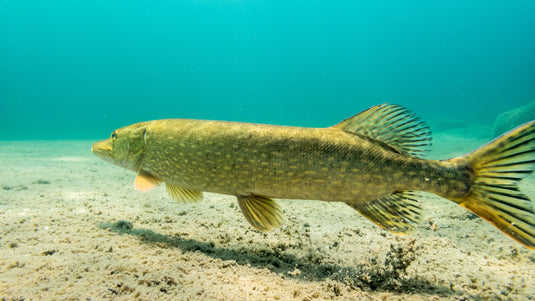
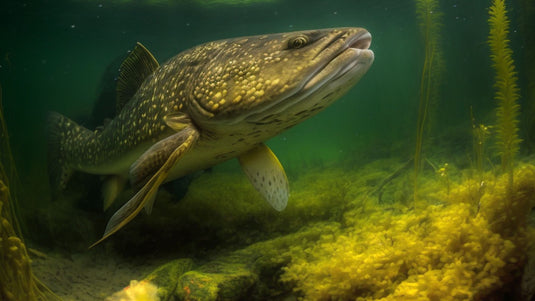
The pike is Ireland’s largest freshwater predator and commonly distributed throughout the country. They appear in lakes, rivers and canals. Basically, anywhere there is freshwater and a good supply of prey fish to eat. As a general rule, pike prefer still or slow running water, but they can make an appearance in some of our fast-flowing rivers too, especially in the slacks and bends. The pike angler should keep an open mind.
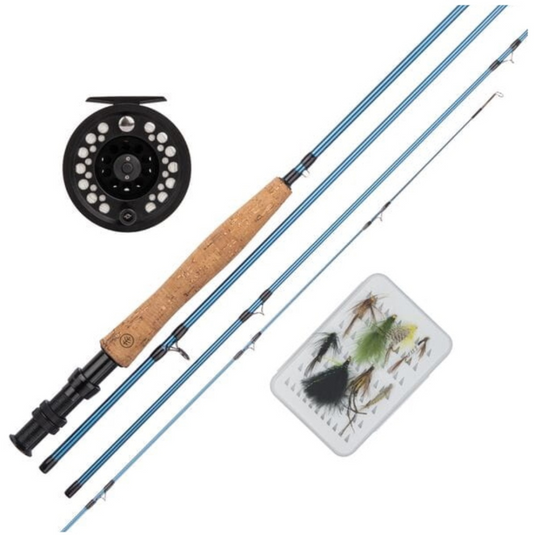
Fly fishing for pike can be done from a boat or off the bank. The fly angler can travel light, so it’s ideal for those who enjoy exploring the waterways on foot. All you need is a rod reel, fly line, leader and some flies. Add a landing net and unhooking tool and you’re all set.

Where to find them
Depending on the time of year, the pike can take up different positions in our freshwater fisheries. On lakes we like to look for structure and cover, somewhere for them to blend into the shadows and prepare to ambush their prey. Weed beds, drop offs, islands, underwater ridges – all these features can provide attractive locations for pike to take up residence. In fast rivers, pike will often hold up in slack water, bends, tributary confluences and weedy areas at the edge of the flow.
In some of our larger loughs, pike will be found in open water, far from the shoreline. They like to keep reasonably close to the shoals of prey fish such as roach, perch and bream. In these situations, a boat kitted out with a sonar device can be very helpful in locating the large shoals of bait fish that provide fodder for the pike. If you can find these shoals, the pike will often be nearby.

Frosty morning on a canal in Co. Kildare. A perfect venue for fly fishing for pike.
Rivers and canals offer great opportunities for fly fishing for pike in Ireland, especially for the angler travelling on foot. You don’t need to achieve great distances with your casting and, very often, pike will lie close to the bank. They are a great place for the novice pike fly angler to get started.
Rivers associated with trout and salmon angling will usually have close seasons from October to March, so the options are a bit more limited. Having said that, early season March/April/May is a great time to target river pike with the fly. Pike anglers should always check local regulations on the game fisheries. You may need to buy a day ticket. And don’t think that fishing for pike excuses you from having a permit! Also be very conscious of current salmon angling regulations. If the fishery rules dictate single hooks or barbless hooks, you must select gear accordingly.

100cm fly caught pike from the river Boyne in Co. Meath
Pike fly fishing equipment
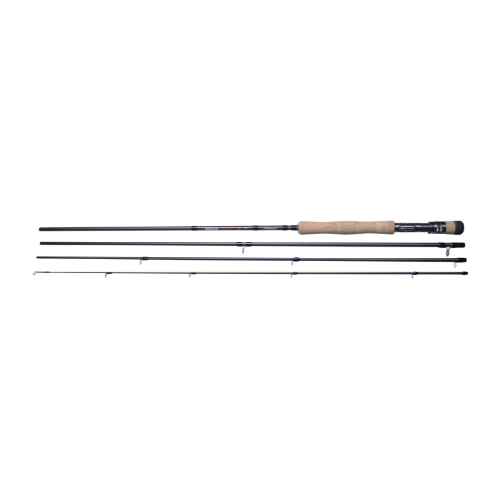
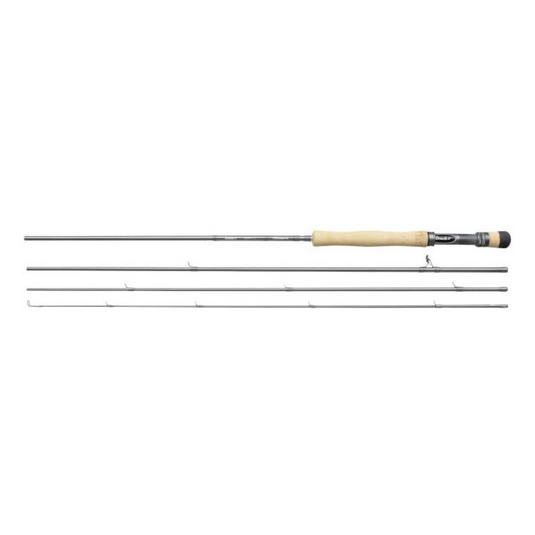
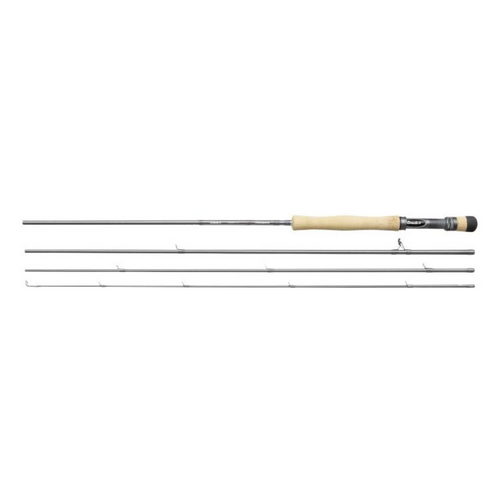
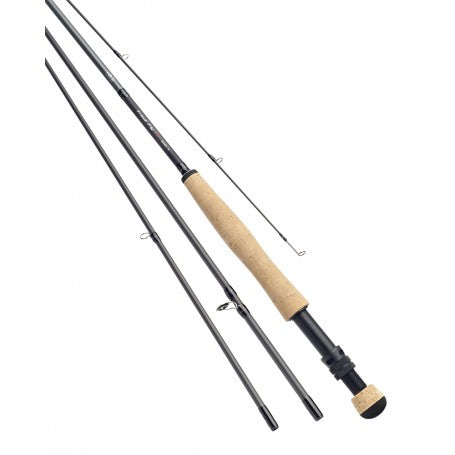
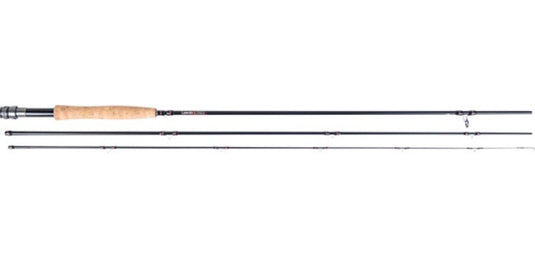
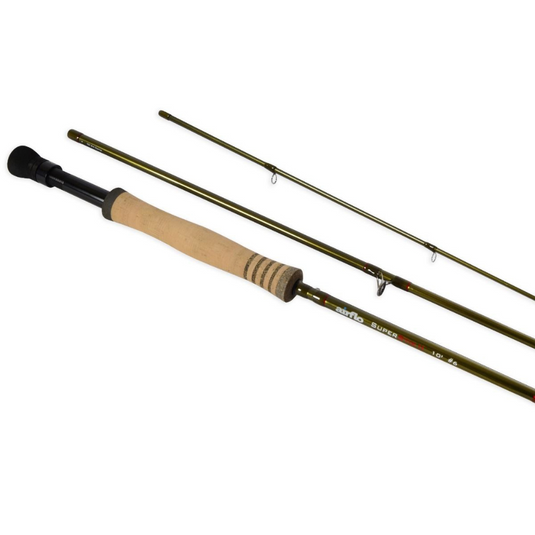
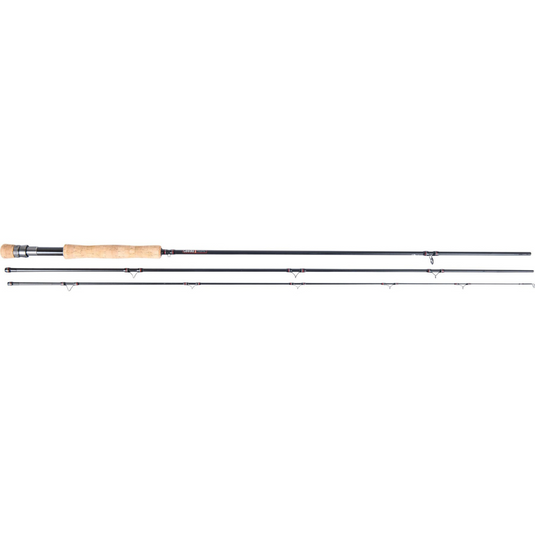
For pike fly fishing, you don’t need to carry a lot of equipment. You’ll need a suitable fly rod, reel, fly line, leader and wire trace at the end. Add to that some effective fly patterns, a long nose pliers, a landing net and you’re good to go.
Many game anglers branch out into pike fishing as a welcome opportunity to continue fly fishing after the trout season has ended in September / October. It’s important to remember that trout fishing equipment is not really suitable for fly fishing for pike in Ireland, especially where larger fish are concerned. Pike should be played in quickly and firmly to minimise them reaching a state of exhaustion. Hanging onto a heavy pike on a 6#weight trout rod may be the stuff of great stories but you’re only risking the fish’s health as it exhausts itself in a drawn-out battle. You won’t do your trout rod any favours either. Much better to get the right equipment for the job.
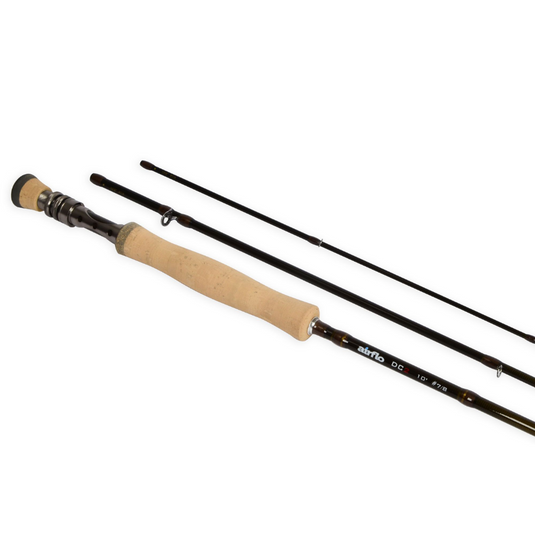
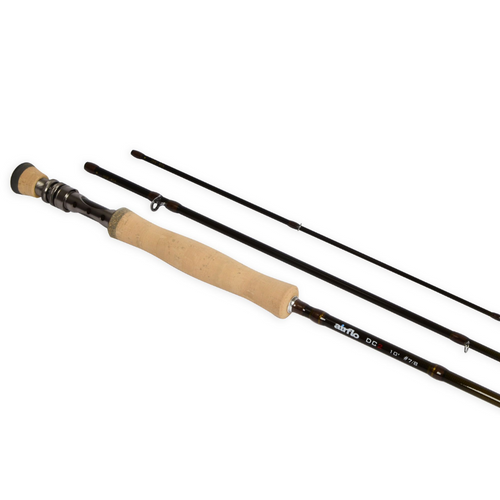
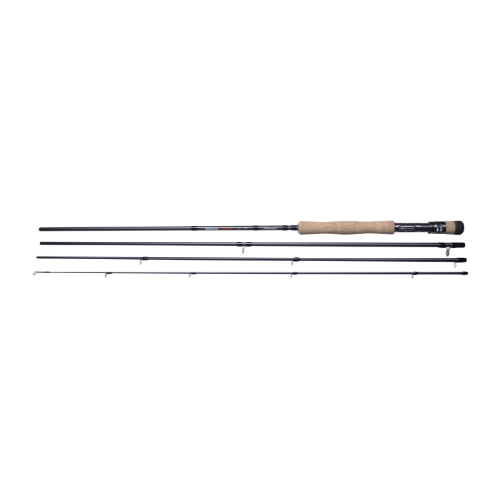
9# and 10# weight rods are appropriate for pike fly fishing in Ireland. We have a healthy population of large fish (over 100cms), so the angler should be prepared when one takes the fly. Not only do these rods have sufficient backbone to play the fish, but they enable the angler to cast larger, bulkier flies that are very effective. 20-30cm flies are not unusual and 6# and 7# weight trout fly rods are simply not up to the job. There are plenty of great pike fly rods and lines on the market today and your local tackle dealer can advise.
Reels for pike fly fishing should be matched to the rod and need to hold the fly line and about 50 meters of backing. In my experience, pike do not normally take off on explosive, long runs so you won’t need a sophisticated drag system. Nonetheless, they can strip line, and you should use backing on the reel in case a fish is hooked with most of the fly line already outside the rod tip. Consider choosing a reel with spare cassettes so you can change fly lines during the fishing session as conditions dictate.
For fly lines, I’d recommend getting three lines to cover most fishing situations: a full floating line, an intermediate or sink tip line and a faster sinking line such as Di 5 or 6. (Di stands for Density Index. A Di 5 line sinks at 5 inches per second, Di 3 at 3 inches per second and so on). Select the correct sinking line and count it down to present your fly at whatever depth you think the pike are holding.
The fly line must be correctly matched to the rod or else the entire kit will be unbalanced and not perform smoothly i.e. match your 9#weight fly rod with a 9#weight line. If you’re limited to just one fly line to get started, a floating line with a sink tip or an intermediate (slow sinking) line are good options, especially in water of 2-4 meters or less.
To the end of the fly line, you tie on the monofilament or fluorocarbon leader. Unlike trout fishing, you don’t need a long leader. Pike are not really “tackle shy” and, anyway, the longer the leader, the harder it is to turn over heavy or bulky flies in the cast. I find that a fluorocarbon leader of 1.5 -2 meters is generally sufficient. 15kg breaking strain is about right. At the end of this leader, tie on a wire leader or “bite-tippet” of at least 30-40cms. At the business end I like to tie on a sturdy line clip enabling you to quickly switch flies without having to tie new knots. If you don’t fancy making up your own leaders, you can now buy ready-made pike fly leaders in the tackle shop.
Pike flies
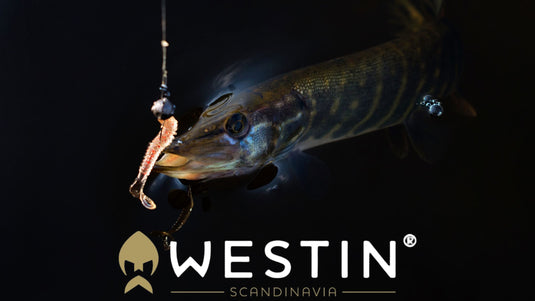
Like trout and salmon flies, there are many patterns available and this list is growing year on year as the sport becomes more popular. Just as in game fishing, we try to “match the hatch” and present a fly that mimics the typical prey fish living in the watercourse e.g. roach or perch. However, unlike game fishing, the pike flies can incorporate lots of patterns and bright colours that resemble nothing natural. It’s the combination of colour and movement that is key to success. It pays to experiment with various patterns and sizes until you find out what works on your local water.
Sometimes the pike want a small fly, sometimes large. The old rule of “bright lure on a bright day, dark lure on a dark day” also holds true. Rate of retrieve can be vital. If the fish aren’t biting, it can often be more productive to change the rate and style of your retrieve before switching flies. Always slow things down in cold winter water.
There is plenty of scope for experimentation with pike flies. You might even like to try tying your own. Buy yourself a fly-tying kit and get creative! Catching a nice fish on a new fly pattern that you’ve invented and tied up yourself is hard to beat.
Fly casting – Tactics and safety
I won’t delve into the mechanics of fly casting here. If you can cast a trout or salmon fly rod, you’re ready to go. If your fishing experience is limited to using conventional spinning rods, I’d recommend booking yourself a casting lesson with a qualified instructor.
To achieve distance when casting a pike fly rod, it’s helpful to be able to haul and double haul. This is a particular procedure built into the casting stroke that increases line speed and further loads the rod. It involves a haul (or tug) on either the back cast or forward cast (single haul) or a haul on both back and forward casting strokes (double haul). Hauling is also beneficial when trying to cast heavy or bulky flies into the wind. Some anglers find this casting technique quite difficult to learn and master. There are plenty of helpful videos on YouTube, but better to get a lesson in the double-haul from a qualified casting instructor.
As with all forms of fly casting, the angler must be mindful of the risks. Pike flies are large and can cause nasty injuries if they strike the caster. Always wear protective eyewear and head gear. Be very conscious of wind direction and try to keep the casting rod hand downwind if possible.
Pike feeding habits – when to go fly fishing
Contrary to popular belief, pike are not rampaging around the waterways all the time, grabbing anything that moves. Depending on the time of year, they can have distinct feeding spells during the day. In between those feeding spells they can lie dormant and can be difficult to tempt. But, when that feeding window opens, many pike in the same area go on the hunt simultaneously. It’s not uncommon to have hectic sport for 30-40 minutes, then things go quiet. Familiarisation with the venue can reveal these feeding times.
Sometimes during the depths of winter and early spring, pike can be difficult to tempt with lures and flies. Flies should be stripped and moved slowly with long pauses. Fish can often move to deeper water so we need those sinking fly lines to reach them, as they will be less likely to move distances to chase your fly.
The pike spawning period in Ireland usually occurs from February to April, depending on the venue. Many small male fish and the larger females will congregate in shallow weedy bays. After the rigours of spawning the pike need to regain strength and will go on the hunt. This can be a productive time. I find May to be a very prolific month with a good chance to catch plenty of fish and some larger specimens. Mid-April to early June is one of my favourite times to fly fish for pike.

Fly caught 104cm pike from the margins of a lough in Co. Cavan
As the water temperature warms up with longer days and the arrival of summer temperatures, the pike can become moody again, larger fish in particular. Many pike anglers choose to give them a break during the warmer months. The fish, if hooked, can often put up a terrific battle but this spectacular display of fighting power can weaken the fish, and they can struggle to recover when returned to warm surface water. Anyway, there are plenty of other species to be caught on the fly rod in Ireland at this time so maybe consider waiting until September before piking again. Mid-September through to mid-November is another great time to chase pike with the fly rod. The fish are feeding up in preparation for winter, and we can experience some of the best catches of the year at this time.
Even the coldest winter days of December or January can produce pike to the fly angler. In fact, I have often seen the fly out-fish regular lures in these conditions. A pike fly can be worked very slowly with long pauses and twitches to provoke a strike. Let it hang, suspended in the water and wait for the hit!

Fly fishing enthusiast Ryan Crozier with a nice fly caught fish of 102cms
Pike handling and fish welfare
As with all fish, pike must be handled with care and respect. It’s important to carry appropriate unhooking tools – a long nose pliers or forceps and use a proper pike-sized landing net with a rubberised mesh.
If possible, carry an unhooking mat to place the fish on during the unhooking procedure. This protects the fish and minimises abrasion and removal of scales and protective slime. Extracting a single fly hook from the jaws of a pike is usually a much easier process than removing treble hooks.
Anglers should familiarise themselves with the process of “chinning” the fish by carefully slipping the fingers inside the gill cover to gain a secure hold of the fish and minimise it thrashing about. This grip also helps opening the fish’s jaws nice and wide to extract the hook. An unhooking glove can be worn to minimise getting cuts from the gill rakers within but, with practice, the task can be performed safely and efficiently with an ungloved hand.
Go barbless
A quick word on barbless hooks. In all my years of fly fishing for pike I’ve noticed no difference in the landing success rate between barbed and barbless hooks. Just keep the pressure on at all times. Give barbless a go. The unhooking process is always so much easier. A simple squeezing down on the barb with the pliers does the job.
Conclusion
Whether you’re already a keen pike angler, or a game angler who can’t bear to stop fly fishing for the winter, consider giving pike fly fishing a try. It’s not expensive to get into and will add an interesting and highly enjoyable dimension to your fishing year.
I’ve lost count of the times I’ve witnessed the pike fly rod out-fish a conventional spinning rod. The natural movement of a well tied pike fly in water is impressive to behold and far more natural than many lures. No wonder it accounts for so many large fish each season.
Happy casting and tight lines!
If you want to go fly fishing for pike, contact me in Navan for fly casting lessons or boat fishing trips in Cavan and Westmeath - www.gofishingireland.ie / chris@gofishingireland.ie
Alternatively, contact any member of A.P.G.A.I. Ireland (Association of Professional Game Angling Instructors) – an association of qualified casting instructors and guides located throughout the island of Ireland - https://apgai-ireland.ie