
Best balaclava for cold weather: fleece wins in 2026
Best overall: the Savage Gear Savage Fleece Balaclava for cold, still days in Ireland. Best for active walking: a lightweight synthetic balaclava. Best for a softer feel under a hood: a merino balaclava. The fleece option is a named product; the other picks are fabric types to compare, not specific products reviewed here.
- For a balaclava for cold weather in Ireland, Savage Gear Savage Fleece Balaclava is the best pick for cold, still sessions.
- Choose lightweight synthetic fabric when you expect to walk hard and build up heat.
- Choose merino for a softer feel, but check the fit under your hood before committing.
- No fabric choice fixes a face opening that slips across your eyes or mouth.
Why this matters
A balaclava has to work with the rest of your clothing. Your jacket collar can push it upward. Your hood can pull it backward. Glasses can fog when warm breath has nowhere else to go. Those fit problems matter as much as the fabric when you are outside in Irish cold and rain.
For 2026, start with the job, not the thickest-looking option. Will you spend more time standing still, walking, or repeatedly pulling the face covering down? If you are sorting the rest of your kit too, our guide to layering clothing for cold-weather outings helps you match head coverage with your jacket and base layers.
This is a comparison of balaclava types, with one specific fleece product. It is not a claim that every merino or synthetic option fits or performs alike. Check the fabric, opening and care instructions of the item you choose.
What makes the best balaclava for cold weather?
- Coverage: Check whether the fabric stays over your ears, neck and the parts of your face you want covered. A generous neck section is less useful if it bunches under your collar.
- Fit: The opening should stay where you put it when you turn your head. Test it with your usual hood or hat rather than judging it on its own.
- Breathing space: Fabric over your mouth changes how air and moisture move. If you wear glasses, check for fogging before you rely on the setup outdoors.
- Warmth for your pace: Standing still and climbing a hillside call for different levels of insulation. Pick for the activity that dominates your day.
- Moisture management: Rain, breath and sweat all dampen face coverings. Check how easily you can move the covering away from your mouth and let it dry.
- Comfort at contact points: Seams and fabric edges sit against your forehead, cheeks and nose. A good fabric choice still fails if those points rub.
In 2026, fit is the first test. A warm balaclava that shifts over your eyes is the wrong one, regardless of its material.
Balaclavas at a glance
| Option | Best for | Standout feature | Key limitation |
|---|---|---|---|
| Savage Gear Savage Fleece Balaclava | Cold, still sessions | Warm knitted construction described in the product listing | One-size fit needs checking; no waterproof claim is supplied |
| Lightweight synthetic balaclava | Active walking | A thinner fabric option for wearing under a hood | Fabric and coverage vary by item |
| Merino balaclava | Soft feel against the skin | Wool fabric option for direct skin contact | Thickness and face-opening design vary by item |
The table separates a real product from two shopping categories. It does not treat all synthetic or merino balaclavas as identical. Use the shortlist to decide what to try on, then check the details of the individual item.
A quick fit check before you choose
First, check coverage with your jacket fully zipped. Turn your head and see whether the neck fabric stays tucked in. Next, check fit with your hood or hat on: the eye opening must remain clear when you look down or to either side. Finally, check moisture by breathing through the setup and watching what happens to your glasses, if you wear them.
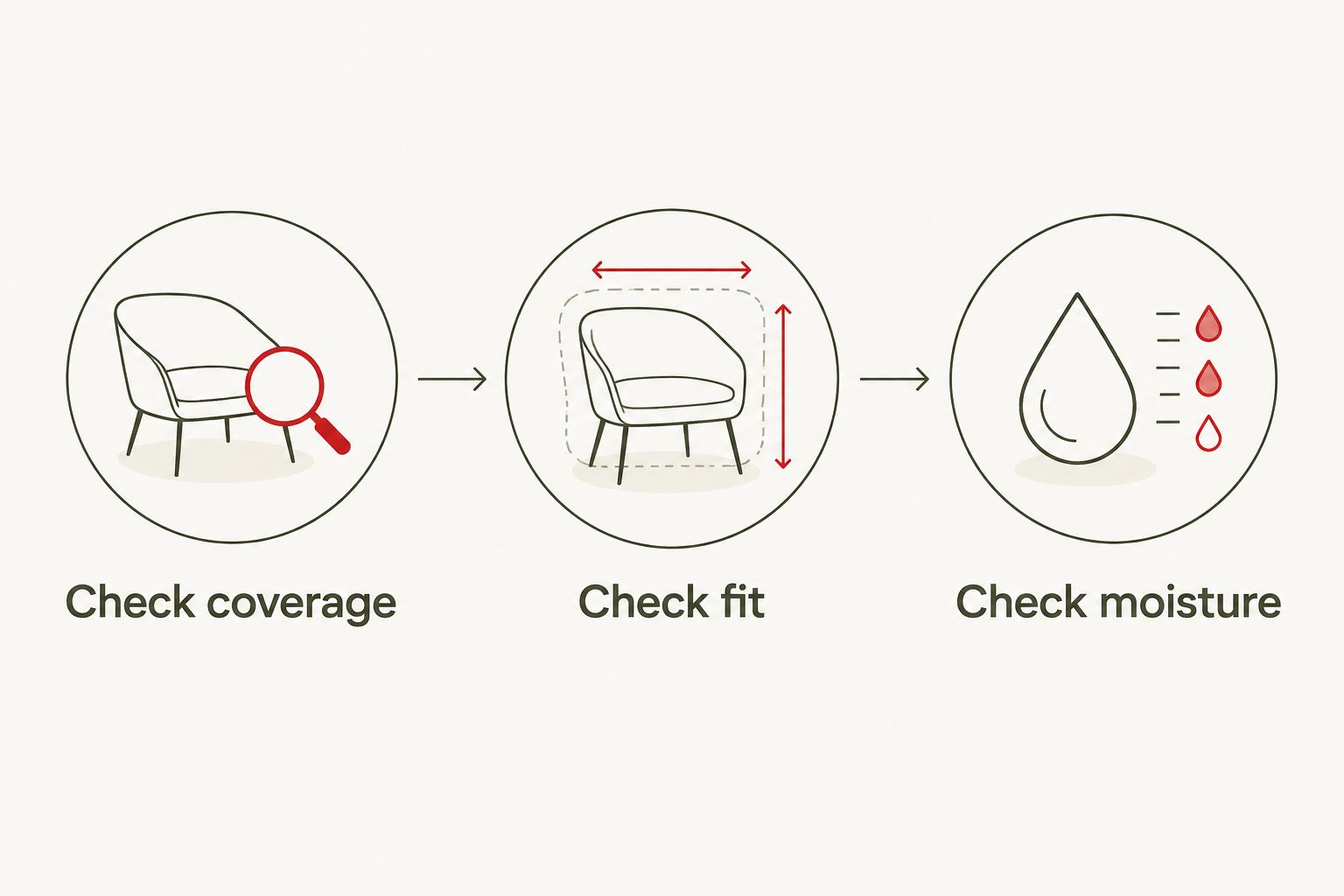
Do that check indoors while the clothing is dry. It tells you whether the pieces interfere with one another before wind and rain make an awkward fit harder to fix. If you regularly use glasses, keep them on for the test.
1. Savage Gear Savage Fleece Balaclava: best for cold, still sessions
The Savage Gear Savage Fleece Balaclava is the only named balaclava in this comparison. Its listing describes an extremely warm knitted balaclava and identifies it as one size in black and grey. That makes it the clearest starting point here when warmth matters more than keeping the covering light while you move.
Savage Gear Savage Fleece Balaclava is best for people spending long stretches relatively still in Irish cold. It is a direct choice for a cold-weather fishing session or any outdoor day with more waiting than walking. Treat the warmth claim as a description of the product, not proof that it will be comfortable under every hood.
Savage Gear Savage Fleece Balaclava pros:
- The product listing explicitly describes it as warm.
- The knitted design gives you a clear fabric type to compare with thinner alternatives.
- One-size labelling makes the fit question clear: try it with the clothing you intend to wear.
Savage Gear Savage Fleece Balaclava cons:
- One size does not guarantee a good fit for every head, hood or pair of glasses.
- The supplied description does not establish that the balaclava is waterproof.
- The listed warmth does not tell you how comfortable it will feel during hard walking.
Best for: Cold, still sessions where you want the face and head covered. Verdict: Buy if the opening stays put with your hood and collar; otherwise, skip it and try a different fit.
For 2026, keep the distinction between warm and waterproof clear. A balaclava sits close to your skin, but your hood remains the layer to assess for rain coverage. Do not expect a warm knit alone to solve a wet-weather clothing problem.
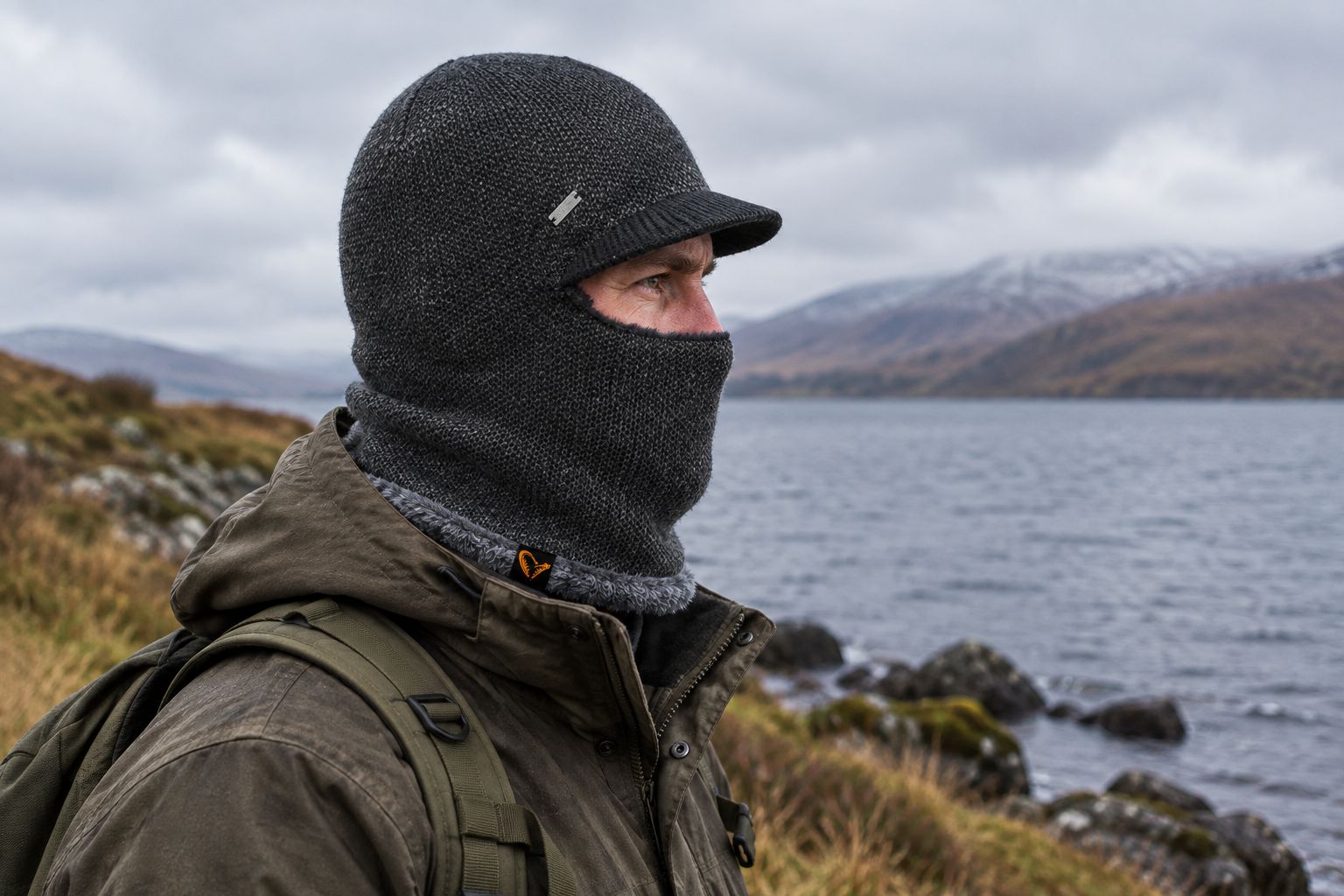
Look down, then turn your head while wearing your hood. If the opening slips or the fabric gathers at your chin, warmth will not make up for that distraction. Check the current product details before choosing it.
2. Lightweight synthetic balaclava: best for active walking
A lightweight synthetic balaclava is a fabric type, not a particular model endorsed here. Its appeal is a less bulky layer when your body is producing heat through movement. The exact feel and coverage depend on the garment, so read its fabric description and check the opening before buying.
Lightweight synthetic balaclava pros:
- A thinner option is easier to assess under a close-fitting hood.
- It gives you an alternative when a warm knit feels like too much coverage during activity.
- Synthetic designs come in different opening and neck shapes, letting you choose for your clothing setup.
Lightweight synthetic balaclava cons:
- Lightweight fabric offers less insulation than a thicker design of comparable coverage.
- A thin face panel can still feel uncomfortable if its seam sits against your nose.
- The label synthetic does not establish how a particular garment handles breath or sweat.
Best for: Walking or other active outdoor use when you want coverage without making warmth the main priority. Verdict: Buy only after checking the individual garment under your hood.
In 2026, avoid choosing by fabric name alone. Compare the length of the neck section, the position of the opening and whether the front stays clear of your mouth. You need those details from the item itself; this category label cannot supply them.
3. Merino balaclava: best for a soft feel under a hood
Merino is a wool fabric option for a balaclava worn against your skin. Choose it as a starting point if fabric feel is your main concern. Merino does not describe a fixed thickness, opening shape or cut, so inspect the specific garment rather than assuming that all merino options fit the same way.
Merino balaclava pros:
- It gives you a wool option if you prefer that feel against your face.
- It can be compared directly with a knitted fleece or a lightweight synthetic design for comfort.
- Different cuts let you prioritise either close coverage or room around the face.
Merino balaclava cons:
- The word merino does not tell you whether a specific item is thick enough for a still, cold session.
- A comfortable fabric can still have an opening that moves under your hood.
- Care requirements depend on the individual garment; check its label.
Best for: Anyone choosing primarily by how a face covering feels under a hood. Verdict: Hold until you can check the cut, thickness and care instructions of a specific merino option.
For an Irish trip in 2026, plan for wet fabric as well as cold air. If your covering gets damp, changing or drying it is a separate decision from choosing its fibre. A material name is not a rain-protection claim.
How we ranked these options
The order follows a practical buying question: which choice has the clearest supported reason to pick it for cold weather? The Savage Gear product has a supplied description stating warmth and a defined one-size design. Lightweight synthetic and merino follow as useful fabric routes, but no specific garment details were supplied for either category.
Coverage, fit, breathing space, warmth for your pace, moisture management and skin comfort determine the recommendation. There are no wear-test results behind this ranking. The listed product wins for a cold, still use case; the fabric categories remain conditional choices. That distinction matters more than filling the list with unsupported model names.
Which balaclava should you choose?
If you want one starting point for a cold, still day, choose the Savage Gear Savage Fleece Balaclava and check its one-size fit with your jacket. If you will walk hard, start by comparing lightweight synthetic designs. If fabric feel drives the decision, compare specific merino cuts before choosing one.
The answer changes when the opening does not stay put. Do not keep a balaclava because its fabric sounds right if it blocks your view or presses awkwardly beneath your hood. For 2026, a secure fit beats a warmer label that you cannot wear comfortably.
Think about your hands and feet as separate parts of the same cold-weather setup. A balaclava covers your head and face; it does not replace suitable gloves, footwear or a hood. Check each piece with the others while you can still change the arrangement indoors.
FAQ
What's the best balaclava for cold weather in Ireland?
The Savage Gear Savage Fleece Balaclava is the best starting point for cold, still sessions because its listing describes a warm knitted design. Check the one-size fit with your jacket and hood before relying on it.
Is a fleece balaclava better than a lightweight synthetic one?
Fleece is the better starting point when warmth during still periods is your priority. Choose a lightweight synthetic option for active walking, then assess the individual garment's coverage and fit.
Is a merino balaclava better under a hood?
A merino balaclava is a fabric option to consider if you prefer wool against your skin. Its suitability under a hood depends on the cut and thickness of the specific garment.
Will a balaclava stop my glasses fogging?
No balaclava can be assumed to stop glasses fogging. Test the face opening and where your breath escapes while wearing the glasses and hood you use outdoors.
Is the Savage Gear Savage Fleece Balaclava waterproof?
The supplied Savage Gear product description does not identify it as waterproof. Assess your hood separately for rain coverage rather than treating warmth as a waterproof claim.
How should a balaclava fit around the eyes?
The opening should leave your view clear when you turn your head or look down. Test it with your hood on, because the hood can shift the fabric.
Should I choose a thicker balaclava for every cold day?
No. Match warmth to how much you will move: a warm knit suits still periods, while a lighter option is a starting point for active walking.
One last thing
Check the balaclava while your jacket is fully zipped, not before. The collar can change how fabric sits around your neck and face. That small fit check is more useful than another claim about warmth when you are choosing what to wear in Ireland in 2026.