

Best Bilge Pumps for Small Boats in Ireland: 2026 Pick
Every small fishing boat in Ireland takes on water eventually, whether it's rain, spray over the bow, or a leaking skeg fitting, and the pump you have aboard decides how big a problem that becomes. The best bilge pump for a small fishing boat in 2026 is an automatic 12V electric unit with a float switch, backed up by a manual hand pump you never need but always carry.
- An automatic 12V electric bilge pump with a float switch is the best overall pick for small fishing boats moored on Irish lakes and rivers in 2026.
- A manual hand pump is not optional backup — it's the pump that works when the battery dies or wiring fails.
- Portable battery-powered pumps suit kayaks and small boats with no wired 12V system.
- Diaphragm pumps handle weed and debris better than centrifugal pumps but move water slower.
- Match GPH rating to your bilge volume, not the biggest number on the shelf.
Why this matters
A boat sitting low on its lines because of an ounce of ignored bilge water is one of the most common and most avoidable problems on Irish loughs and rivers. Rain, spray, a loose stern gland, or melting ice from the bait box all end up in the same place: the bilge. Fit the wrong pump, or none at all, and you're bailing with a bucket at the worst possible moment.
The gear list for a day on the water usually gets built around rods, an anchor and a life jacket, and the pump gets forgotten until it's needed. Our guide to essential boat accessories for Irish anglers covers the wider kit list; this one goes deep on the one item that decides whether a wet bilge stays a nuisance or becomes an emergency.
What makes the best bilge pump for a small boat
- Flow rate matched to bilge volume — a pump rated too small for the compartment never keeps up with a real leak
- Automatic vs manual operation — automatic pumps run without anyone aboard; manual pumps need a hand on the handle
- Power source that fits your boat — hard-wired 12V, portable battery, or no power at all
- Debris tolerance — weed, leaves and grit foul cheap pumps fast on Irish loughs
- Ease of fitting and servicing — a pump nobody can reach to clean gets left dirty
- Saltwater vs freshwater build — brass and stainless fittings last longer on tidal water than plastic
Bilge pumps for small boats: at a glance
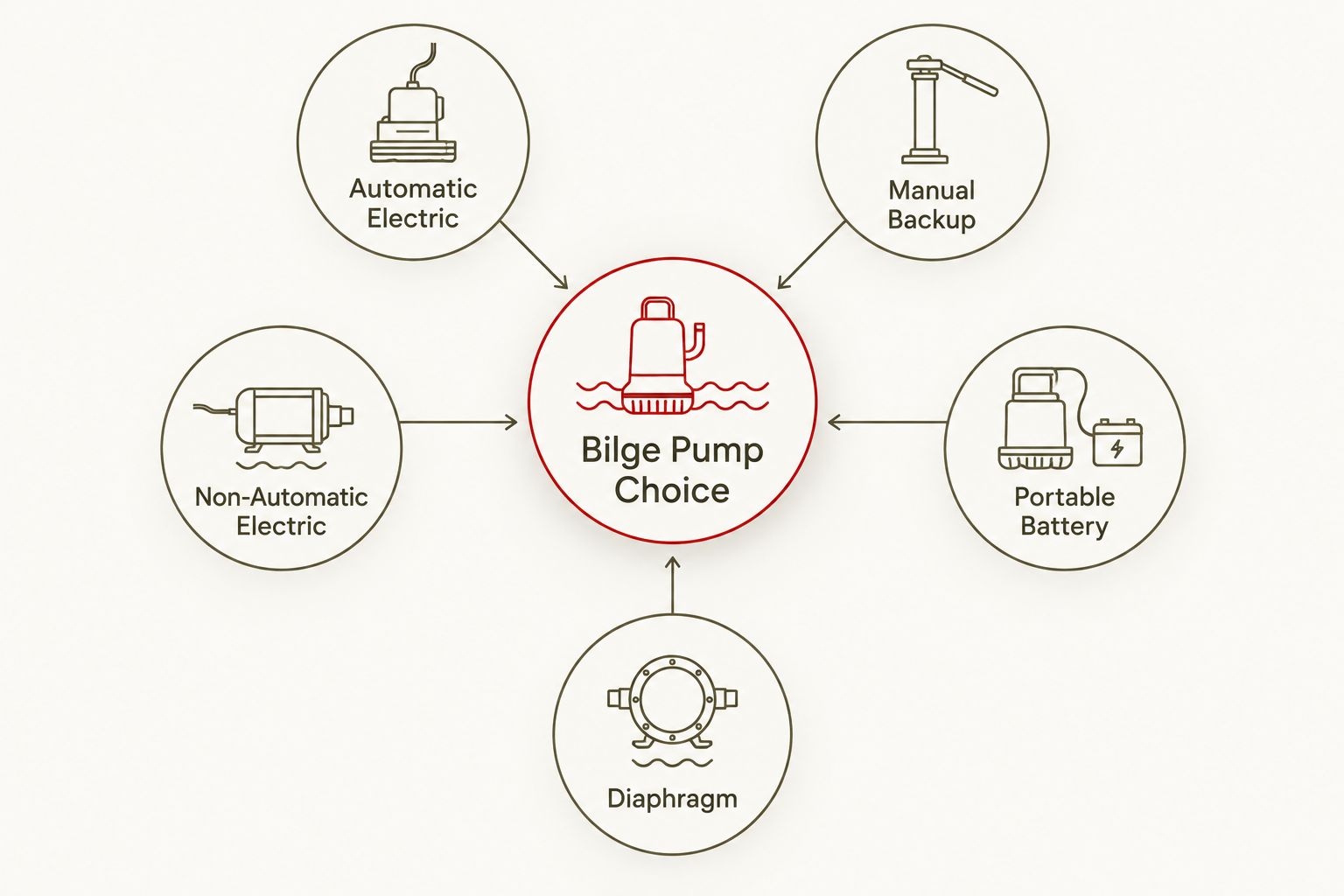
| Pump type | Best for | Standout feature | Key limitation |
|---|---|---|---|
| Automatic 12V electric (float switch) | Boats moored overnight on Irish loughs | Runs unattended | Needs a working 12V circuit |
| Manual hand-operated | Backup on every boat | Works with no battery at all | Slow, needs someone aboard |
| Non-automatic 12V submersible | Day boats that are always attended | Simple single-switch wiring | No cover if left unwatched |
| Portable battery-powered | Kayaks and boats with no wiring | No drilling or hardwiring needed | Shorter run time |
| Diaphragm | Weedy bilge water | Handles debris without clogging | Slower flow than centrifugal |
1. Automatic 12V electric bilge pump: best overall for boats moored on Irish loughs
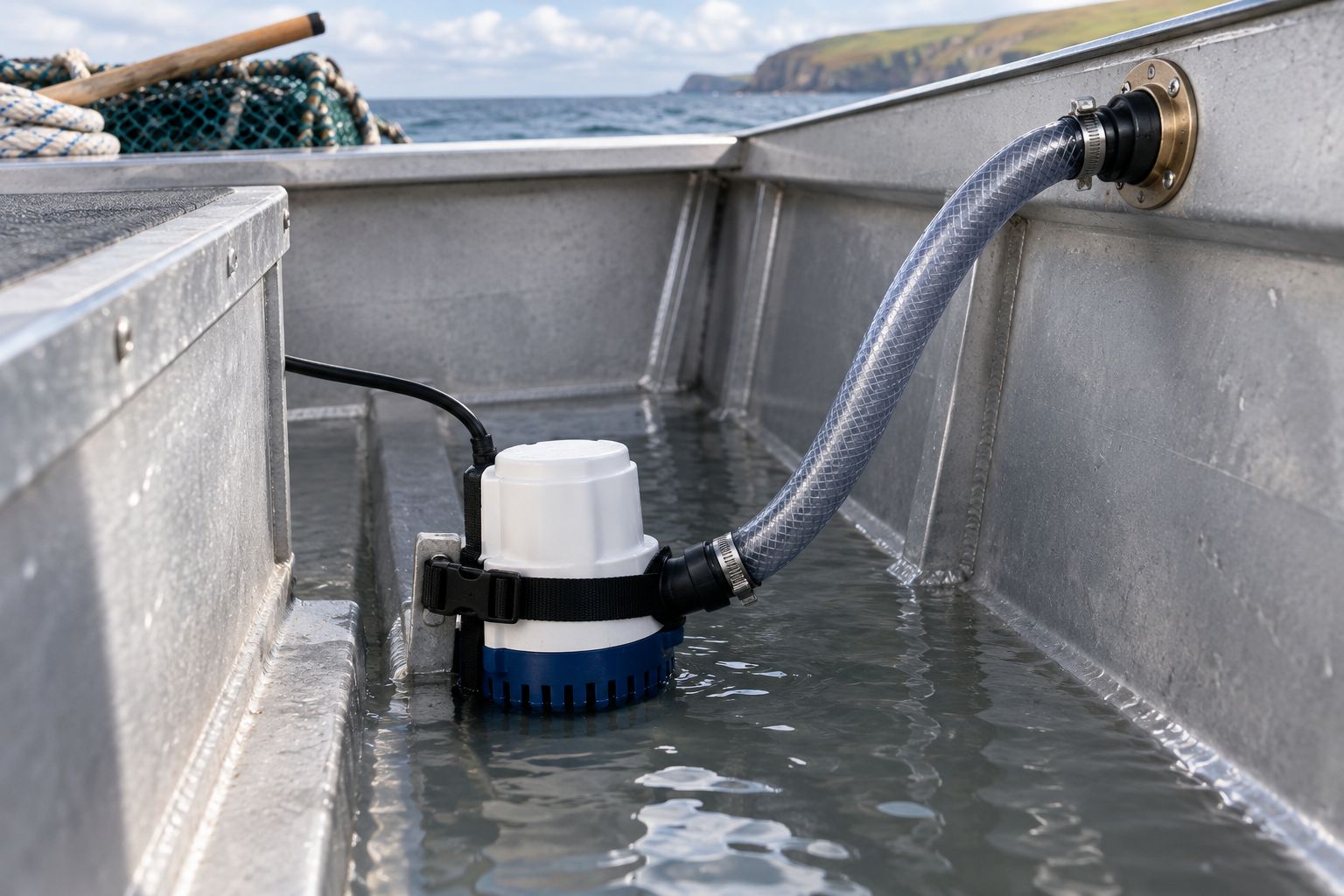
An automatic pump with a float switch sits in the bilge, senses rising water, and switches itself on without anyone touching a button. That matters most for a boat left on a mooring on Lough Ree, Lough Erne or a slipway on the Shannon overnight, where nobody's aboard to notice water creeping up the ribs.
Automatic 12V bilge pump pros:
- Runs whether you're aboard or not
- No manual step to forget before you leave the boat
- Pairs with a battery you're probably already carrying for a fish finder or a trolling motor
Automatic 12V bilge pump cons:
- Needs a working 12V circuit and a charged battery to do anything
- The float switch itself can jam with grit or weed
- Fitting means running wire and cutting a through-hull outlet, which is a job, not a five-minute task
Best for: small fishing boats kept on a mooring or trailer overnight on Irish lakes and rivers. Verdict: Buy — this is the pump to build the setup around in 2026.
2. Manual hand-operated bilge pump: best backup for every small boat
A manual pump needs nothing but an arm to work it. No battery to go flat, no wire to corrode, no switch to fail. It's the pump that still works the day the electric one doesn't.
Manual bilge pump pros:
- Zero reliance on electrics or battery charge
- Cheap enough to keep a spare stowed permanently
- Simple enough to hand to anyone aboard in an emergency
Manual bilge pump cons:
- Slow compared to an electric pump of similar size
- Tiring to work over a long crossing or a heavy leak
- Useless if nobody's aboard when the water rises
Best for: backup aboard every small boat, regardless of what electric pump is already fitted. Verdict: Buy — not a luxury, a requirement.
3. Non-automatic 12V submersible pump: best for day boats always under watch
This is the same style of pump as the automatic version, minus the float switch. You flick a single switch to run it, which keeps the wiring simple and cuts one of the parts most likely to foul on weed.
Non-automatic pump pros:
- Simpler, cheaper wiring than an automatic setup
- One less moving part to jam or corrode
- Fine for boats that are never left alone on the water
Non-automatic pump cons:
- Someone has to remember to switch it on
- No protection at all if the boat takes on water while moored and unwatched
- Not a substitute for an automatic pump on any boat left overnight
Best for: day boats that go out and come back with someone aboard the whole time. Verdict: Hold for day use, Skip if the boat is ever left moored unattended.
4. Portable battery-powered bilge pump: best for boats with no wired electrics
Kayaks, small punts and tenders often have no 12V system to tap into. A portable battery pump solves that without drilling a single hole in the hull. Pair it with a 12V 100Ah LiFePO4 battery and you've got dedicated power that moves between boats.
Portable battery pump pros:
- No hardwiring or drilling into the hull
- Moves between boats, kayaks and tenders as needed
- Suits anyone who doesn't want to commit to a permanent install
Portable battery pump cons:
- Shorter run time than a hard-wired pump
- Needs its own battery kept charged between trips
- Output is usually lower than a fixed centrifugal unit
Best for: kayak anglers and small boats with no wired 12V system aboard. Verdict: Buy for boats without electrics; Hold if a hard-wired option is already possible.
5. Diaphragm bilge pump: best for weedy bilge water
Diaphragm pumps push water with a flexing membrane instead of a spinning impeller, which lets them pass small debris that would jam a centrifugal pump. On weedy Irish loughs where leaves and cut weed end up in the bilge, that's a real advantage.
Diaphragm pump pros:
- Handles weed, grit and small debris without clogging
- Self-priming, so it doesn't need to sit fully submerged to start
- Fewer failures on boats fished on weedy still water
Diaphragm pump cons:
- Slower flow rate than a centrifugal pump of the same size
- More moving parts inside the pump body to service
- Overkill on a boat with clean bilge water
Best for: boats fished on weedy loughs where debris is a constant problem. Verdict: Hold — a strong niche pick, not the first pump for a clean-bilge boat.
How we ranked these
The order above runs on the criteria set out earlier: flow rate against likely bilge volume, automatic versus manual operation, how the pump is powered, and how well it copes with debris on Irish waters. The automatic 12V pump tops the list because it covers the scenario that causes the most damage — water rising while nobody's watching. Everything below it fills a specific gap that pump doesn't cover.
Which bilge pump should you choose?
For most small fishing boats on Irish lakes and rivers in 2026, fit an automatic 12V electric bilge pump as the primary unit and carry a manual hand pump as backup — that combination covers both the unattended-mooring risk and the electrics-fail risk in one go. Kayak and tender anglers without a wired system should default to a portable battery-powered pump instead. Boats fished on weedy still water get more life out of a diaphragm pump run alongside the electric one, not instead of it.
FAQ
What's the best bilge pump for a small fishing boat in Ireland?
An automatic 12V electric bilge pump with a float switch is the best overall choice for 2026, since it clears water whether or not anyone is aboard. Pair it with a manual hand pump as backup for when the battery or wiring fails.
How many GPH bilge pump do I need for a small boat?
Small fishing boats typically run pumps rated between 500 and 1,100 GPH, sized to the bilge compartment rather than the whole hull. A larger, weedier bilge needs the higher end of that range.
Do I need an automatic bilge pump or is manual enough?
A manual pump alone is not enough for any boat left moored or trailered unattended, since nobody's there to work it. Automatic pumps cover that gap; manual pumps stay aboard as backup.
Can I run a bilge pump off a portable battery?
Yes, a portable 12V battery powers a submersible bilge pump without any hardwiring into the hull, which suits kayaks and tenders. Run time is shorter than a permanently wired setup, so keep the battery charged between trips.
How much water can a bilge pump actually move?
A pump rated at 500 GPH moves close to 1,890 litres of water an hour under ideal conditions. That's plenty for rain and spray but not enough to keep up with a real hull breach.
Is a manual bilge pump enough as a sole pump?
No, a manual pump only works while someone is aboard to operate it, which leaves a moored or trailered boat unprotected. Fit an automatic electric pump as the primary and keep the manual pump as backup.
What size hose does a small boat bilge pump need?
Small boat bilge pumps typically run on 3/4 inch to 1 inch hose, matched to the pump's outlet size. Undersized hose restricts flow no matter how strong the pump is rated.
Does a bilge pump need a float switch?
A float switch is what makes a pump automatic, switching it on as water rises without anyone touching a button. Without one, the pump only runs when someone flips the switch by hand.
One last thing
A 500 GPH pump sounds like a lot until you picture the maths: that's roughly 1,890 litres an hour, which clears rain and spray without trouble but won't keep pace with a real hole in the hull. A bilge pump buys time to get back to shore — it's not a fix for a breach. Check the pump, the float switch and the outlet hose before every trip out on Irish water in 2026, not after the bilge is already ankle-deep.