

How to Choose Polarised Lens Colours for Fishing (2026)
Grey lenses handle most bright days on Irish lakes, rivers and the coast, but the light on the day decides the real winner. Amber, copper, green and blue mirror lenses each do one job well — pick the wrong colour and you're fishing half-blind through glare that a better lens would have cut clean through.
- Grey lenses are the safest all-round pick for bright Irish days on lakes, rivers and the coast in 2026.
- Amber and copper lenses lift contrast on overcast days and low light, which covers most Irish river sessions.
- Blue mirror lenses cut the harshest glare on open lake and sea water in full sun.
- Green lenses sit in the middle — good for mixed light and busy backgrounds like reeds or trees.
- No single lens colour covers every condition, so carrying two pairs beats compromising on one.
Why this matters
Glare off the surface hides everything you actually need to see: the drop-off, the weed bed, the pike sitting still in two feet of water. Polarised lenses strip that glare, but the tint colour changes how much contrast and brightness comes through underneath it.
Get the lens colour wrong on a dull February afternoon on the Shannon and a dark lens leaves you squinting at a flat, grey river with zero definition. Our polarised sunglasses guide breaks down frames and coatings — this page is just about the colour of the lens itself, and why it changes what you can actually spot in the water.
Wading safety is part of this too. Spotting a sudden drop-off or a submerged branch before you step on it depends on contrast, not just glare reduction, and that's exactly what lens colour controls.
How to choose polarised lens colours for fishing
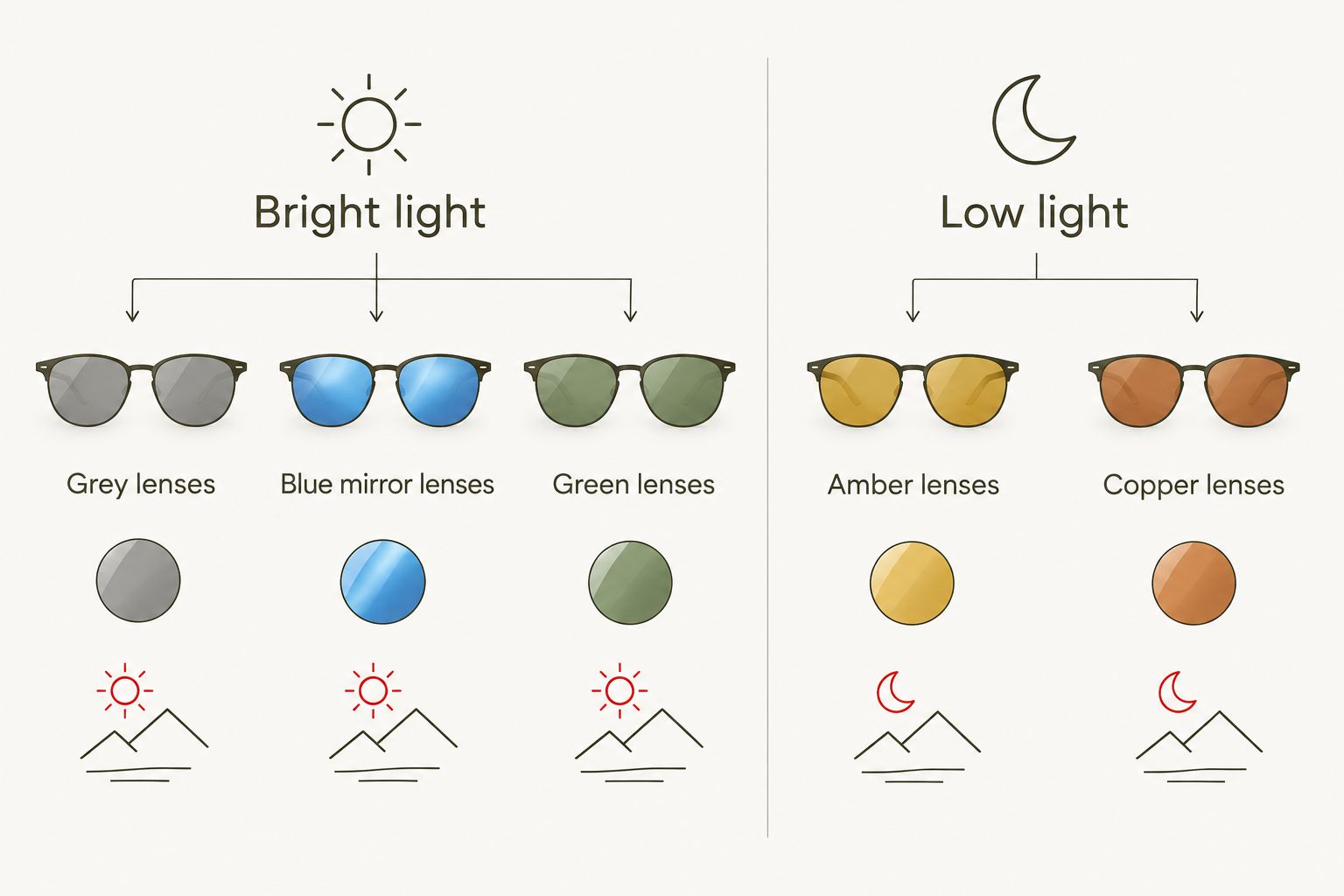
Match the lens to the light, not to the fish species. The table below is the fast version — the sections after it explain why each one earns its verdict.
| Lens colour | Best light conditions | Best water or setting | Verdict |
|---|---|---|---|
| Grey | Bright, sunny days | Lakes, sea, open water | Buy — all-round pick |
| Green | Bright to medium light | Rivers, mixed backgrounds | Buy — good general contrast |
| Amber / Copper | Overcast, dawn, dusk | Rivers, still water | Buy — best on grey Irish days |
| Blue mirror | Intense glare, full sun | Open lake, sea, boat fishing | Buy — cuts the hardest glare |
| Yellow / Rose | Very low light | Dull winter afternoons | Hold — niche use only |
Grey lenses: the all-round choice for bright days
Grey lenses hold true colour and cut brightness evenly across the whole lens without boosting contrast artificially. On a sunny day on a lake or the open sea, that's exactly what you want — less eye fatigue over a long session and no colour distortion when you're trying to read water depth by shade. Grey is the pick if you only own one pair and fish mixed venues through 2026. The trade-off is contrast: on a dull day, grey lenses can feel flat compared to amber or copper.
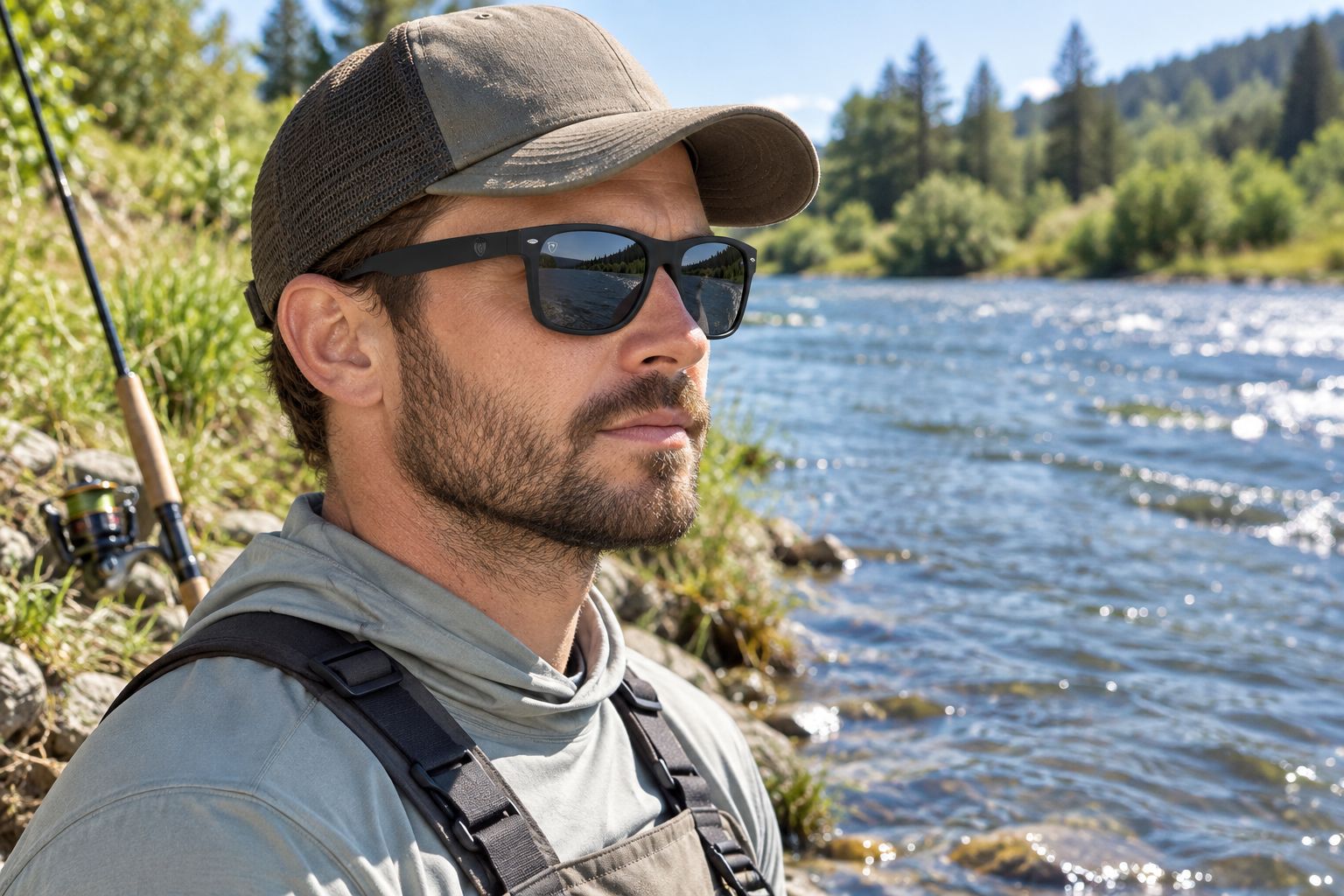
Amber and copper lenses: best for overcast Irish days
Amber and copper tints push contrast up hard, which makes shapes under the surface — a pike lying still, a drop-off, a submerged branch — stand out against a dull background. Ireland spends a lot of the year under cloud, so this is not a niche pick here the way it might be in a sunnier country. Amber and copper lenses win on overcast rivers and low winter light, full stop. The cost is glare control in bright sun — they let more light through than grey or blue mirror, so they're the wrong call on a cloudless August afternoon.
Blue mirror lenses: best for glare on open water
Blue mirror coatings sit over a darker base tint and reflect away the most intense surface glare, which is exactly the problem on big open lakes and the sea on a bright day. Boat anglers rate these highest for exactly that reason — glare off open water in full sun is harsher than glare off a tree-lined river. Blue mirror is the call for lake and sea sessions in strong sun. They're overkill and too dark for dawn, dusk or overcast days, where they cut so much light you lose definition instead of gaining it.
Green lenses: best for mixed light and river backgrounds
Green lenses split the difference between grey and amber — enough contrast boost to help against a busy background of reeds, trees or riverbed stone, without going as dark as grey or blue mirror. They handle a river session that starts overcast and turns bright by lunchtime better than any single-purpose lens. Green is the sensible middle-ground buy for anglers who fish rivers more than open lakes. The downside is that it's a compromise pick — it won't beat blue mirror in harsh glare or amber on a truly dull day.
Why lens colour choice varies
A few things push the decision one way or another beyond the table above:
- Water type — open lake and sea fishing sees harsher, more constant glare than a tree-lined river, which is why kayak and sea fishing anglers lean toward blue mirror more than river anglers do.
- Time of day — dawn and dusk sessions need lighter tints (amber, copper) because dark lenses over-block the low light you've got.
- Season — Irish winter light is duller for longer, which shifts the balance toward amber and copper for a bigger share of the year than in most countries.
- Background — reeds, overhanging trees and stony riverbeds favour green or amber; flat open water favours grey or blue mirror.
- Session length — a full day on the bank rewards a lens that reduces eye strain (grey, green) over one that maximises contrast but tires the eyes (amber, copper) in bright conditions.
- Still water depth reading — on shallow lake and still water fishing marks, grey's true colour rendering helps judge depth by shade more accurately than a tinted lens.


Do you need different lenses for a river than for a lake?
Yes — a river session usually calls for green or amber, while a lake or sea session usually calls for grey or blue mirror, because the glare pattern and background are different. Anglers who fish both regularly end up owning two pairs rather than compromising on one.
Are photochromic lenses worth it over a fixed colour?
Photochromic lenses that shift tint with light levels solve the dawn-to-midday problem on a single river session, trading a fixed colour's peak performance for flexibility across changing light. They're a reasonable pick if you fish long sessions that cross overcast and bright spells, but a dedicated amber or grey lens still outperforms them at either extreme.
FAQ
What's the best polarised lens colour for fishing in Ireland?
Grey is the best all-round polarised lens colour for fishing in Ireland in 2026, covering bright days on lakes, rivers and the coast without distorting colour. Amber or copper beats it specifically on overcast days, which make up a large share of the Irish fishing calendar.
Is amber or grey better for overcast days?
Amber is better than grey for overcast days because it boosts contrast against a flat, dull background instead of just dimming brightness. Grey performs better once the sun comes out and glare becomes the main problem instead of contrast.
Do blue mirror lenses work for river fishing?
Blue mirror lenses work for river fishing but they're not the best choice — they're built for the harsher, more constant glare of open lake and sea water. Green or amber lenses read a tree-lined or reed-edged river better.
Can you wear polarised sunglasses at dawn or dusk?
Yes, but a dark lens like grey or blue mirror blocks too much of the limited light at dawn and dusk. A lighter amber or copper tint keeps enough brightness through while still cutting glare.
Do polarised lenses help you see fish underwater?
Polarised lenses help you see fish underwater by removing surface glare that would otherwise hide everything beneath it. The lens colour then decides how much contrast comes through once the glare is gone.
Is green a good all-round lens colour for fishing?
Green is a solid middle-ground lens colour for fishing, handling mixed light and busy backgrounds like reeds or riverbed stone better than grey or amber alone. It won't beat a dedicated blue mirror lens in harsh glare or amber on a truly dull day.
Do I need a different lens colour for boat fishing?
Boat anglers on open lake or sea water generally do better with blue mirror or grey lenses, since glare off open water in full sun is harsher and more constant than on a sheltered river. A shore angler on the same lake could still get away with grey alone.
Are yellow or rose lenses worth buying for fishing?
Yellow and rose lenses are a niche pick for very low light, such as dull winter afternoons, and add little value outside that narrow window. Most Irish anglers get more use out of an amber, copper or grey lens for the rest of the year.
One last thing
The lens colour matters less than switching it when the weather changes — anglers who own one grey pair and stick to it through a grey Irish winter are leaving contrast on the table for half the year. If you fish year-round, a grey or green pair for the bright months and an amber or copper pair for autumn through spring covers 2026's mixed weather better than any single "best" lens ever could.